
Thorpe: All countries whose visas have been suspended will be affected by Trump’s decision
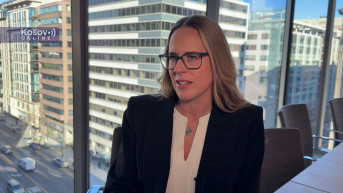
Senior Nonresident Fellow at the Atlantic Council’s European Center in Washington Amanda Thorpe assessed that all countries, including those from the Western Balkans, whose immigration visas have been suspended will be affected by the State Department’s decision. She hopes this will not discourage young people from considering moving to the United States.
Speaking to Kosovo Online, Thorpe points out that the decision has not been explained very clearly, given that it has implications for a wide range of countries, some of which are good partners of the United States.
“First of all, this is an extremely broad range of countries - 75 states is truly a large number. The list includes countries from Cape Verde, which are among our most reliable partners in Africa, through Iran, all the way to the Bahamas, a destination many Americans travel to for vacation. It is unclear why Western Balkan countries have also been included. The rationale for this is not clear, and I do not know whether there is any more concrete explanation, apart from the general narrative that immigrants allegedly drain the wealth of the United States, which I personally consider inaccurate. I believe that all countries on this list will be affected, but I do not see any specific Western Balkan country being particularly or uniquely exposed to the consequences. Honestly, I do not think there is a good answer to the question of which country would be most affected, nor to the question of why these countries ended up on the list at all. It is also unclear how long these measures will last, what their immediate consequences will be, as well as what their long-term effects will be on immigration and attempts to restrict it from these countries,” Thorpe said. Her research focuses on the Western Balkans and congressional engagement.
Despite this measure, she says that the United States remains a strategic partner for the Western Balkans.
“I believe Washington can still be a strategic partner. Perhaps with an unreliable narrative, but still reliable when it comes to national security. If you look at the various documents and messages coming out of Washington, you will see that they are often uncoordinated, and even mutually contradictory. On the one hand, there is a National Security Strategy that contains harsh assessments of Europe’s decline. On the other hand, the Trump administration lifted sanctions against the leader of the Republic of Srpska, whom many consider irredentist. At the same time, the Western Balkans Democracy and Prosperity Act provides guidelines for considering new sanctions. There is also a five-year economic plan, as well as a task given directly to the Director of National Intelligence and the Secretary of Defense to review the malign influence of Russia and China,” Thorpe said.
As she notes, all of this shows that much depends on the messages coming from Washington, that is, on whom you listen to.
“These signals can be interpreted in different ways. I have often emphasized that those who know the Balkans well - such as Senator Shaheen or Congressman Turner - represent stable voices in Washington and genuinely believe in the transatlantic partnership. It will change in the future, but I believe that Washington’s interest in the Balkans will continue to be present,” our interlocutor said.
She hopes that young people will not be discouraged by Trump’s measure and that they will still want to immigrate to the United States.
“I think the United States is currently going through quite a difficult period. Democracy is under pressure and facing serious challenges. Relations are strained on multiple levels, and I would not say that this is exclusively about the visa regime - the partnership is undergoing a broader transformation. Still, I hope that young people, young immigrants, and young people from the Balkans will continue to want to come to America. Some of my best and brightest colleagues and friends of Bosnian origin are precisely those who went to the United States during the war. They deeply believe in American values and tradition, and I believe that is part of what makes America great. I think we are currently at a turning point in these relations,” Thorpe concluded.


0 comments