
Todorovic: When deadlines within the Growth Plan are missed, funds go to others
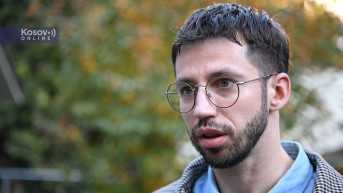
Researcher at the European Policy Center, Marko Todorovic, told Kosovo Online that the European Commission has not yet provided an assessment of the reform steps that Serbia was supposed to implement in order to receive funds from the Growth Plan. If the EC determines that the necessary political preconditions have been met, particularly those concerning the functioning of democratic institutions and the rule of law, Serbia should receive the first and second tranches of funds that have already been approved for some countries in the region.
Todorovic explained that Serbia submitted a report to the EC detailing what had been done by June 2025 and that it filed funding requests for the first two periods of the Growth Plan – for the reform steps that were to be completed by the end of the previous year, and for the second period covering the first half of this year.
He noted that the tranches are allocated based on six-month periods and that different reform steps are scheduled for the first six months, the next six months, and so on.
"It is quite unusual that, with considerable delay, Serbia has not yet received any assessment from the European Commission, and therefore no funds. The possible reason, as assumed, is that the EC may still be evaluating certain political preconditions, especially in the context of increased polarization in society, which was also highlighted in the recent European Parliament Resolution. We expect that by the end of this year we will have more information about which reform steps have been implemented and which have not. The funds should be released if the EC determines that the political preconditions have been fulfilled," Todorovic said.
According to him, the funds from the Growth Plan intended for Serbia are significant because part of them goes directly into the state budget, while another part finances infrastructure projects, both regional and national.
"In the end, it serves as a financial incentive for reforms that are beneficial to society. Many of these reforms are also related to harmonization with the EU’s legal framework, which Serbia must do if it wants to join the EU. In that sense, it is a kind of reward for faster alignment and a tool meant to encourage, accelerate, and restore credibility to the accession process," Todorovic emphasized.
He pointed out that the logic of the entire Growth Plan for the Western Balkans is that specific funds are tied to clearly defined objectives and deadlines for their completion.
"There are certain deadlines, and if they are missed, the funds are redistributed to other candidate countries so that they do not go to waste. For example, some steps were supposed to be completed by December 2024. However, the EU anticipated possible delays, often for justified reasons, and therefore allowed a grace period of two years for the first set of steps due by December 2024. For all subsequent steps, a one-year grace period was set. This applies to all candidate countries," Todorovic explained.
He added that each reform step carries a specific amount of funding, so in Serbia’s case, once those steps are completed, the funds will be transferred to its account – but only if the delay does not exceed one year, or two years in the case of the initial reform steps.


0 comments