
EU: Kosovo excluded from Growth Plan funding
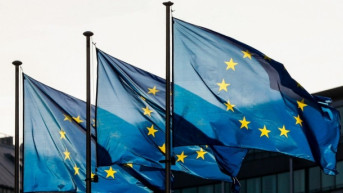
The European Commission has approved the second tranche of financial aid from the Growth Plan for the Western Balkans, allocated to Albania, North Macedonia, and Montenegro, but not to Kosovo, since Pristina failed to submit an official report, as the Facilitation Agreement with the EU has not been ratified by the parliament, the EU told Front Online.
An EU official confirmed that without the formal report, which follows from the ratification of the agreement, the disbursement of funds is not possible.
“This decision does not include Kosovo because it has not officially submitted its report. The lack of formal reporting stems from the absence of ratification of the Facilitation Agreement,” the EU official told Front Online, adding that the funds are ready but that internal political steps are awaited.
Former Kosovo ambassador Gjergj Dedaj criticized Prime Minister Albin Kurti, currently in a caretaker role, claiming his actions have seriously damaged Kosovo’s relations with key Western partners.
“Albin Kurti has seriously harmed Kosovo’s partnership with the US and the EU. His monstrous and irresponsible policy has led to Kosovo’s isolation and sanctions, the suspension of the Strategic Dialogue with the US, and the withdrawal of international investors,” Dedaj said.
He argued that this policy has also resulted in the loss of EU financial assistance, while other countries in the region, including Serbia, have received their share.
“This also means the suspension of European Commission funding for Kosovo, due to Kurti’s parliamentary deputies, while the same funds have been granted to all other countries in the region, including Serbia,” he added.
Dedaj warned that Kosovo is facing serious political and economic degradation, accusing the current government of authoritarianism and disregard for citizens.
“His preoccupation is power, corruption, nepotism, attacks on the media and the judiciary, and deceiving voters. The political crisis caused by Kurti’s quisling, anti-state clique has brought Kosovo to the brink of bankruptcy, political degradation, democratic chaos, and the endangerment of its Euro-Atlantic future,” Dedaj stated.
He called for political change and a new government, describing the current leadership as an obstacle to progress and integration.
“Kosovo and its people, along with the parliamentary parties, must make a historic turn and remove this neo-Stalinist clan from power if we want progress, democracy, the rule of law, peace, partnership, and Euro-Atlantic integration,” Dedaj concluded.
Former diplomat Avni Arifi also stated that Kosovo has directly lost tens of millions of euros due to the institutional crisis, which prevented the adoption of required documents.
“The institutional blockade created in Kosovo has cost the country hundreds of millions of euros. As early as April, we were supposed to receive the first tranche of the Growth Fund, €65 million out of a planned €820 million for three years, and there is no hope we will get them anytime soon,” Arifi told Front Online.
He added that Kosovo is currently technically excluded from many major European projects and that the country is moving toward a new kind of isolation instead of integration.
“There is no need to emphasize that under Kurti and Self-Determination, Kosovo is heading toward a modern form of isolation resembling Enver’s Albania, rather than Euro-Atlantic integration,” Arifi concluded.
Political analyst Azem Vlasi said the main reason Kosovo has been excluded from EU funding is the political deadlock, primarily the non-functioning of the parliament and government.
“The main reason for the lack of EU funds is the crisis caused by the failure to form the Assembly, which lasted far too long and without reason, especially since we still don’t have a functional government elected in the February 9 elections,” Vlasi said.
He emphasized that Kosovo would have access to European funds if its institutions were stable and functional.
“The EU had already imposed certain measures against Kosovo due to events in the north two years ago. But those measures would now be forgotten if we had a functioning Assembly and Government,” he added.
Vlasi warned that the EU’s loss of confidence in Kosovo’s institutions is serious and poses a major obstacle to any future assistance.
“The EU has lost trust in our capacity, responsibility, and ability to govern the state. If someone is not serious in managing their own funds and household, even a friend will not give them money or help,” Vlasi concluded.


0 comments