
In 2024, elections in 40 countries worldwide: How will the voting from the USA and EU, through Russia to Taiwan, reflect on the Kosovo issue?
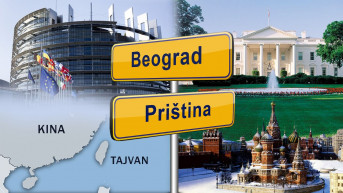
On the international stage, the year 2024 will be marked by as many as 70 elections in 40 countries. Some of them, such as the presidential elections in the United States and Russia, those in the European Union, and in Taiwan, could determine future geopolitical trends, shape relationships among leading global powers, and have a significant impact on the Kosovo issue.
While there is little uncertainty about the upcoming presidential elections in Russia on March 17, where Vladimir Putin is expected to secure another six-year term, commentators on Kosovo online agree that the results of the U.S. presidential election and the new composition of EU institutions are, as things stand, much more uncertain. It is currently unknown whether November 5 will see a replay of the electoral race from four years ago between the incumbent President Joseph Biden and Donald Trump.
In the European Union, from June 6 to 9, a new composition of the European Parliament will be elected. A total of 720 Members of the European Parliament will be elected from 27 countries. The election year in the EU has been preceded by the strengthening of right-wing parties, which have been achieving better results in elections in many European countries, even forming governments. Recently, there has been speculation about the possibility of their coming together and collectively participating in the EP elections. Given that most of these parties hold a critical stance towards the international community's policy on Kosovo, with some even calling for their home countries to withdraw recognition of its independence, the question of whether these parties, in the event of a good result, would bring significant changes to the EU's policy on resolving the Kosovo issue and the dialogue between Belgrade and Pristina has been lingering for some time.
Elections are also taking place this year in the United Kingdom, Portugal, Belgium, Croatia, and in our region, Romania, North Macedonia, and Bosnia and Herzegovina. According to some forecasts, in the UK, the Labour Party could return to power after 14 years in opposition, with their leader Keir Starmer taking over as prime minister, advocating for closer relations with the EU. Presidential elections will also be held in Finland and Slovakia, where the incumbent presidents are not entering the electoral race.
In Ukraine, President Volodymyr Zelensky's term expires in the spring, but the Ukrainian constitution prohibits elections during wartime, so his mandate could be extended. Additionally, as announced, citizens in Ukrainian territories under Russian control will, for the first time, vote in the Russian presidential elections.
The first elections this year considered crucial for the direction the world will take will be held in Taiwan, on January 13. According to some estimates, if the course of independence is confirmed in the presidential elections, another major conflict with global consequences could potentially emerge after the wars in Ukraine and the Gaza Strip. If the opposition wins, tensions between Taiwan and China could temporarily decrease. While Washington recognizes Taiwan as part of China, it also has numerous alliance agreements with the island.
This year is also an election year in India, Mexico, Botswana, Bangladesh, Mongolia, among other countries. In the 40 countries where elections will take place this year, approximately 4.2 billion people live, which is more than half of the global population.
Dragana Mitrovic, a professor at the Faculty of Political Sciences in Belgrade, says that concerning our region and the Kosovo issue, the results of the U.S. presidential elections and the elections for the European Parliament could carry the most weight.
"The U.S. elections will certainly have the greatest significance. Before them, there are the Russian presidential elections, the elections for the European Parliament, whose composition, as well as many European officials, will change. Whether the EU's policy, primarily that of Germany, which also faces a series of important regional elections, will change remains to be seen. We see the strengthening of the right wing in Europe, which is currently the most rational force in the political spectrum of this country. This can be a positive trend, but still in the medium and long term, not so quickly, considering the deadlines that have been set for us, supposedly in January, February, things need to be resolved and there is exceptional pressure on us for that," Mitrovic notes for Kosovo online.
Regarding the U.S. presidential elections in November, she points out that they are already becoming very complicated due to judicial decisions preventing intraparty competition for candidates such as Donald Trump, who is leading in the Republican Party.
"And if Trump were to win these elections, American foreign policy would certainly be less interventionist. However, it's unlikely that the strategic course set for the long term would change. We might expect positive changes for us in the long term, but not in the short and medium term, although officials would certainly be at least somewhat replaced, and we would see less hostile and compromised faces. But, as we know, in the previous Trump administration, many positions in the State Department were left unfilled, and this Biden administration has also brought back many retired officials known to us in a negative light. So, in that sense, it would be somewhat more favorable," believes Mitrovic.
Former Ambassador of Serbia to the U.S., Professor Ivan Vujacic, believes that there is currently pressure to conclude certain things in the dialogue between Belgrade and Pristina before the U.S. presidential elections. He also points out that at this moment it is still unknown who will be the candidates in the election race for the White House, making it difficult to make predictions about how both the campaign and election results will affect Washington's policy towards the Western Balkans region, especially the Kosovo issue.
"If there were a replay between Donald Trump and Joseph Biden, and if Trump were to win, it would have an impact not only on the dialogue but on the whole world. Because Trump has shown himself to be outside the usual American politics, both domestically and internationally. But it's too early to talk about that. Both candidates are in serious years, and it's a question of how the whole process will proceed further. It's also a question of whether Trump will be able to run; that depends on the decision of the Supreme Court," says Vujacic for Kosovo online.
He does not expect the Kosovo issue to be high on the agenda of the U.S. presidential campaign.
"I don't expect the Kosovo issue to be part of the campaign. We are the most important to ourselves, which is normal, but still, we are a small part of the world. Much more significant things are at play, such as relations with China, the war in Ukraine, Gaza and Israel, climate change... These are all very significant topics. In the campaign, we would be very low, especially since there is a certain type of stability here, and in the absence of a major conflict, we are not high on the agenda," emphasizes Vujacic.
Assistant Professor at the Faculty of Political Sciences in Belgrade, Stevan Nedeljkovic, tells Kosovo online that Serbia has established good cooperation with both Republicans and Democrats in the U.S. He believes that regardless of whose candidate wins in the presidential elections next year, there will be no drastic changes in Washington's policy.
"There used to be a kind of mantra that Republicans were unfavorably disposed towards Serbia, and Democrats were not. Primarily due to conservative values cherished by the Republican Party and some anti-Clinton logic that really existed here, I would say, quite reasonably. However, in recent years, this mantra is changing because, as we can see, the state of Serbia has quite successful cooperation with both Democrats and Republicans. So, I think that changes, if they were to happen in the U.S., would not drastically affect the policy that the U.S. would have towards Serbia," believes Nedeljkovic.
He continues that if the Republican Party and its candidate, whoever that might be (as it is currently unknown), were to win the presidential elections, it could mean a somewhat more nuanced and improved approach towards Serbia. This is considering the good contacts that Serbia has with Richard Grenell and many other politicians from the U.S. who come from this party, according to Nedeljkovic.
"On the other hand, if we look at the attitude of Mr. Escobar or Ambassador Hill towards Serbia, we see that it is anything but a bad relationship that we remember from the 90s. There is much more understanding for the interests, for the position of Serbia, and what they seem to have very well recognized, the reputation and prestige of Serbia. If you inflict harm on Serbia, it feels very wounded, and that can drastically worsen relations between Serbia and the U.S.," notes Nedeljkovic.
When asked if the U.S. is in a hurry to reach a solution or significant progress in the dialogue between Belgrade and Pristina before the elections, and whether Kosovo can be expected to be a major focus of the presidential campaign, Nedeljkovic responds that he thinks not.
"If we draw an analogy with the year 2020, we saw that Donald Trump very much wanted to use the Kosovo issue for his campaign. I would say, without any foundation, that Donald Trump's obsession was, and I believe still is, to win the Nobel Peace Prize. On the other hand, if we follow the foreign policy trends of the Joseph Biden administration, I wouldn't say that the Kosovo issue will be a priority in an election year. In an election year, especially when the incumbent president is running the race, and at this moment Joseph Biden is fighting for the nomination of his party, and later, of course, for victory in the presidential elections, I don't believe he will invest much strength and time in something that would be the final resolution of the Kosovo issue, whatever that may mean," emphasizes Nedeljkovic.
He adds that at this moment, we are still "under the mantra that it is normalization," and he believes that even in 2024, the U.S. will fully support the normalization of relations between Belgrade and Pristina.
"Of course, that doesn't mean that some kind of final solution can be expected in that year. We had some solutions in 2023, the Franco-German plan and the Ohrid Agreement, and we see that little is being implemented at the moment. But what is important, and what is important for the U.S., is that there is stability. The U.S. priority when it comes to Serbia is to give importance and contribute to Serbia's stability in the Western Balkans. Another thing is constructiveness when it comes to dialogue with Pristina. These are the two key things based on which the U.S. measures its policy towards Serbia," emphasizes our interlocutor.
Regarding the upcoming elections for EU institutions, former EU envoy for Kosovo Wolfgang Petritsch believes that the strengthening of the extreme right in Europe would not have a positive impact on resolving the Kosovo issue because, as he points out, only a moderate policy can bring compromise and success.
"We see in Serbia that the extreme right has not succeeded in elections, and I hope that they will not have greater success in European elections," Petritsch said for Kosovo online.
He emphasizes that this statement is not only because he is personally convinced that only a moderate policy, a policy of compromise, can bring success, but also because the extreme right, as he notes, "only has its own interests, not an interest in a European solution to the problem."
"It is about Serbia progressing faster in accession negotiations, and that progress in Brussels can be guaranteed only by moderate forces, social-democratic, liberal-conservative, not extreme nationalists," Petritsch added.
The upcoming presidential elections in Russia next year will not change anything regarding Moscow's policy towards the Western Balkans and the Kosovo issue, as the results of those elections are known, says journalist Momir Turudic, editor of the portal at the Radio Television of Serbia.
"There will certainly not be any drastic change in Russia's policy, both towards the Western Balkans and towards all other hotspots in the world. It will almost certainly remain exactly the same as it is today. What is interesting is what would happen, theoretically, if elections were held in Ukraine, but I think the probability of that is really minimal. Not only has President Volodymyr Zelensky already announced that there will be no elections while the country is in a state of war, and that war will certainly continue into the next year, but it is also not realistic. Not only is the country at war, but millions of its citizens are in exile. How elections could be organized in such circumstances and how credible the results of such elections would be is a big question," says Turudic for Kosovo online.
Since the outbreak of the conflict between Russia and Ukraine, the Kosovo issue has been brought into this context – from whether Kiev, which does not recognize Kosovo, will change that stance, to whether Russia can use this case as an argument in its claims to parts of Ukrainian territory.
"My impression is that there was more talk about this at the beginning of the Russia-Ukraine war when it was truly a news story that overshadowed everything else. Overnight, the COVID pandemic that had turned the world upside down and all other topics disappeared. At that time, there was a lot of discussion about the Kosovo case in relation to everything happening in Ukraine. However, on the other hand, we must be aware that things have accelerated so much that when events consume each other, both in the media and politically, the Russia-Ukraine war also somewhat fell into the background," says Turudic.
He points out that this happened even before the outbreak of the Israel-Hamas war. This does not mean, he adds, that the Russia-Ukraine war is in any way different for Russia and Ukraine.
However, for the rest of the world, the tension has somewhat subsided, and the news has become routine. Much less attention is given to everything happening in that context. Not to mention what happened when Hamas attacked Israel on October 7th, and Israel responded. The Russia-Ukraine war has, in a way, 'sunk.' It doesn't mean its significance is lesser, but in the context of what is happening in the world, and as things stand, we've seen that overnight a completely new hotspot can emerge. It's not impossible that in the coming year, the relationship between Russia and Ukraine and how it reflects on the Western Balkans and everything else will be somewhat at an even lower level. A kind of low-intensity conflict, not a frozen conflict, but a war with little on-the-ground and political movement," believes our interlocutor.
Professor Mitrovic, regarding the Russian presidential elections, expects continuity on both the domestic and foreign fronts.
"There will be continued support for the sovereignty and territorial integrity of our country, which is crucial for us, in international bodies and generally," stated the professor.
The first elections in the world this year will be held in Taiwan, where citizens will choose their president on January 13th, and these elections, as Mitrovic points out, could impact the escalation of tensions, primarily in the relations between the U.S. and China.
"Both sides will want to favor candidates they find favorable, which, I assume, will worsen the already poor U.S.-China relations. However, no one in Taiwan actually wants any conflict with mainland China, nor will, in my opinion, lead to any major changes regardless of who wins these elections, whether it's the Kuomintang, which is traditionally oriented towards reunification with mainland China, or the Democratic Progressive Party, which is more pro-American and pro-independence. In any case, whoever wins these elections, no one will dare to challenge the People's Republic of China by declaring or formally calling for independence, which is its 'red line.' So, I don't think there will be any significant escalation, any major hotspot, and even less that it will transfer to us and the Kosovo issue," emphasizes Mitrovic.
That Taiwan's problem with China is of a different kind, emphasizes journalist Momir Turudic.
"Both the U.S. and the states that are most 'in a clash' with China recognize its territorial integrity, namely that Taiwan is an integral part of it. This has been the case since the thaw between America and China in the 1970s. The fact that it's not quite like that on the ground doesn't mean much for China itself, which doesn't allow its integrity to be questioned in any way, and it's a step-by-step tactic, as was the case with Hong Kong, which became part of China again after 99 years. The same applied to Macau, the former Portuguese colony. Chinese policy is that Taiwan is part of China and that one day there will be complete reunification with the mainland," says Turudic.



comments