
Ulutas: Situation in Kosovo calm, NATO supports Belgrade-Pristina dialogue
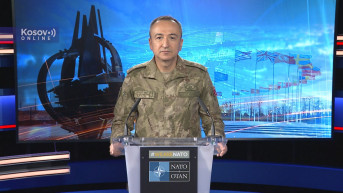
The Commander of KFOR, Major General Ozkan Ulutas, stated that the situation in Kosovo is calm, but fragile, stressing that lasting security depends on a political solution and that KFOR therefore strongly supports the dialogue on normalization of relations between Belgrade and Pristina mediated by the European Union.
“That is the framework in which solutions for outstanding issues should be sought, with respect for the rights of all communities,” Ulutas said in an interview with Tanjug, as reported by Politika.
He stressed that he maintains regular contacts and excellent cooperation with the Chief of the General Staff of the Serbian Armed Forces, General Milan Mojsilovic.
Asked how he assesses the current security situation in Kosovo, he said it is calm and that recently he has not noticed any significant changes in that regard.
“Of course, the situation remains fragile as a consequence of still unresolved issues. My first mandate began immediately after serious security incidents in northern Kosovo and the subsequent increase of KFOR’s presence on the ground. Since then, we have not witnessed a repetition of violence at that level,” Ulutas said, adding that he expects those responsible for the violence to be held accountable.
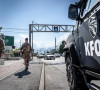
Speaking about the current situation in the north, Ulutas said it is calm and that KFOR is closely monitoring the situation and maintaining a visible presence through regular contacts with all local communities and through patrols, including synchronized patrols with the Serbian Armed Forces along the administrative boundary line.
“I am also in regular contact with the Chief of the General Staff of the Serbian Armed Forces, General Mojsilovic, with whom I have developed excellent cooperation. This helps maintain transparency of our activities, as well as mutual awareness and effective responses to sudden events that may affect local security and regional stability,” Ulutas pointed out.
He stated that KFOR maintains a strong presence along the administrative line and conducts regular patrols and surveillance activities to ensure a safe and secure environment.
Ulutas stressed that KFOR also conducts synchronized patrols with the Serbian Armed Forces.
“Such activities contribute to security in that area. We are in constant communication with Serbia’s armed forces in order to prevent any incident and improve mutual understanding. The situation is continuously assessed, and KFOR remains vigilant in order to prevent any threat to stability,” Ulutas said.
Asked how he sees the position of Serbs in Kosovo, Ulutas replied that KFOR is committed to ensuring a safe and secure environment for all people living in the area, in accordance with its long-standing mandate of the United Nations, impartially and at all times.
“Our presence throughout Kosovo is for the benefit of everyone. We encourage all sides to engage in constructive dialogue and work toward reconciliation,” Ulutas said.
Responding to a question about how KFOR views the fact that Pristina has formed and is arming the Kosovo Security Force, while according to United Nations Security Council Resolution 1244 KFOR is the only armed force in Kosovo, Ulutas said that the development of the Kosovo Security Force is supported by the NATO Advisory and Liaison Team, which is separate from KFOR.
“Since 2016, the NATO Advisory and Liaison Team, which is separate from KFOR, has supported the development of the Kosovo Security Force within its original civil protection mandate through capacity development, education and coordination of training. That support remains unchanged and is limited to the KSF’s original civil protection mandate,” Ulutas said.
Asked how the memorandum on defense cooperation between Pristina, Tirana, and Zagreb affects the current security situation in Kosovo and the region, Ulutas said that NATO as an organization is not a party to it and had no role in consultations regarding that agreement.
“The mentioned initiative is a trilateral cooperation agreement between Albania, Croatia, and institutions in Kosovo. We are aware of it, but NATO as an organization is not a party to it and had no role in consultations regarding that agreement,” Ulutas stated.
According to him, NATO membership does not prevent allies from concluding additional cooperation agreements.
He also welcomed the continued contribution of Albania and Croatia to the KFOR mission.
Asked how long-term stability in the region can be achieved, Ulutas said that the solution is ultimately political rather than military and that a long-term solution can be achieved only through continuous political dialogue, readiness for compromise, and full implementation of all agreements.
“That is why NATO fully supports the dialogue between Belgrade and Pristina led by the European Union, with the aim of normalizing relations and resolving all outstanding issues, while respecting the rights of all communities. KFOR is ready to continue supporting this dialogue, in full coordination with other actors of the international community present in Kosovo,” Ulutas stressed.
He added that encouraging economic development, strengthening democratic institutions and ensuring respect for the rule of law and human rights for all people are also crucial for lasting peace and prosperity.
Commenting on a recent report by the Politico that the United States administration has been lobbying in recent months to reduce the number of NATO troops in Kosovo, Ulutas said that the United States has a fundamental role in supporting lasting security and regional stability, including within the framework of the NATO mission KFOR.
He said that KFOR’s deployment and strength are periodically reviewed and adjusted in line with developments, but that no significant changes are currently being considered.
“The United States has nearly 600 soldiers deployed in KFOR and leads Regional Command East. That command contributes to KFOR’s daily activities in several ways, including patrols, contacts with representatives of local communities, as well as support for reconstruction and economic development projects,” Ulutas emphasized.
Asked what the recently announced joint military exercise between Serbia and NATO will bring to their partnership, Ulutas said that KFOR, although it will not have a role in it, welcomes the announcement of a joint NATO–Serbia exercise that will be held in May in Serbia and stresses that it represents a very important training opportunity.
“The exercise will be organized by Serbia and will be conducted in full respect of Serbia’s policy of military neutrality. It will contribute to strengthening stability in the Western Balkans, which remains a region of strategic importance for NATO,” the KFOR commander said.

0 comments