
US House Foreign Affairs Committee rejects Congressman Self’s proposal to suspend aid to Greece over non-recognition of Kosovo
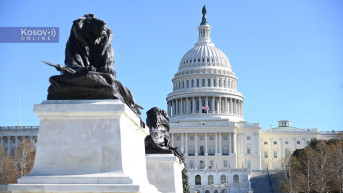
A proposal by Republican United States Congressman Keith Self calling on the US to pressure Greece to reconsider its position on Kosovo and stop blocking its membership in NATO did not receive support from his colleagues at a meeting of the House Foreign Affairs Committee.
On Wednesday, Self proposed suspending $1.8 million intended for international military education and training for Greece because of Athens’ refusal to recognize Kosovo’s independence, RFE reports.
The proposal, in the form of an amendment to a bill supporting Greece, was opposed by Democratic Congressmembers Gregory Meeks and Dina Titus, as well as Republican Chairman of the House Foreign Affairs Committee Brian Mast.
Meeks said the bill aims to reauthorize a bipartisan program for Greece, while Titus stated that the issue of Kosovo should be addressed separately and not linked to the military training program for Athens. Mast also recommended voting against Self’s amendment.
According to the Committee’s statement, the bill authorizing international military education and training assistance for Greece, HR 8019, was approved on Wednesday, while Self claims that Athens’ non-recognition of Kosovo undermines the stability of the Western Balkans and Kosovo’s path toward NATO membership.
“Although there are strong joint military efforts between the United States and Greece, it remains on the short list of four NATO allies that refuse to recognize Kosovo’s sovereignty. These NATO partners join China, Russia, and Serbia in refusing to recognize Kosovo’s independence – a close partner our adversaries refuse to recognize because they know Kosovo is a key pillar of stability in the Western Balkans,” Self added.
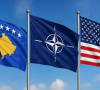
Spain, Romania, and Slovakia are the other three NATO members that do not recognize Kosovo’s independence. Since NATO membership requires unanimous consent from all member states, non-recognition by these countries remains a major obstacle for Kosovo.
Self warned that the Western Balkans region faces instability and that Russian influence in the region is “well known and growing.”
According to him, Donald Trump’s administration established the standard that American taxpayers’ money must be used in the national interest of the United States and that this is the essential issue today.
He believes that Kosovo has demonstrated a commitment to democratic governance, civilian control over security forces, and multiethnic coexistence – elements which, he said, make a strong case for NATO membership.
“As long as Greece, Romania, Spain, and Slovakia refuse to recognize our Balkan ally, there will be no path for Kosovo’s membership in NATO,” Self said.
He added that Kosovo’s membership in the alliance would serve as a counterweight to US adversaries and help prevent another crisis in the Balkans.
“Although I appreciate Greece’s current contribution to the KFOR mission in Kosovo, true stability in the Balkans would be strengthened if Kosovo were granted NATO membership,” Self said.
Democratic Congressman Ritchie Torres also expressed support for Kosovo’s NATO membership and the continuation of the American presence in KFOR.
“Congress wants to see Kosovo’s membership in NATO, bipartisan support for maintaining troop levels in KFOR, and dialogue that does not reward Serbia for concessions and obstinacy,” Benny Stanislawski, spokesperson for Congressman Torres, said in a statement to Radio Free Europe correspondent in Washington Alex Raufoglu.
Together with Torres and Republican Congressman Mike Lawler, Self introduced a resolution in the House of Representatives at the end of April calling on Washington to support Kosovo’s NATO membership.
The three American congressmembers also introduced another resolution, likewise on April 30, calling on the United States to continue its participation in KFOR, NATO’s peacekeeping mission in Kosovo. This resolution comes after reports and discussions in recent months about the possibility that Washington could reconsider the presence of American troops in NATO missions, including KFOR.
The Pentagon previously told Radio Free Europe that there had been no announcements of any changes to the deployment of US forces.
Around 590 American soldiers are currently serving in Kosovo as part of NATO’s peacekeeping mission.
“Without American capabilities, KFOR loses most of its strength and operational effectiveness. That is clear in the region. The attack in Banjska was a reminder that now is not the right time for the US to withdraw from KFOR and from the global stage,” the spokesperson for Congressman Torres said.
He added that the KFOR resolution aims to keep Kosovo on Washington’s agenda at a time when political developments may shift American attention to other issues.
Kosovo seeks to become part of NATO and the European Union. However, countries that do not recognize its independence, declared in 2008, continue to present an obstacle to Pristina’s Euro-Atlantic integration.
Kosovo Online also wrote about this in its analysis, and NATO told our portal at the time that any further step in relations between the Alliance and the institutions in Kosovo requires the consensus of all members of the military alliance.
0 comments