
Joksimovic: EC report no surprise, Dialogue to resume only after Serbia elects new government
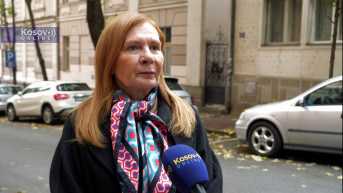
Aleksandra Joksimovic, Director of the Center for Foreign Policy, told Kosovo Online that there was nothing unexpected in this year’s European Commission enlargement reports. She believes that the dialogue on the normalization of relations between Belgrade and Pristina—the key condition for both sides to advance on their European paths—will be unblocked only after a new government is formed in Belgrade.
“The last meeting at a more serious political level was perhaps held in 2023, but essentially there has been no significant movement in fulfilling the criteria and implementing the agreements reached so far, from the Brussels Agreement to the Ohrid Agreement. There is simply a vacuum in which certain developments may even be unfolding in an uncontrolled manner, particularly in northern Kosovo,” Joksimovic said.
She added that the EU-facilitated Dialogue was producing virtually no results, as Pristina had experienced a period of institutional deadlock, while the Student List had now won the elections in Belgrade.
“That victory now needs to culminate in the formation of a new government, but this is a process that takes time. Only after that can we expect a clearer formulation of the future government’s policy regarding the Dialogue, as well as some initial steps in the form of first contacts and a clearer indication of how the new government envisages the continuation of the Dialogue between Belgrade and Pristina,” Joksimovic said.
In her assessment, there is nothing unexpected in the European Commission reports.
“As far as Serbia is concerned, over a number of years we have seen increasingly explicit criticism regarding what is understood as, or referred to as, the European agenda, particularly in key areas such as the rule of law, the fight against organized crime and corruption, media freedom and freedom of speech. These are fundamental values to which the European Union pays particular attention, and a certain degree of backsliding has been identified in these areas. This is no longer merely stagnation; we are now seeing actual backsliding,” she said.
Regarding Kosovo, Joksimovic said that the report did not indicate progress in any meaningful sense.
“There is none; quite the opposite. In that context, the one difference that must be highlighted as extremely important is Montenegro, where the report is very positive and where it is assumed that this could be the last report of its kind. Both Montenegro and the European Union hope that Montenegro could close all negotiating chapters by the end of this year and sign the Accession Treaty by the middle of next year. That would fulfil not only Montenegro’s agenda but also the European Union’s strategic objective of achieving enlargement during the current institutional term,” Joksimovic said.
She added that Albania had also received a fairly positive report and, alongside Montenegro, was the only country in the region with the potential to join the European Union within a relatively short timeframe.
“Albania may be about a year behind Montenegro. Admittedly, the political situation in Albania itself is not particularly stable at the moment, and we are seeing serious protests. Nevertheless, what the European Commission assesses in terms of the reform agenda and fulfilment of the criteria is also positive for Albania,” Joksimovic said.
Asked whether Kosovo could obtain candidate status, Joksimovic recalled that the issue remained difficult for the European Union to resolve given that five EU Member States do not recognize Kosovo’s independence.
“In that context, the unanimity required for decisions concerning European integration does not exist. On the other hand, it is also important to note that the European Union is exploring ways in which decisions in the enlargement process could be taken without unanimity—that is, by qualified majority. Whether that will happen remains to be seen, but it is important for all candidate countries because it would prevent potential conditionality arising from bilateral disputes and unresolved issues, which is also one of the European Union’s objectives,” she explained.
Joksimovic noted that the EU viewed the year now drawing to a close as one of the most successful for European integration in a long time and that the prospect of enlargement was becoming increasingly tangible.
According to her, Moldova and Ukraine represent a new group of membership candidates facing a different set of challenges.
“The European Union will certainly try to find a way to give Ukraine a chance,” Joksimovic concluded.


0 comments