
Vucevic: KFOR must be a barrier against Pristina's attacks
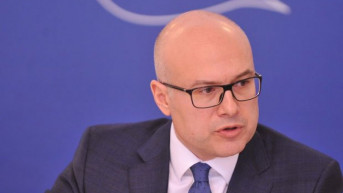
Deputy Prime Minister of Serbia and Minister of Defense Milos Vucevic said that as a part of the Government but also as a citizen of the Republic of Serbia, he was concerned about everything that was happening in Kosovo and possible further escalation due to unilateral moves by Pristina, Radio Television of Vojvodina broadcaster (RTV) reported.
"A few Serbs who remained in Kosovo and Metohija are itching the Pristina Government. I can't say there is fear because if there was, I would not accept this job, but I have concerns. This concern is not something that limits us or blocks us but rather something that puts all the issues in focus. The main issue is the survival and preservation of our country. There are big tests ahead of us. We do not choose the time – the time chooses us. I believe that this Government will be worthy of all the citizens of Serbia. Serbia does not want wars and conflicts. We are not being heroic and we are not euphoric. We are focused and concerned about the preservation of the Serbs in Kosovo and Metohija. We do not want to go to war with the NATO", Vucevic said in the program "Fokus" for TV B92.
Vucevic stated that the Serbian Army was not afraid and was ready to carry out any order of the Commander-in-chief.
"We hope all these sensitive topics will be at the negotiating table – diplomacy, not armed forces," Vucevic said.
The Minister of Defense asked what it meant to make agreements with the mediation of the European Union, and then after ten years of non-implementation of that agreement, someone told you that it no longer existed and that the less favorable part is ahead of you.
"Ahead of you who implemented that same agreement. Ahead of the party that adhered to the Brussels Agreement. We were not enthusiastic, of course, but we understood its purpose – maintaining the peace. And we have had it for the previous ten years. We did not have war conflicts, years 1998, 1999, or 2004 did not repeat. What Kurti did in the middle of Berlin is a slap in the face to the European Union", Vucevic added.
He emphasized that he believed that there was no coincidence that Kurti did it in Berlin, neither that the timing was accidental, nor that the decision to cancel the KS plates was accidental.
Vucevic stated that the Serbian citizens must understand that the issue of the license plates was not a technical issue and that it was a question of the survival of the Serbs in Kosovo, primarily in the four northern municipalities where the Serbs are majority.
"There is Pristina's decision to send special units to replace the commander of the north, to suspend everything – contrary to all agreements of the Brussels Accord, and without the consent of the mayors of these municipalities. There is also the fact that their special police forces make their bases in the north of Kosovo and Metohija, in the Serbian municipalities, which are positioned for interventions that pose a danger to the local Serbs. And, of course, a quiet transformation into the armed forces of Kosovo. If you ask NATO, they will say that they are not working on that, but you will see that some of their members are working on equipping and arming the KSF (Kosovo Security Forces). Building an army in Kosovo is not according to United Nations Security Council Resolution 1244, and it is not allowed according to the military-technical agreement from Kumanovo. Today, KFOR and NATO have a great responsibility. They must be a barrier against Pristina's attack on Kosovo," Vucevic says.
He pointed out that KFOR has been having an interest in protecting the interests of all citizens in Kosovo and that they were aware of their responsibility.
"We must be aware that the countries that have recognized Kosovo's independence consider the decisions of the Pristina administration as legitimate and legal," the Serbian Minister of Defense of Serbia said.
Vucevic assessed that the thesis about the northern Kosovo criminalization was dangerous.
The Minister said that "it is a dangerous fallacy of irrelevant conclusions to think if a member of our people from the north of Kosovo is affected then he is a criminal and that is why Pristina is intervening, and not to think it is an attack on local Serbs".
According to him, the criminalization in the north of Kosovo is something that Pristina emphasizes, but also some individuals from our people accept it, or those who should be part of our people by name and surname, Vucevic says and adds that we hear this in the Serbian parliament and in tycoon media in Serbia.
"If Rosu had invaded Northern Mitrovica because Milan Radoicic lives there or some of them had participated in the murder of Oliver Ivanovic and Pristina had evidence, it would have arrested them. Pristina arrested because of the statement about Racak, that Racak was feigned. They convict you for this in Kosovo. But that's why you will hear from the opposition parties in the National Assembly that the Kosovan Serbs are headed by a criminal gang. Such an irresponsible approach and lack of care for their people and country are disturbing. This is what those who would recognize Kosovo as an independent state say", Vucevic said.
He also added, "For me, it is extremely cowardly to wait for Aleksandar Vucic's move regarding Kosovo, in the hope that it will be wrong. From King Milan Obrenovic, then Peter I and Aleksandar Karadjordjevic, then Tito and the communist regime, then Milosevic, Kostunica, and Tadic – no one has solved the Kosovo knot. It's not resolved, it's always somewhere in between. Today you're waiting for Vucic to stumble over that. For ten years you've been saying that he betrayed or sold Kosovo, and for ten years he's been guarding the Republic of Serbia, and I think he's guarding it in such a masterful way, that it will be studied tomorrow."
According to him, time is needed to see it all clearly.
"Instead of being in solidarity and acting as one, we constantly ask from Serbia to show all its cards in advance. As if only we had to show our tactics in advance. Which country does that? In terms of decisions, the country has a public policy," Vucevic concluded.
comments