
Vucic: The entry of the KSF into Northern Kosovo demonstrates a desire to provoke conflict
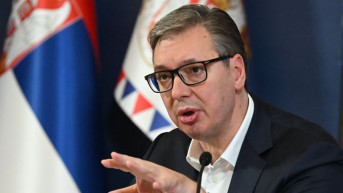
President of Serbia Aleksandar Vucic stated that the recent entry of the Kosovo Security Force (KSF) into northern Kosovo demonstrates recklessness, arrogance, and a desire to provoke conflict, but noted that the Serbs have learned to act wisely.
“This speaks of recklessness, arrogance, and a desire to provoke conflict. But our people have learned to be wise, unlike some who behaved in a similar way in the 1990s, trying to build their own position,” said Vucic in an interview with TV Pink.
When asked to comment on the admission of Self-Determination and the Freedom and Justice Party (SSP) into the Party of European Socialists, Vucic remarked that he does not hold leftists in high regard, and that the expulsion of Robert Fico’s party clearly reveals that organization’s political orientation.
“I don’t think anything good of the leftists. My ideology is different. Wherever they have ruled, they have destroyed their countries. There are exceptions, particularly in southern Europe and in two Scandinavian states. I could easily comment on the fact that Kurti and Djilas were both admitted on the same day, but I don’t believe that the people from SSP, unlike Kurti who chose them as partners, were even consulted,” he explained.
Vucic emphasized that the expulsion of Fico—“one of the few free-minded and independently oriented leaders who neither listens to nor serves foreign interests”—speaks volumes about the orientation of that political group.
“I congratulate Fico for leaving bad company,” he underscored.
The President said he found it more interesting that Albin Kurti is now facing a second round of elections, as his party’s rule is reduced to Podujevo, Stimlje, and possibly Gnjilane.
“I found it more interesting that Kurti has to face a second round of elections, even though he had announced he would hammer the final nail into my political coffin. It turns out, in the end, that his party’s control remains only in Podujevo, Stimlje, and perhaps Gnjilane,” Vucic said.
On the Pro-KLA Rally in Tirana: “Great Albanian Nationalist Rallies Are Not a Problem as Long as They Speak Against Moscow and Beijing”
Commenting on the rally in Tirana in support of former KLA leaders, Vucic explained that such overtly nationalist gatherings are tolerated so long as their organizers declare themselves against Russia and China.
“Imagine if we organized such rallies—or I, as president—on behalf of anyone accused of murdering over 100 civilians. If I were to announce that publicly and call upon Serbs from Slovenia, Croatia, Bosnia and elsewhere to attend—can you imagine the EU’s reaction? They would say people are intimidated, that we are criminals, and that such a rally would be an anti-European act. Yet, a rally like this one in Tirana will be applauded by everyone,” Vucic said.
He added that, aside from being directed against Serbia, there is another underlying reason for such double standards:
“As long as you are against the Russians and the Chinese, you can do whatever you want—you are hailed as champions of democracy. But if you haven’t imposed sanctions on Russia, you can be the most disciplined police force in the world—and you will still be the worst. If we don’t impose sanctions on Russia, as we haven’t for three and a half years, we’ll remain the worst in the world forever. And if we were to impose them tomorrow—which I don’t think will happen—we’d suddenly become the champions of democracy, at least until the issue of Kosovo comes up again. That’s the essence of it all.”
Vucic stressed that Serbia must and should remain on the European path, as it is good and important, but added that the political context must also be understood and an internal dialogue opened.
“We should not be hypocritical; we must know what we want. Do we want EU membership? I believe we can overtake all others in the Western Balkans, and very quickly, because we have the capacity, the people, everything. We are more significant—but we must first define our own goal,” the President observed.
He repeated that rallies like the one in Tirana will not be considered problematic.
“Such great-nationalist gatherings will not bother anyone, because they have declared themselves against Moscow—and they also know how to criticize Beijing wherever they go,” Vucic added.
He emphasized that it is important for the upcoming summit between Donald Trump and Vladimir Putin to yield results, since every positive outcome of that meeting would also mean progress and hope for Serbia.
He noted that while the meeting will not resolve the issue of sanctions—“which I believe will remain in place for several more years”—it could reduce tensions, battlefield casualties, and create a more stable atmosphere overall.
Vucic stressed that Serbia has managed to preserve peace despite numerous external provocations.
“No one has ever answered the question—which I also raised before Andrej Plenkovic—of why a military alliance was formed between Pristina, Zagreb, and Tirana. I didn’t even quite understand what Rama meant when he spoke to me. Why a military alliance? Because of neutral Austria? I doubt it. Say openly that it’s because of Serbia. We have no problem with that—we are not afraid, because we know you don’t have the strength to harm us—but we do understand why you’re calling Bulgaria and others to join, and why a Croatia–Slovenia alliance was formed. We understand it all very well,” Vucic said.
He added that Serbia only expects one thing—that no one demands it become militarily weak or economically fragile so that it cannot defend itself.
“Nothing else. We will not attack anyone, nor will we commit aggression, but we will not allow anyone to destroy our country—as many have tried over the past eleven months. Just look at the media in Pristina and Zagreb—they’re identical, like two peas in a pod,” the President said.
Talks on Developing a Cancer Vaccine
Vucic revealed that he held discussions with Aleksandr Kecmang, head of the Gamaleya Institute in Moscow, which is working on developing a cancer vaccine.
“They explained certain things to me. We have a large percentage of cancer patients. This vaccine is different—it helps those who are already ill. It’s not preventive. It could be up to 85 percent effective. Once the Russians authorize it, we will fully engage in the project. We cannot play around with such matters—we can’t yet produce it, because they themselves have not received all necessary approvals—but we will prepare the infrastructure to be able to implement it,” Vucic said.
He emphasized the importance of medical care and expressed hope that the vaccine would achieve the expected results.
“The current price of that treatment is €100,000, but it is so important that we would be ready to allocate funds to treat a large number of patients,” he said, adding that the health of Serbian citizens is his top priority, along with the country’s progress.
Vucic noted that tests conducted in Serbia show a high number of cancer cases.
“The low-level radiation used during the 1990s gradually damages the body and causes malignant diseases. We have more cancer cases than people in other countries—particularly in areas exposed to heavier bombing. We must do everything to treat our people, and I have great hopes that the vaccine will be available to our citizens by the end of next year, though that doesn’t depend on me. We must prepare for it,” he stressed.
Meeting with Viktor Orbán in Budapest on Monday
Vucic announced that he will meet Hungarian Prime Minister Viktor Orbán in Budapest on Monday to discuss all key topics.
“We will discuss all major issues—from energy to every form of cooperation. We have excellent relations, and I am pleased that Orbán has been given the opportunity to organize what is likely the most important summit of the 21st century—between Trump and Putin,” Vucic said.
He emphasized that the summit will address far more than Ukraine.
He noted that Vladimir Putin plans to explain why a certain type of agreement is being pursued, and added that many global actors will try to obstruct both the agreement and the meeting itself—but that merely holding the meeting would already mark an improvement in the situation.


0 comments