
Vucic: Everyone knows it is impossible to talk to Pristina about anything
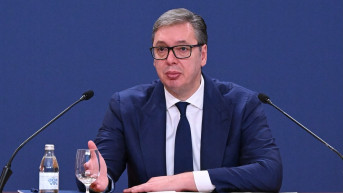
Serbian President Aleksandar Vucic said that no one is forcing Serbia to engage in talks today, because they know it is impossible to discuss anything with representatives of Pristina. Speaking about the issue of Greenland, he noted that those who rejoice at the possibility of an American takeover of the island from Denmark are mistaken, as this would contribute to complete chaos in the world and open dozens of similar questions.
Vucic told TV Informer that Serbian society has not been able to conduct serious discussions on many issues, including Kosovo.
“As soon as someone said anything about Kosovo, they would be labeled a lunatic or a traitor. Today, no one is forcing me to talk, because they know that it is impossible to talk about anything with those in Pristina. The problem is that we were not prepared to discuss this rationally. We have lived to see Pristina form a military alliance with Albania and Croatia, and Croatia additionally with Slovenia. That is why you will notice that some countries in the region will not send troops to Ukraine, so that through their presence they could allegedly keep Serbia under control. Our position is very complicated,” Vucic emphasized.
Asked about current geopolitical developments, such as the seizure of a Russian tanker in the Atlantic, he said that when such relations in the world become normal and commonplace, nothing can come as a surprise.
“What matters in such a situation is that we try to preserve peace, that we try in every possible way to defend stability, to unite. I do not mean political parties, because that will never happen. I mean people starting to think about their country. Often, because things are good for us, we think they can only get better. Christmas is a time to reflect, alongside joy, on what kind of year lies ahead of us, to gather energy and strength, to defend our values, Serbian society as a whole, and the democratic values of a state-building nation,” he explained.
He stressed that it is necessary to understand our basic common goals and to protect one or two generations from conflict, and to be strong enough that no one even thinks of attacking us.
He assessed that the situation in Venezuela will become more complicated due to internal frictions.
“Everyone is asking who betrayed Maduro. Those who want to continue say that everything remains the same, just without him, and that the people supported him, so taking power is merely a technical matter—but it is essential to have popular support,” Vucic added.
He pointed out that Greenland is increasingly closer to Europe and that Europeans are watching how and in what way to respond to Trump.
He said it should not be overlooked that Americans will raise the legal question of why Greenland belongs to Denmark.
He recalled that until the 13th century Greenland belonged to Norway and that, after a statement by a Norwegian minister that they did not need Greenland, Denmark took over the territory.
In that context, he said that despite fatigue, he measured and weighed every word, every comma, in Ohrid, even though Serbia was under great pressure.
Vucic emphasized that the United States has realized that Greenland is a gateway to North America, and that it is also important to Trump that, ahead of the U.S. midterm elections, he must present something tangible—because taking Greenland would represent a major success in securing security.
He also recalled that the new, multi-layered U.S. strategy includes 37 critical raw materials necessary to maintain global dominance.
He said a final agreement with China is expected, which would amount to an agreement on the division of the world, in which the Americans would dominate the West.
He pointed out that Serbia became a target because of raw materials, noting that when the so-called “color revolution” began, it revolved around lithium.
“People fight and struggle over raw materials, rare metals, and we are a unique case of refusing to use what we have, out of spite toward the entire world. That speaks to our strategic frivolity and the irresponsibility of a society unwilling to engage in real dialogue and consider real facts.”
Noting that the United States carried out a masterful intelligence operation in Venezuela, he said Serbia is drawing conclusions from all of this on how to protect itself from any potential aggressor.
In that sense, precisely because of all the changes taking place, he stressed that dialogue with Bosniaks will be very important.
“We must talk to them, even with the most aggressive and the most explicitly anti-Serb oriented, with anyone. I hope there will be an opportunity for that once the staging of the color revolution stops, in which some state bodies, media, and intelligence structures are participating. We must talk to everyone and strengthen ourselves,” the president said.
He said the state will preserve peace thanks to its own strength.
“Thanks to our strength—the strength of the citizens of Serbia who have worked well for 10 or 12 years—we were able to buy, and also to produce, things we never even dreamed of,” Vucic said.
He also cited the words of Azerbaijani President Ilham Aliyev, who observed that in today’s world there is no real law, only alliances determined by the situation you are in, and some small friendships that are stronger than alliances. Even those, he said, apply only to regional friendships and alliances, while “beyond that level, nothing exists.”
It is wrong, Vucic noted, that many people rejoice at what is happening with Greenland, because it would contribute to complete chaos in the world—so much so that neither NATO nor the EU would be able to function easily.
He noted that Greenland is important primarily because of the Arctic Circle and what that will bring in the future, as Americans want to remain there alongside Russians and Chinese, who are major players.
Vucic stressed that he does not rejoice at all in what might happen with Greenland, even though Denmark was the first EU country to recognize Kosovo, after Switzerland, which is not an EU member, and that those two countries led the fiercest campaign and were the most outspoken “patrons” of Kosovo in Europe.
He warned that Greenland would open dozens more such questions.
“And when the game is played in someone else’s yard, it will be played again in our yard as well. That is what I would like to avoid—to preserve our young people, to have them stay here,” the Serbian president emphasized.
Speaking about global trends, not only in Latin America but also in the Middle East and the Pacific, Vucic said that all of this ultimately leads toward Africa.
“You cannot see there who will align with whom or against whom,” Vucic said, noting that China is investing heavily in Africa, that Russians are also present on the continent, while French President Emmanuel Macron, during two African tours, tried to reaffirm France’s position there.
“I believe that in the end there will be a battle over Africa,” Vucic said.
On Somaliland, he recalled that the United States is silent on Israel’s decision, regardless of all the recommendations of the African Union.
“From Somaliland to the situation in the Congo, in Rwanda, relations between Rwanda and Burundi, Rwanda and Uganda… relations between major powers and regional powers, the issues of South Sudan and Sudan, Mozambique, Tanzania… there are many different issues,” the Serbian president listed.
Asked whether there is a chance that Serbia could, in the long run, remain on the sidelines and not take part in any potential conflict, Vucic replied that during his presidential mandate this can be avoided, although it will not be easy, but that he cannot guarantee what will happen afterward.
“Do not forget that many questions remain unanswered. Why the alliance of Pristina, Tirana, and Zagreb? This is not a military-technical alliance that would mean ‘we give you Patriots, you give us Sotas.’ No, this is a military alliance. Bulgaria will not accept this so easily, because it is an offensive alliance. Do not forget that there are people who believe that when a conflict breaks out between part of the West and Russia, it is an opportunity to completely crush former Russian allies, to finish us off once and for all. Such schools of thought exist—I do not think they are dominant or Brussels-based, but they undoubtedly exist in the region,” Vucic said.
He also shared details of a conversation with Danish Prime Minister Mette Frederiksen at one of the European Political Community summits.
“I asked how they expect us to recognize Kosovo and do anything, and what they would do if that happened to them with a large part of their territory. There is no answer to that. An answer does not exist; they only say it is different, but there is no explanation. They say Milosevic committed genocide. And when you ask for facts to support that, they say we should look to the future instead of returning to the past. Why did the Russians leave Kosovo in 2003? And yet the Russians did not bomb us, nor did they take 14 percent of our territory, nor did they kill 2,500 people in 1999…,” Vucic recounted.
He said that 2026 will be the best year economically for the citizens of Serbia, although politically it will be tense and difficult.
Asked whether the global situation will affect Serbia’s economy and investments, Vucic said reports will be published soon, but he believes investments exceeded €3.5 billion last year.
“We surpassed €3.5 billion in investments in 2025, which is not bad, but it is much weaker than in 2024. We lost that due to blockades that devastated the country. In addition, the refinery shutdown added further difficulties. I hope it will resume operations in a few days. There would have been additional increases in pensions and salaries if it were not for the blockades. That is one of the key reasons we had problems. They devastated their own country—and they devastated it,” Vucic explained.
Regarding sanctions on NIS, Vucic said he hopes Serbia will be able to purchase at least another five percent of shares in the coming period, which would give it a greater say and prevent it from being someone who decides nothing.
“Then we would have insight into the finances and everything else. I think that is realistic,” the Serbian president added.
Vucic also said that this year will be an election year, and that snap parliamentary elections will be held in October, November, or December.
As he noted, the election date depends on an agreement among political actors, if they are willing to reach one.
He reiterated that it is important for citizens that peace and stability be preserved.
“And that we unite. When I say unite, I do not mean political parties, because that will never be possible, but people starting to think about their country, to fight, to defend our values—those are the democratic values of a state-building nation,” Vucic said.
He also noted that there is a possibility he could run as a candidate for prime minister.
“There is a possibility that I will run, if research shows that Serbia would head in the wrong direction if I were not a candidate,” Vucic said.
comments