
Vucic from Norway: We are opening a new chapter in our relations; talks about Kosovo and energy
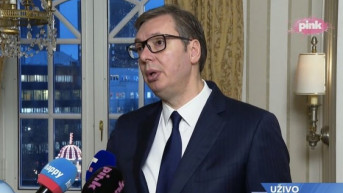
The President of Serbia, Aleksandar Vucic is in Norway on a two-day working visit. He said he had talked about Kosovo, but primarily about bilateral relations, above all in energy, in which, he said, Serbia must make significant progress, and her partners from Norway could help with that, Tanjug reported.
"We talked about all important topics, for us, the issue of Kosovo and Metohija is of great importance. We talked about it fundamentally, because Norway diagnoses the situation on the ground better, more accurately, and precisely than anyone else, understands the situation, and monitors everything. Norway is a country that keeps the peace in the 20th and 21st centuries, after the end of the decades-long conflicts they had and they respect that," Vucic said in a statement to journalists.
He says there was some discussion about the last talks on Kosovo and the results of the agreement; about the necessity to preserve peace and stability, and about the dialogue process.
"I, as usual, did not shift the blame to the other side but tried to show how much more trust is needed to discuss the future differently. They will continue to monitor that process," Vucic said and added that Norway was also interested in the situation in Bosnia and Herzegovina.
During the day, Vucic met with King Harald V of Norway and Crown Prince Haakon, Prime Minister of Norway Jonas Gahr Store, and the President of Storting Masud Gharahkhani.
He said that bilateral relations had been discussed as a matter of priority during the meetings, mostly related to energy.
"Minister Dubravka Djedovic had her talks, tonight we have a meeting with companies and advisers interested in helping or investing in our country. I saw, in all the interlocutors, a huge interest in solving energy problems not only in Norway, but also in Europe, in the Western Balkans, and we discussed how to jointly solve problems in the region," Vucic said.
These, he says, are the questions of how to ensure progress and large investments, how to invest in renewable energy sources, and to make our water and air cleaner.
"It's not a matter of one day, but years ahead of us," Vucic pointed out and stated that for more renewable energy sources, it was necessary to ensure a balance - to build hydropower plants.
That is why, he says, Norway is extremely important to Serbia, pointing out that Norwegian Rystad Energy is the best team in the world.
"Many difficulties are ahead of us, but we have to do it to be successful in the energy sector as in others, for example in public finance. We have to compete in this, not only for this winter. It's not just an issue of oil and gas, but the whole network. We have to do a lot at home, in our habits, to invest money and we will work on that, to ensure the future of the citizens of Serbia," Vucic said.
He noted that along with investments in cleaner energy sources, a way had to be found for Serbia to preserve its resources.
"You cannot use the Serbian wind, the sun, our soil, the earth, and to equally export it to any country. The obligation is to keep it in Serbia; there must always be a pre-emptive right, at normal, rational, prices for our country, and then everything else. If you can fit in then great, and if not, let's find someone who can fit in," Vucic said.
After the conversation with Prime Minister Store, Vucic announced that they discussed numerous topics of importance for the two countries - from bilateral and economic cooperation to plans and projects in the field of energy, infrastructure, and investments.
"I reiterated Serbia's gratitude for the partnership relations with Norway, as well as for the willingness to jointly strengthen and intensify political dialogue and comprehensive cooperation because our countries are bound not only by interests but also by a historical friendship forged in difficult times," Vucic wrote on his Instagram account "buducnostsrbijeav”.
Store organized a working lunch in honor of the President of Serbia.
On Instagram, Vucic thanked the royal family for the warm reception.
"I am grateful to His Majesty King Harald V and His Royal Highness Crown Prince Haakon for the extremely warm reception. We talked about the friendship of our people and the traditional values we share, but also about the numerous challenges we all face today," he pointed out.
Vucic added that he had invited King Harald and Crown Prince Haakon to visit Serbia, to have the honor to return hospitality.
During the conversation with the President of Storting, Masud Gharahkhani, Vucic thanked Norway for its support.
"I thanked the President of Storting, Masud Gharahkhani, for the fact that Norway was always ready to help Serbia, not only with its experience in harmonizing the EU standards and regulations but also in expert and financial assistance to our reform processes, especially in the modernization of our energy system. Today we open a new chapter in the relations between the Republic of Serbia and the Kingdom of Norway," Vucic wrote on Instagram.
In Oslo, the President of Serbia laid a wreath at the monument to the Yugoslavs who died in occupied Norway in the Second World War, RTV reported. Vucic was welcomed at the cemetery with high military honors by the commander of the Akerschus Fortress, Arne Opperud, and the Secretary General of the Ministry of Defense, Frede Hermansen.
Vucic laid a wreath followed by a minute of silence, Tanjug reported.
"With deep reverence, I bowed to the Yugoslav victims, the Prisoners of War, who far from their homeland laid down their lives for freedom, as the greatest heritage of humanity. I am grateful to the Kingdom of Norway for preserving their memory and for showing respect for the war victims from our territories. This commemorative landmark is not only a witness to the difficult times we went through together but also one of the foundations and pillars of the future we are building together," Vucic said.
More than 3,000 Yugoslavs died in camps in Norway, most of them Serbs. They were brought to more than 20 labor camps in occupied Norway.
0 comments