
Vucic: Removal of dinar absolutely unlawful and a direct provocation
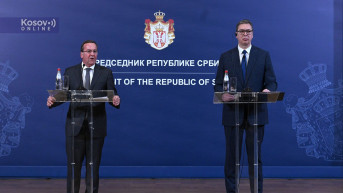
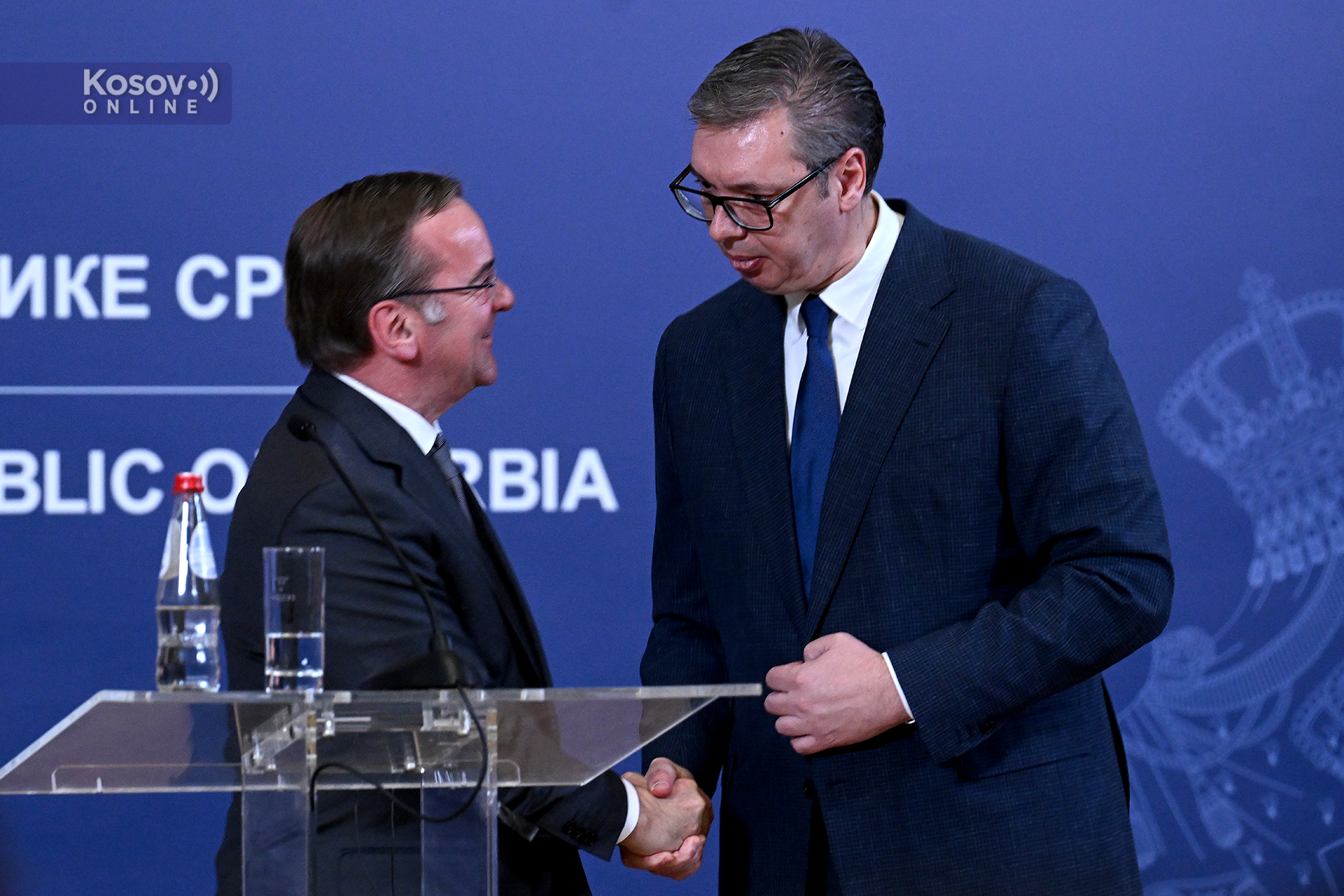
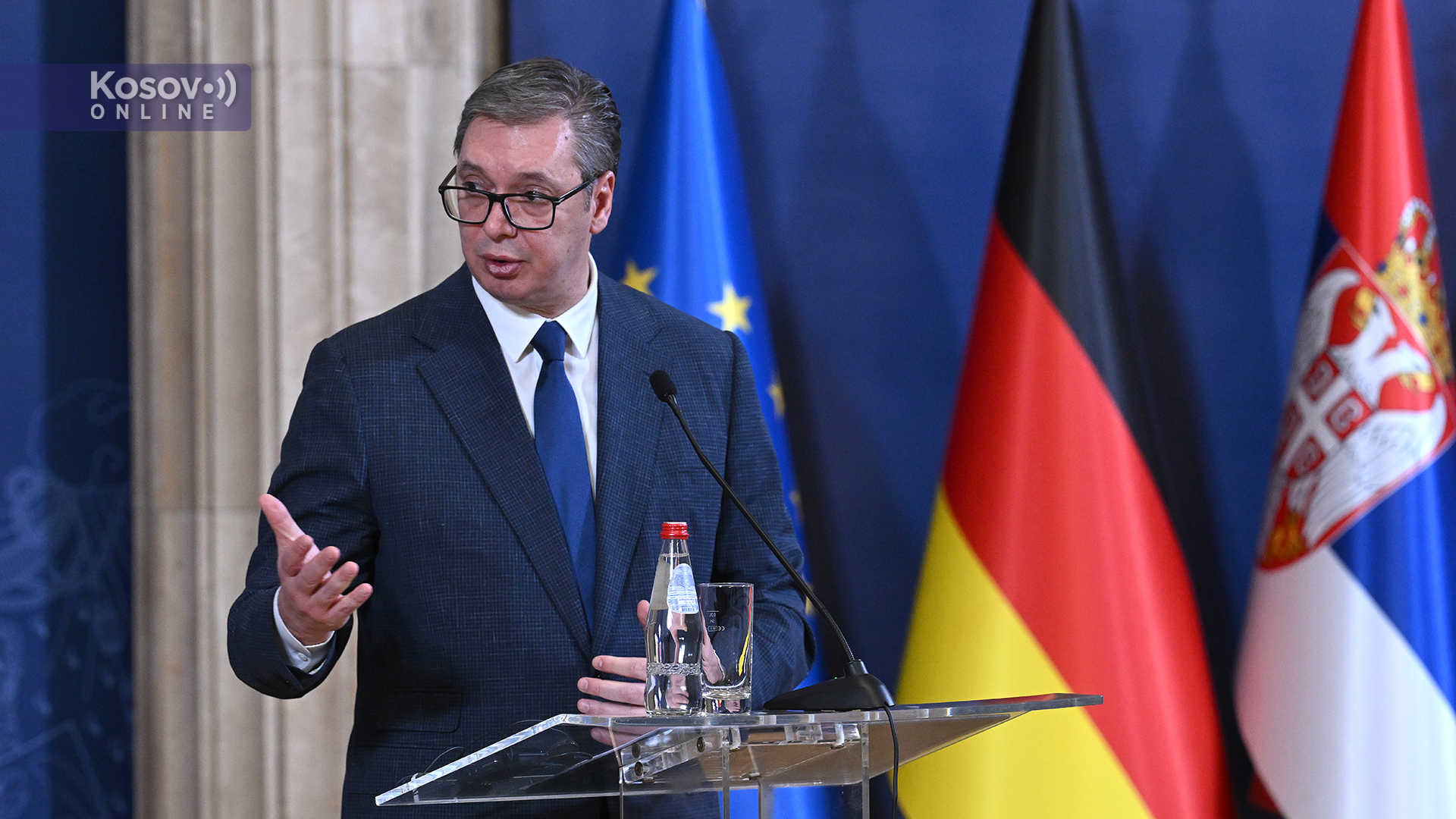
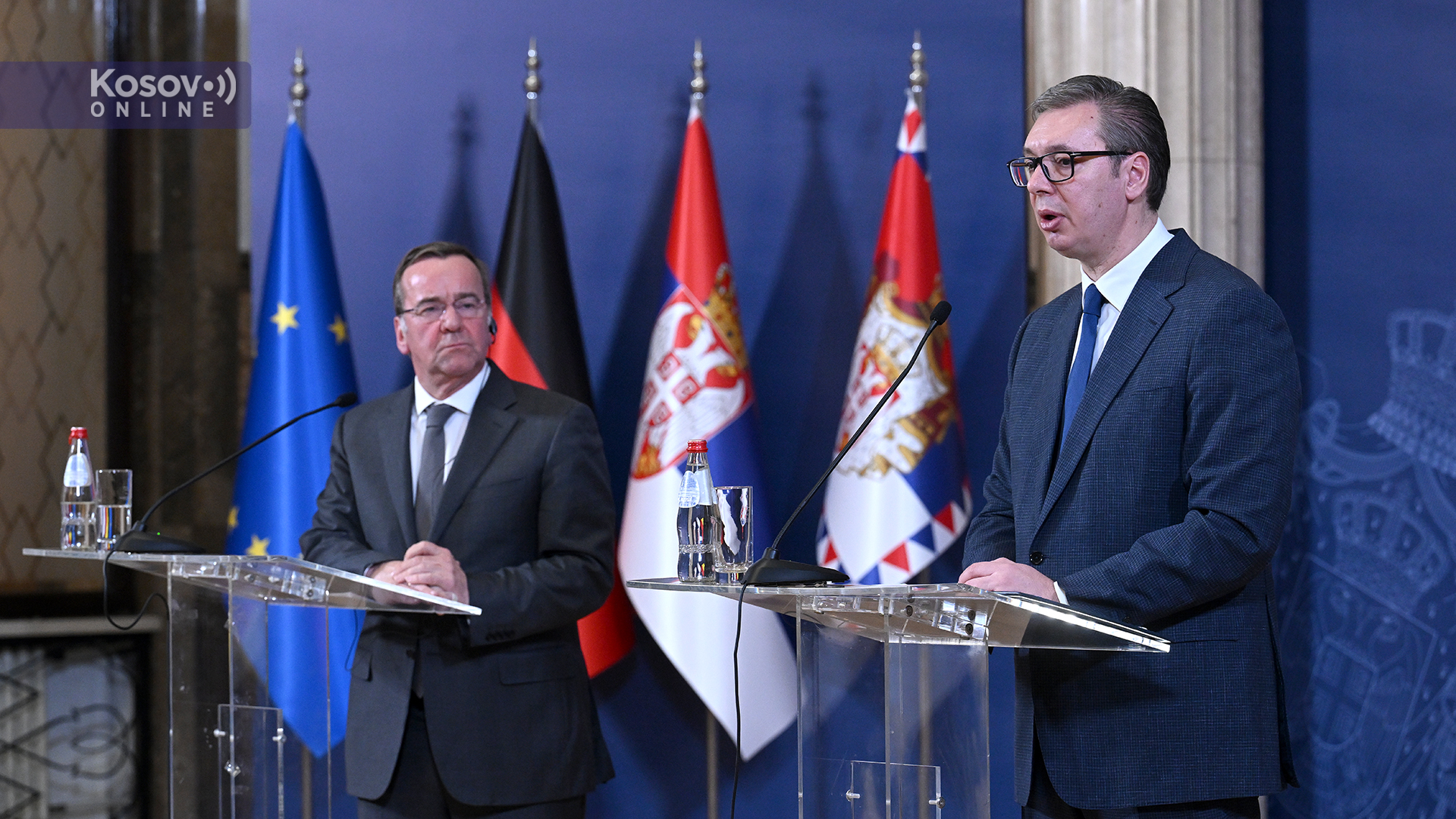
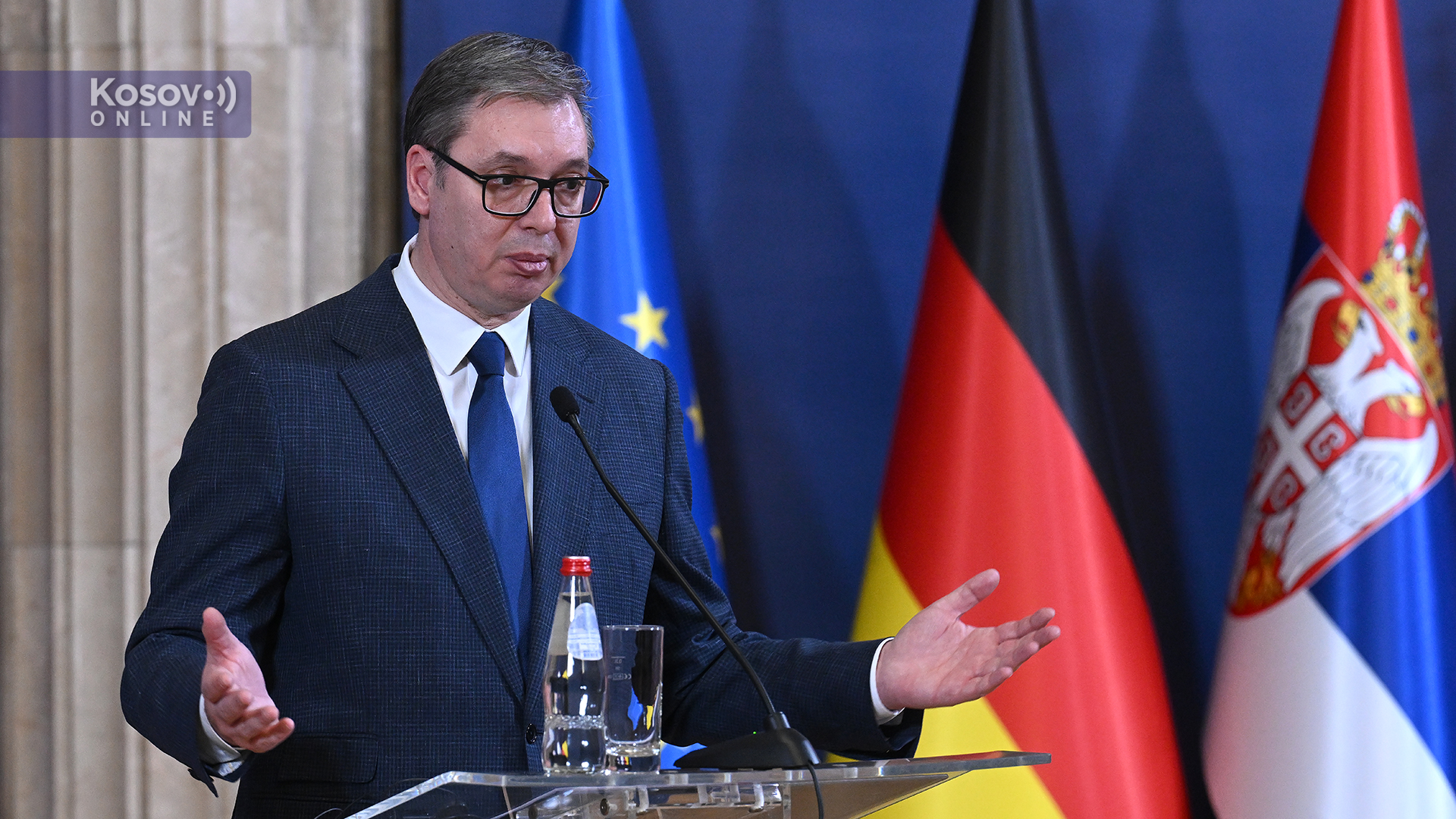
President of Serbia Aleksandar Vucic and German Defense Minister Boris Pistorius addressed the public following a meeting held at the General Secretariat building of the President of the Republic in Belgrade. Vucic stated that the removal of the dinar from Kosovo was absolutely illegal and was not a matter of transitional provisions or additional time, but a direct provocation that no one understood, except that it was aimed at the ethnic cleansing of the Serbs from Kosovo.
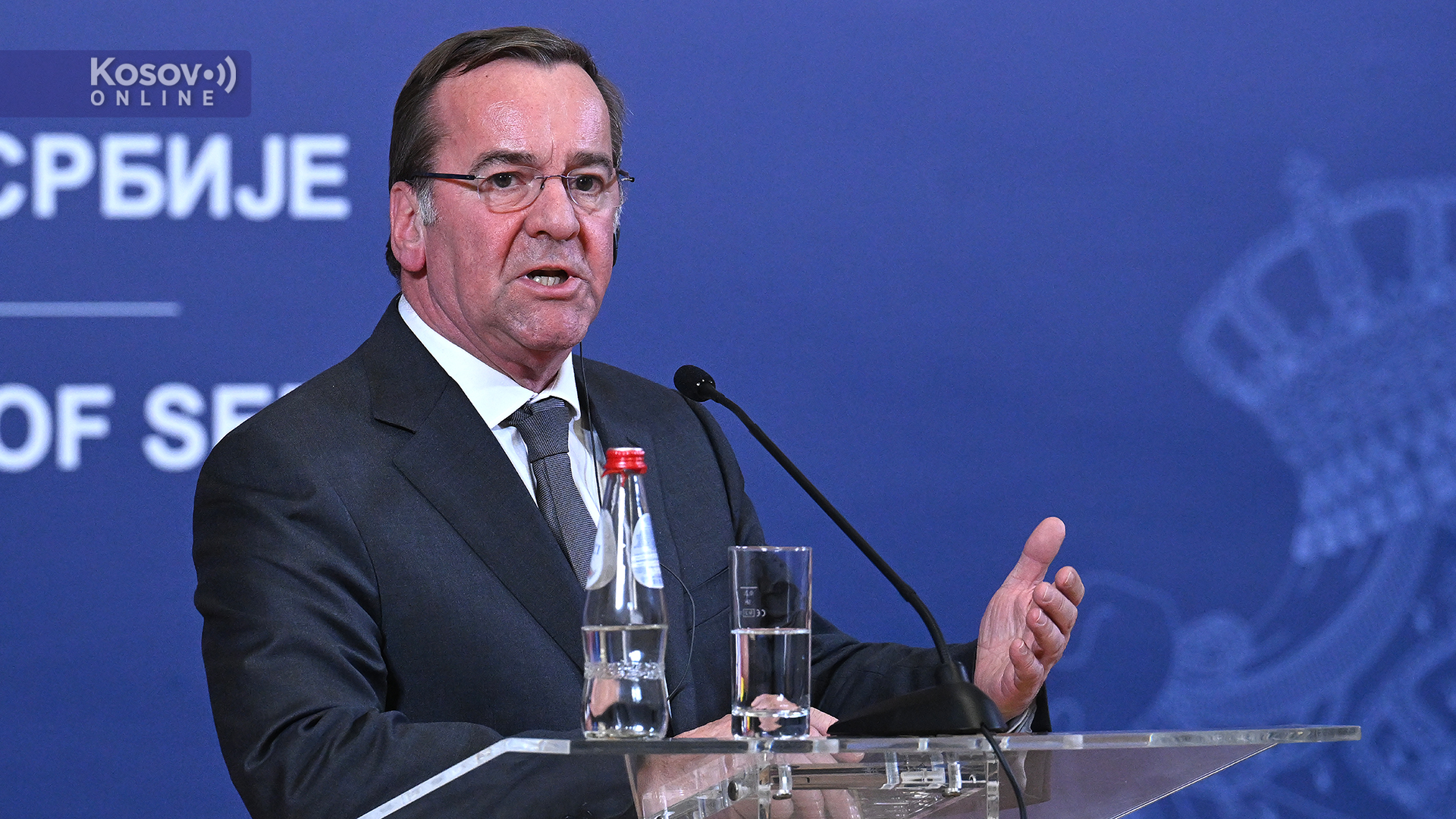
German Defense Minister Boris Pistorius emphasized today, following talks with Serbian President Aleksandar Vucic, that stability and peace in the Western Balkans were of common importance, and that Serbia was a key factor in the region.
At a joint press conference, Pistorius pointed out that he had had a brief but very comprehensive open discussion with President Vucic.
"We have established that we share a common interest in stability and peace in the Balkans. Serbia, as the largest country and economy, has a special responsibility in this regard. At the same time, I see great potential for development in the Western Balkans through regional economic integration and further dynamic approximation to the EU, where stability and good neighborly relations are crucial," he explained.
He said they had agreed that any destabilization of the region harmed the accession perspective.
He also conveyed that they had discussed Republika Srpksa and that they would advocate for the integrity of that territory.
"We are also united in the fact that there can be damage with escalation. Wisdom in political life is that compromises must be made and the past overcome to prevent escalation and tensions. Violence and threats are not a means of political conditioning. Therefore, a return to dialogue and de-escalation is necessary," Pistorius emphasized.
A transition period for the dinar
He pointed out that during his visit to Pristina, he had called for dialogue and said that measures, no matter how legitimate they might be, including the dinar, should not be introduced in a way that would harm citizens, and that there needed to be a transitional period.
"No one should have an interest in unnecessarily provoking tensions," Pistorius emphasized.
He stressed that the reduction of Serbian troops on the border with Kosovo was necessary and that it was decisive and necessary for Serbia to support further investigations into the events of September in Banjska.
He also commented on the war in Ukraine, saying that Russia, despite all warnings, had caused a war that could not be justified by anything.
"That war is terrible for the citizens and represents an attempt to shake our security architecture and our way of life. NATO stands with Ukraine. We will do everything to support Ukraine's fight for its freedom. The law of the stronger does not apply, but the strength of the law. Sanctions are a means and something to which Serbia must and will join," Pistorius emphasized.
He said that Serbia and Germany would work together to end the war quickly and allow Ukrainians to live in peace, as preserving the integrity and sovereignty of all states was important.
"The citizens of the Western Balkans know better than others the importance of freedom and security. Dialogue must continue as it is crucial for EU approximation and regional stability. Serbia and Kosovo must be prepared to compromise and continue to implement the Ohrid Agreement," he said.
"We also discussed the past elections, and we are awaiting the OSCE report. The President informed me that all identified irregularities would be taken into account. Fair and free elections are crucial for a future EU member," he added.
Arming for both Kosovo and Serbia
In response to a question about the German arming of Kosovo, Pistorius stated that Berlin didn't only arm Kosovo, but also provided military equipment to Serbia and other countries as a contribution to the stabilization of the region and enhancing self-defense capabilities.
"I am not aware of any offensive weapons. It's about the right to self-defense," he explained.
He recalled that Germany had recognized Kosovo and considered it a sovereign state, while some, a minority, had not done so yet.
"Irrespective of status and recognition, stability of the region is in the common interest, and a prerequisite for that is nurturing good neighborly relations. This is a crucial prerequisite for stability. We speak a clear language in the Western Balkans. We are interested in a peaceful and stabilized region, as a partner in the EU. And Serbia is the largest economic factor and as such has a special responsibility," he emphasized.
When asked about the purpose of his visit to the Balkans, Pistorius highlighted that it was not about offers but about perspectives.
"I have already emphasized the importance we attach to the Western Balkans' accession to the EU," he added.
Regarding Russia's influence on Serbia, Pistorius states that Germany believes it exists.
He stressed that no path to the EU led through conflicts in the region, and everyone knew that, so the task was to jointly open the doors to the Union.
The German Minister thanked Vucic for his clear words, especially for assuring him that Serbia would not undertake anything that would jeopardize the stability of the region.
Direct Provocation
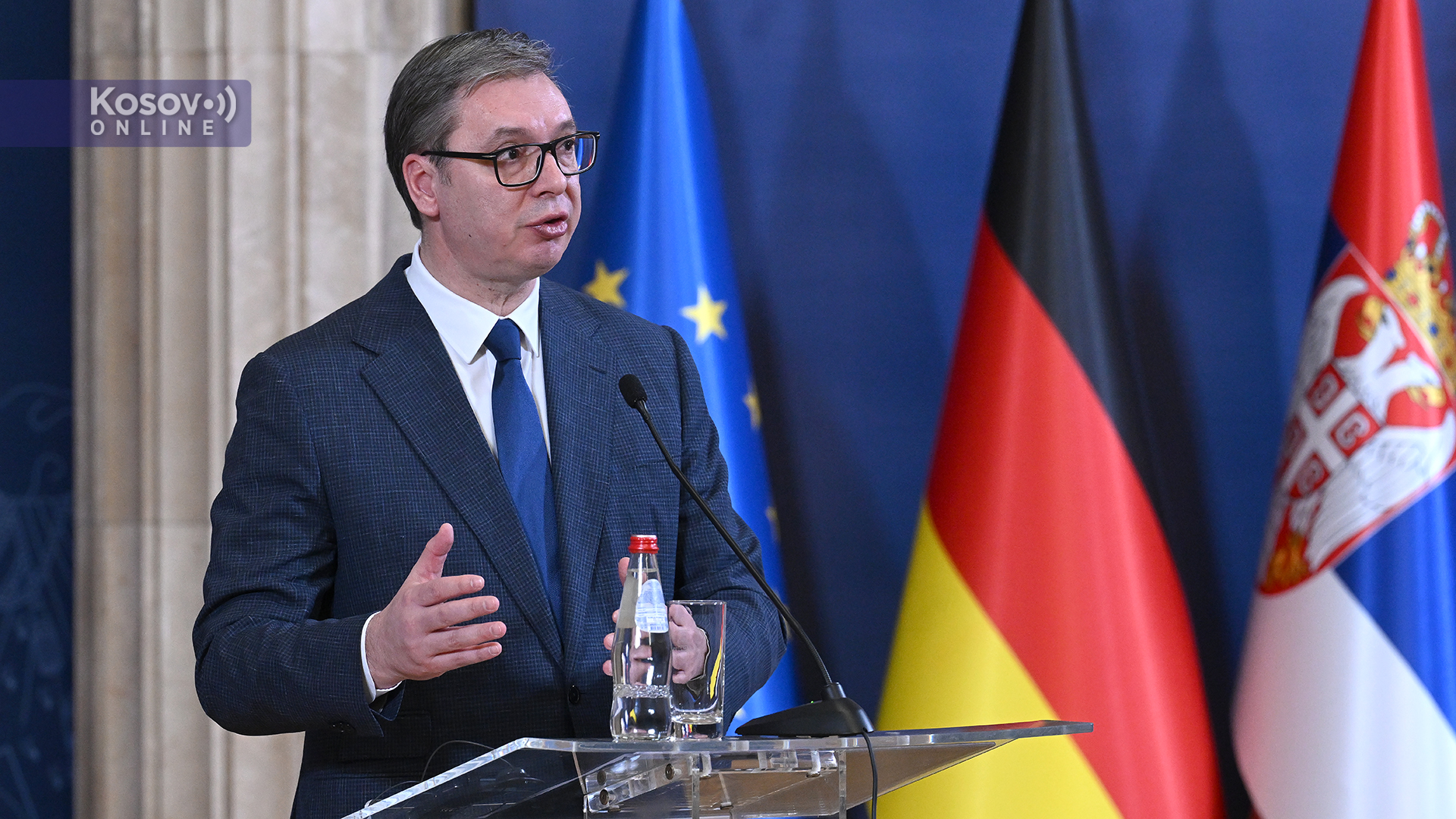
Serbian President Aleksandar Vucic stated that the removal of the dinar from Kosovo was absolutely illegal and was not a matter of transitional provisions or additional time, but a direct provocation that no one understood, except that it was aimed at the ethnic cleansing of the Serbs from Kosovo.
"As for Kosovo, we do not agree. Not regarding the dinar either. Serbia views this in accordance with the UN Charter, Resolution 1244, agreements, and all accepted arrangements. The removal of the dinar is illegal and is not a matter of transitional provisions or additional time," Vucic said at the joint press conference.
He pointed out that funding for the education and healthcare systems was a part of the Brussels Agreement from 11 years ago, as well as all subsequent agreements.
"There is no document that would show otherwise. This is a direct provocation that no one understands, except as aiming for complete ethnic cleansing," Vucic said.
He conveyed that the conversation with the German Minister had been open and entirely honest, from both sides.
He emphasized that Germany was one of the main protagonists of Kosovo's independence and that policy, while Serbia's view was in line with the UN Charter and Resolution 1244.
"We differ, but we understand that dialogue is the only solution to overcome the crisis," Vucic stressed.
Double Standards
He added that Serbia was conducting an investigation, and would continue to do so, regarding Banjska, but he also asked Germany, within EULEX, where, he said, there was noticeable "loud silence", to ensure that an investigation was finally carried out into the attempted murder of at least seven Serbs, including two children, who had just been carrying a Christmas tree, 'cross, and oak' on Christmas Eve in Kosovo and Metohija, regarding those who had tried to kill Dragisa Galjak. “We would like the standards to be equalized," Vucic stated.
He added that there was good communication with NATO and that it was important for provocations to cease.
Vucic emphasized that stability and peace were of crucial importance for the Western Balkans, as well as for all of Europe, and that no one was interested in any escalation or instability.
"I have given my word that Serbia will not surprise anyone with military or other actions. We will maintain stability, and my word means more than many signatures I have seen in the region and Europe," Vucic said.
Cooperation with Ukraine
Regarding Russia, Vucic says he explained to his interlocutor Serbia's specific position, once again invoking the UN Charter and its attitude towards Kosovo.
"I said that everything said about the territorial integrity of Ukraine is true and all that is fine, but it is also true that in the Western Balkans, we know best what that looks like. We in Serbia know what it looks like when you deny someone territorial integrity. And we behave correctly, not endangering cooperation with Ukraine," the President of Serbia pointed out, adding that he would attend the upcoming Western Balkans - Ukraine Summit in Tirana.
He added that Serbia had exceptional relations with Ukraine as if he hadn't seen Vladimir Putin in two years.
"We hide nothing from anyone, nor do we act unlawfully. We are proud to be a free and independent country that wants to continue its European path," Vucic said, thanking for the support in that context.
Internal Affairs
He stated that Serbia's accession to the EU was significant, but also noted that fair and very honest elections had been held in the country, and it would be important for others to interfere less in Serbia's internal affairs.
"We will accept all recommendations from the OSCE and ODIHR; we have invited them to observe local elections because we hide nothing. We have such a strong and clear legitimacy that we have nothing to fear. It is very important to respect international legal norms, but also to reduce interference in the internal affairs of other countries. Serbia has become the subject of interference by many powers, and due to geopolitical interests, many think they have the right to interfere in our internal affairs," Vucic stated.
Regarding Bosnia and Herzegovina, he said that Serbia supported its territorial integrity as an internationally recognized state and had never questioned it, nor the integrity of the entities within Bosnia and Herzegovina.
"We have respected and will respect the agreement of the three peoples, consensus, and the Dayton Agreement, as well as its actual implementation, not interpretations - as someone pleases," Vucic stated.
When asked by journalists about foreign interference in elections and presenting evidence of it, Vucic said that he had not meant Russia when he had spoken about it.
"As soon as we finish the report, we will present it. Is there Russian propaganda? Yes, there is. There is also some other propaganda. Just keep in mind that as much as you are sensitive to interference in your affairs, we are sensitive to it too. We are a serious country and state, and we don't compile reports based on rumors. We will first inform our partners about it to get real answers, not to present things from social media. That's not serious," he explained.
On the European path
He added that Serbia was on the European path and decided for itself.
"I am proud that we are an independent state that makes decisions independently. Nobody except the citizens of Serbia has any influence on the president or the prime minister, and I am proud to represent an independent country to which nobody can dictate," Vucic emphasized.
He also added that Germany was Serbia's most important economic partner, by far the first in terms of trade value. He pointed out that Germany's economic influence was incomparably greater than Russia's.
"I emphasized the importance of the idea of a single market, which we should share with the EU and previously with the region, which is why we have taken steps, not only with the 'Open Balkan' and the Berlin Process but also some unilateral things to show our readiness to participate in it," Vucic said.
Money for the Serbs in Kosovo
The President of Serbia stated tonight that the state would, in one way or another, secure money for the Serbs in Kosovo, but also asked Western partners - if everything was allowed to Pristina, then why call Belgrade to dialogue?
He also announced that at the UN Security Council session, for the first time, he would utter such qualifications, relating to the processes in Kosovo, which, he said, would have legal consequences.
"We are in a difficult situation. Today, Pristina completely unlawfully stopped a vehicle with money, starting from the premise that it is a sovereign state. If that's already the case, I ask Western partners, why do you call us to dialogue? What do you want from Serbia? What do you want from us? If Pristina is entitled to everything - there is no answer to that," Vucic said.
He stated that the state would strive to solve all problems, and as he had said before, money for the Serbs in Kosovo would be secured "one way or another".
"But in the UN, I will speak, if by some miracle they don't close the session, for the first time about some qualifications related to the real processes taking place in Kosovo, which will have legal consequences in the future," Vucic added.
Open to dialogue
In response to a question addressed to the German Minister – based on what international legal act does Berlin arm Pristina, Vucic noted that there was actually no answer to two questions:
"By what international legal act can Kosovo be armed? There are only acts of individual states that have recognized independent Kosovo, but none that would approve it. Regarding the dialogue - we are invited to dialogue because we see the legal nature of the situation in Kosovo differently. If we are here only to verify what Pristina does - then you don't need us".
Vucic emphasized that Serbia was always open to dialogue.
"We have been going to talks, waiting for someone to form the CSM for 11 years, which was not wanted. We have made numerous concessions, and one, not a concession, but an obligation, Pristina has not," the President of Serbia recalled.
He added that he had promised that Serbia would maintain stability and would keep that promise.



0 comments