
Vucic: You cannot change political will; Not everything is merit-based
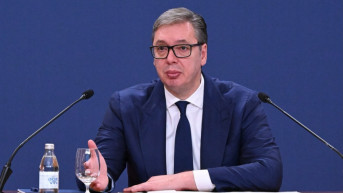
Serbian President Aleksandar Vucic said this evening, commenting on the opposition of several EU member states to the opening of Cluster 3 in Serbia's EU accession negotiations, that political will cannot be changed and that not everything is based on merit.
Speaking to RTS regarding reports that EU member state ambassadors had failed to reach a consensus on opening Cluster 3 during their discussion on Serbia, Vucic said that two or three countries had been strongly opposed, while several others had merely voiced reservations.
He stressed that what troubled him most was the fact that certain Serbian officials had worked diligently to meet every requirement set by the European Commission and to demonstrate that Serbia possessed both the capacity and the determination to implement reforms faster than others.
According to Vucic, this was also acknowledged by Croatian Member of the European Parliament Davor Ivo Stier.
"But you cannot change political will. As I said, you will see that not everything is based on merit," Vucic emphasized.
He added that there was no reason either for despair or excessive optimism, as the outcome had been expected.
"For almost five years we have seen no progress—not because we have failed to make progress across all sectors. We are catching up with and overtaking everyone who has been ahead of us for years and even decades. But political will is something entirely different," Vucic stressed.
He thanked European Commission President Ursula von der Leyen, European Council President António Costa, French President Emmanuel Macron, German Chancellor Friedrich Merz, and Italian Prime Minister Giorgia Meloni for supporting Serbia.
"I also thank everyone who openly makes it clear that they have other objections to Serbia. We should be more concerned with which motorway or railway we will open than with which cluster. That is real life. Even the best possible performance cannot always influence such decisions. Everything unfolded as expected," Vucic explained.
He said that all the Baltic states, the Nordic countries and the Benelux countries had expressed opposition, with their principal objection relating to Serbia's refusal to impose sanctions on Russia.
"Introduce sanctions against Russia and suddenly you become a highly democratic country. Ban Russian media and you become even more democratic... We have not made such a decision," Vucic said.
He pointed out that Serbia respected Ukraine, describing it as a friendly country that had not recognized Kosovo and that had included respect for territorial integrity, in accordance with the UN Charter, in the declaration adopted at the Belgrade gathering. He added that Russia was also a friendly country and likewise supported the principle of preserving Serbia's territorial integrity.
"We are acting responsibly and will continue to build good relations with both Kyiv and Moscow. We will not change our policy because someone seeks to pressure us through blackmail," the Serbian president said.
He observed that it had become increasingly difficult to remain free and independent in today's world, citing Spain as an example.
Vucic also recalled criticism over Serbia's arms exports to Israel, followed by criticism over the attendance of a Serbian minister at the funeral in Tehran of Ayatollah Ali Khamenei.
"I have always taken the blows upon myself—that is my policy. What they did not tell you is that Serbia would not even have been represented in Bratunac had I not remembered it, because no one in the government did. Iran has not recognized Kosovo, and someone has to bear that in mind. Yet the very next day I spoke with Benjamin Netanyahu. But you must have the courage to fight for your country and withstand pressures that many people simply cannot endure," Vucic said.
Speaking about Croatia's opposition, he said it was neither new nor unexpected, claiming that Croatia would like to see Serbia on its knees, humiliated and weak.
"They would like to do to Serbia what they are doing to Montenegro. As long as I am President of Serbia, that will not happen. They even had to publish the IMF forecast showing that Serbia will rank among Europe's top five countries in terms of economic growth over the next five years. That is something the citizens of Serbia have earned," Vucic said.
He also claimed that Croatia had complained about Serbia to NATO during the Alliance's summit in Ankara, urging it to pay attention to Serbia's military build-up.
"Serbia is not weak and will never again be weak or anyone's punching bag. Anyone who believes they can threaten Serbia's territorial integrity or conduct aggression against our country would face losses one hundred—or even one thousand—times greater than those sustained during the NATO aggression, particularly in terms of military equipment and assets. No one should entertain such illusions. I say this above all because it serves as a deterrent. We are ready to defend our country and our freedom, and today we are far stronger than we were before," Vucic emphasized.
Asked about what he described as "foolish remarks" made by Croatian President Zoran Milanovic, Vucic declined to respond.
"We respect Croatia, which has an exceptionally strong military. They are part of NATO; we are not. We respect NATO, but we want to determine our own destiny. That is why we will never again become anyone's prey—not only as we were in 1999, but also during the wars of the 1990s and even during the Second World War," the Serbian president said.
Turning to the economy, Vucic said Serbia's economic growth was accelerating, while inflation stood at 2.7 percent in June, lower than the EU average.
However, he expressed concern over the renewed conflict involving Iran and the United States.
"We already have a problem tomorrow. The conflict between Iran and the United States has flared up again because the root causes have not been resolved. There is no end to the stalemate. This creates problems for us because of rising oil prices. Once again, the state will have to spend public funds to keep fuel prices under control. In addition, 50 percent of Russia's refineries have now been destroyed. Oil prices are soaring again, which means higher fuel prices unless we intervene," he explained.
Vucic also remarked that, in the past, countries advanced primarily by becoming EU members, but said this would not be the case for Serbia.
"Serbia will not become a member of the European Union anytime soon. Neither will Ukraine, nor many others. Ukraine is too large, and for this region Serbia is also too large to be accepted, especially given issues such as Kosovo, our relations with Russia and China, and increasingly also with the United States. What matters for us is raising our standard of living. We should live rationally and focus on how life can become better for our own people," Vucic concluded.

0 comments