
Vujinovic: Arming of Pristina shows Erdoğan’s support for Kurti; Drones arrived ahead of elections
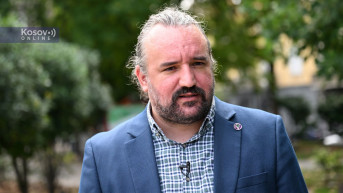
Security studies researcher Nikola Vujinovic stated that the “Sky Dagger 15” drones delivered to Kosovo represent a continuation of Turkey’s policy of arming Kosovo Albanians and that President Recep Tayyip Erdoğan clearly supports Albin Kurti as a political force in Kosovo. However, he emphasized that he does not see this as a security threat to Serbia.
Vujinovic recalled that Turkey has been supplying weapons to Pristina for years and, alongside other NATO allies, is the most active in doing so. He also mentioned earlier deliveries of Turkish-made “Bayraktar” drones, as well as the announced construction of a munitions and armored vehicle factory.
“All of this clearly reflects support for Kosovo’s independence and for the Albanian factor in the Western Balkans. The timing of this drone delivery to the Kosovo Albanians is highly symbolic—it clearly shows that Turkey and President Erdoğan are openly backing Kurti as a political force in Kosovo and Metohija. Considering that local elections are just days away, which will show whether the year-long political crisis surrounding the parliament has affected Self-Determination or not, this is undoubtedly a form of Turkish support,” he said.
He pointed out that the fact that the Albanians have received these drones does not pose a threat to the stability of the Western Balkans.
“Given that during our parade in Belgrade we also saw a notable number of what we call ‘mosquitoes’—our version of loitering munitions—it’s clear this is more of a symbolic act,” Vujinovic said.
He stressed that this move carries a political message.
“This is not only a political message to the Kosovo Albanians and their voters in the upcoming local elections—it is also a message to the entire Western Balkans that, in addition to the Albanians’ Western allies, there is also an Eastern ally. Together, they share two political goals: first, resolving the so-called Albanian question in the Western Balkans, which in their view culminates in a ‘Greater Albania’; and second, dealing with the Serbian factor, which remains an obstacle to that agenda,” he noted.
He added that this is also a message to the Western allies themselves.
“It’s meant to show that this region is not solely their playground. The fact that they have accepted a Turkish general once again as KFOR commander suggests there have been some new realignments,” he said.
Vujinovic emphasized that the overall reaction shows Serbia remains the key actor in the Western Balkans on whom peace depends.
“As long as we remain patient, politically condemn such actions—as we should—and invoke legitimate documents like UN Security Council Resolution 1244, which stipulates that the Kosovo Security Forces should not even exist, let alone be so heavily armed, we can see that regional stability and the avoidance of escalation largely depend on Serbia’s restraint,” he said.
He added that President Vucic’s statement clearly indicates that Serbia’s patience may be running thin.
“I personally expect some form of additional political violence before the local elections, and it remains to be seen how our state will respond to all that and to the final electoral outcome. We can already see attempts to buy the votes of even Serbian citizens for political parties that support Kosovo’s independence. That’s why President Vucic’s statement is extremely significant—it shows that Serbia’s patience may be wearing out,” Vujinovic said.
“Recently, President Vucic met with President Erdoğan. I believe this issue was discussed at that meeting, and judging by Vucic’s reaction, Erdoğan likely denied that such deliveries would occur in the near future. So, from a purely security standpoint, this drone delivery is disappointing, as it demonstrates the support that a major regional power like Turkey provides to what I would call an illegitimate entity on our territory. However, from Serbia’s national security perspective, it does not pose any significant threat,” he stated.
He concluded that Kosovo is trying to bring this process to completion.
“Someone, somewhere—though in my opinion completely unrealistically—has envisioned transforming the Kosovo Albanians into a military force capable of matching our army. That’s simply illogical and impossible: the numbers, skills, and history all say otherwise. But someone decided to pursue it, perhaps to keep us under pressure, distracted from other issues like Bosnia and Herzegovina, and so on. The process will continue. The announced construction of that so-called munitions factory shows that increasingly complex weapon systems will likely be supplied to the Kosovo Albanians. Once again, I must stress that I don’t see this as a genuine security threat to the Republic of Serbia, but I do see it as a development that will affect our future political relations with the sponsors of Kosovo’s independence,” Vujinovic concluded.
0 comments