
Vujinovic: New elections in Kosovo most likely
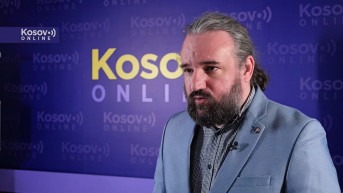
Security studies researcher Nikola Vujinovic stated that despite the real possibilities for forming a new government, deep intra-Albanian hostilities make snap elections in Kosovo the most likely outcome.
"If we consider various possibilities, we can see that there are real foundations for forming coalitions and a government. However, I believe that intra-Albanian animosity is so strong that neither side is willing to talk to the other, let alone consider forming a coalition," Vujinovic told Kosovo Online.
He pointed out that the results of the February elections give the opposition hope that they will secure more votes in the next elections.
"I think Kurti’s 48 MPs will decrease in the next elections because Kosovo’s emerging problems are being attributed to the Self-Determination Movement and Albin Kurti," Vujinovic explained.
He warned that new elections could "generate new violence against the Serbian community."
"We are already witnessing attempts at violence and efforts to introduce the so-called 'Bosnian model' into Kosovo's elections. As you know, in Bosnia and Herzegovina, the Bosniak community elects the Croatian representative by voting in Croatian elections. This is what has now happened to the Serb List. In areas around Prizren and Pec, Albanians voted for Serbian community representatives from other political parties, causing one Serb List mandate to go to another Serbian party. I believe this will only continue and intensify," Vujinovic stated.
As a possible scenario, he does not rule out the formation of a new government under pressure from Kosovo's allies, primarily the United States.
"If they order a coalition to be formed, it will be formed. However, in that case, the Serb List and the Association of Serb Municipalities will be factors that must be considered in the new government," Vujinovic argued.
He doubts that a new government could be formed through MPs from Self-Determination switching sides, as some Pristina analysts speculate.
"Albanian society is not particularly known for such political 'defections,' which we see in other communities across the Balkans and Europe. I am skeptical," Vujinovic said.
He is also convinced that as soon as such a possibility appeared in the media, Albin Kurti began "analyzing" a list of potential defectors.
"If he suspected anyone, we will see it in the form of revoked mandates," the analyst concluded.



comments