
Vujinovic: Resolution cosponsorship expected, the West doesn't consider the region's future
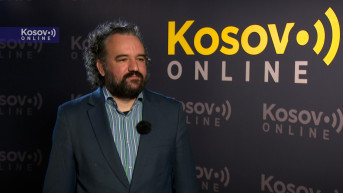
Security study researcher Nikola Vujinovic assesses that the Resolution on Srebrenica and the cosponsorship of regional countries are an expected precedent and political weapons, but the West hasn't thought about the consequences of its adoption for the region's future.
"This is something that was expected and is completely, I dare say, without long-term thinking. The US, UK, and Germany may or may not be in these parts, but we will always be here, our descendants will be here. And someday, someone will complain about supporting a resolution against Serbs, which will be pointless," Vujinovic assessed for Kosovo Online.
He emphasizes that he is not surprised that many Western Balkan countries, such as North Macedonia, Albania, and Bosnia and Herzegovina, are among the cosponsors. He explains this as "anti-Serbian sentiment."
"Why these states? Well, they are all elites that are under the control of certain major powers. In order to stay in those positions, including the Montenegrin DPS, they go along, as they say. I am completely convinced that in North Macedonia, if you were to privately talk with any statesman or Macedonian, they would say, 'Forget about it, we were told to support it.' It's clear for the Albanians, as well as for Bosnia and Herzegovina, and even for these Dukljans, Montenegrins, or Committees in Montenegro... These are simply anti-Serbian attitudes, and they will support anything that is anti-Serbian," Vujinovic asserts.
He adds that it was crucial for the West to involve as many countries in the region as cosponsors of the Resolution because it sends a clear message to other UN members.
At the same time, he highlights that this makes Serbia's fight before the UN General Assembly to prevent the adoption of such a document more difficult, but he believes Serbian officials are handling it successfully.
"In the past few days, the president has spoken with 25 African countries. Someone might ask why. Well, they all have an equal vote in the General Assembly. If this were in the Security Council, we wouldn't worry because Russia and China would veto it. But in the General Assembly, we are close to it not passing," Vujinovic believes.
He claims that the Resolution is a continuation of political pressure on Serbia.
"This resolution is another continuation of political pressure because of our foreign policy, because of our attempt to remain neutral. Essentially, it's a precedent. At this moment, there is genocide in Gaza, Ukrainian forces are pushing their own people into slaughter, and we are talking about Srebrenica, which undoubtedly was a war crime, but to highlight it as an example of genocide is truly pointless," Vujinovic says.
Asked whether Kosovo could exploit the adoption of the Srebrenica Resolution since it has previously announced a lawsuit for genocide against Serbia, our interlocutor has no doubt that such a UN document will become a political weapon for which – as he emphasizes – "the sky is the limit."
"The fact that this Resolution will be politically adopted and accepted in the General Assembly – the sky's the limit for what they'll do next. We have heard from Sarajevo that war reparations will be sought despite the fact that the Hague court ruled that Serbia didn't participate in that crime. However, political stories, political arguments, and then Kosovo Albanians can really file that lawsuit. Now, the question of the lawsuit is often not about it being resolved but about reputation. We have EXPO 2027, and someone 'sticks' a genocide lawsuit on Serbia. I'm not quite sure every potential exhibitor will be willing to come to a 'genocidal state'," Vujinovic thinks.
He adds that another problem is that most leaders in the region build their popularity on "fighting against Serbs."
"The stability of Kurti's regime is questionable; he is under the control of the US, more so Germany, and he can very easily be replaced, and he can't gain any legitimacy among his people except in the fight against Serbs. That Is the only legitimacy that politicians in those countries are sure of. We saw Croatian elections and coalition negotiations where Penava from the Homeland Movement refused to form a coalition with Serbs just because they're Serbs. That is straight-up cultural racism," Vujinovic concludes.
Asked whether the decision of some countries to cosponsor the Srebrenica Resolution will affect further bilateral and economic cooperation in the region, he emphasizes that for now, it is an enigma because some political elites in North Macedonia have already hinted at withdrawing from the Open Balkan initiative, and the same goes for Albania.
"From an objective, even pro-Serbian point of view, I don't understand how we cooperate so successfully with Albania. Serbian tourists go to the Albanian coast, labor moves without IDs, trucks pass borders without problems, and yet, at the political level, we have issues. I would attribute this to our benevolence, Serbia's goodwill. How long it will last, I can't determine, but fundamentally, relations in the region are bad because of Serbia. If we weren't this accommodating, this region in Europe would be much worse off today because the behavior of our neighbors towards us is truly deserving of a harsher word than just bad," Vujinovic believes.



0 comments