
Vukadinovic: Serbia should declare the EU as a party in the process, not a mediator in the dialogue
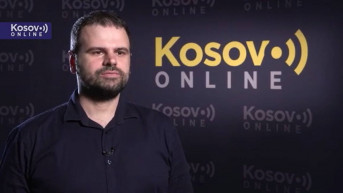
Igor Vukadinovic, a research associate at the Institute for Balkan Studies, assesses that due to its bias, Serbia should acknowledge that the EU does not have a neutral role but is one of the parties in the Kosovo dispute and that therefore this issue should be returned to the United Nations.
"In my opinion, Serbia should publicly acknowledge the role of the European Union as a party in the Kosovo dispute, not as some third, impartial side. Therefore, it should request that all negotiations related to Kosovo be returned under the auspices of the United Nations with the participation of other major and significant countries, primarily Russia and China, but also all other countries in the United Nations. In that way, Serbia's position in those negotiations would be somewhat different," Vukadinovic stated for Kosovo Online.
He emphasizes that returning the dialogue process to the UN would halt the blackmailing and lead to a form of negotiation where both sides could present their red lines, and issues would gradually begin to be resolved.
"The entire concept of negotiations would be different. It wouldn't be in this form where one side, the West, blackmails the other side, but it would perhaps be in a form of negotiations between two sides, where both sides present their red lines, where they try to find the smallest common denominator, places where they can agree, and thus gradually resolve problems, not as it has been done in the past ten years, abruptly and violently changing the situation on the ground in Kosovo to the detriment of one side and in favor of the other," Vukadinovic explained.
He believes that it is unrealistic at this moment to expect the dialogue to be left to the representatives of the two nations because this issue has been internationalized, and the West has already aligned itself as an active advocate of the interests of one side, both in the case of Kosovo and Bosnia and Herzegovina. "The West has long since aligned itself in these disputes as an active advocate of the interests of one side. Thus, the Albanian, as well as the Bosniak elites, have no interest in negotiating directly with the Serbian side when they have a powerful West that will uncritically accept all their demands and positions," this historian said.
Vukadinovic explains that this is the concept implemented by Sarajevo because instead of negotiating with Republika Srpska, it intervenes with Western centers of power, which then pressure both RS and Serbia.
"And that is the concept being applied. In this way, Bosniaks communicate with Serbs. Similarly, Albanians have been communicating with Serbia in the past two decades. Some of their basic, vital national interests are automatically accepted by the West. And these do not become their demands, but the demands of powerful Western countries, NATO, the European Union, America, Germany, Britain, and France. Thus, Serbia is not facing the demands of Albanians, but the demands of the so-called international community," he believes.
When asked whether he sees the possibility in the future for Serbs and Albanians to decide their fate on their own, he said this will only be possible in the event of significant geopolitical changes.
"There is certainly a possibility, but the key prerequisite would be significant geopolitical changes in the balance of power on a global level, where the West would lose its monopoly on force, its monopoly on imposing its interests and concepts on other countries of the world. In such conditions, in such a world, Albanians would then find themselves in a position to opt for direct dialogue with Serbs, that is, for direct negotiations between the two sides in an attempt to find some common compromise solution," Vukadinovic concluded.


0 comments