
Vuletic: It will be interesting to hear the Trump administration's position on the judicial jurisdiction proposal
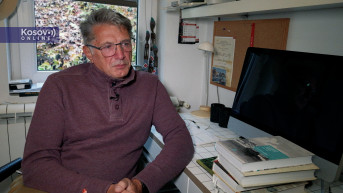
Sociologist Vladimir Vuletic stated for Kosovo Online that the U.S. State Department's assessment—declaring that the Serbian Government's proposed Law on Prosecuting Crimes Committed in the Territory of Kosovo constitutes a violation of dialogue commitments—stems from the American perspective that Kosovo and Serbia are two independent states. As such, Serbia has no authority to interfere in matters related to criminal or any other prosecution in Kosovo.
Considering that alongside these criticisms directed at Belgrade, the U.S. is also demanding that Serbia bring Milan Radoicic to justice as someone allegedly responsible for the events in Banjska in September last year, Vuletic noted that the expectation is essentially for Serbia to extradite individuals potentially sought by Kosovo courts, despite Serbia's position on these issues being defined by its Constitution.
"Kosovo and Metohija is a territory currently not under the jurisdiction of Serbian state authorities, but that does not mean Serbia relinquishes its right to assert jurisdiction as defined by the proposed law. This act, which is both judicial and political, represents Serbia’s response to the inaction of KFOR and other institutions in addressing the increasingly severe violations of human rights and freedoms of Serbs living in Kosovo and Metohija, as well as the behavior of the provisional institutions there. This conflict has long existed, not just between Pristina and Belgrade, but also between Washington and Belgrade," Vuletic explained.
He further added that the proposal for Serbia's judicial jurisdiction in Kosovo comes at a time of impending political transition in Washington, making it intriguing to see how the incoming U.S. administration will respond to this proposal, which is still awaiting parliamentary approval.
"This will serve as a kind of test to see how the Trump administration views the resolution of this conflict and what their stance on the matter will be. I hope that the Trump administration, if not in practical solutions, will at least be closer in political spirit to what could be called compromise, which aligns with Serbia's policy," Vuletic noted.
He emphasized that both the President of Serbia and all Serbian institutions have consistently advocated compromise as the solution. However, Serbia's policy toughened when it became apparent that the other side not only lacked any ideas for compromise but interpreted Serbia’s proposals as a sign of weakness.
"The Kurti administration has taken the position that there is essentially nothing to negotiate in the talks—or if there is, it would only happen after mutual recognition between Belgrade and Pristina," Vuletic pointed out.
According to his assessment, the current U.S. administration was closer to Kurti's perspective, fully supporting policies derived from such an approach without questioning them. In contrast, Vuletic speculates that Donald Trump's administration might adopt a somewhat different approach.



0 comments