
Vuletic: Movement for the People and State would ease Serbia's position in negotiations, revealing those advocating Kosovo recognition
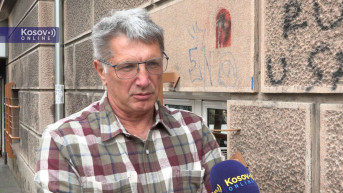
Sociologist Vladimir Vuletic told Kosovo Online that the People's Movement for the Nation and State, announced by Serbian President Aleksandar Vucic, should create a watershed moment in Serbia concerning Kosovo and Metohija, demonstrating a clear distinction from those merely nominally advocating for the preservation of Serbia's state legal status.
He says that in Serbia, for a long time, there has been an unspoken division regarding what and how to proceed concerning Kosovo in the future.
"Very few individuals openly advocate for Kosovo's independence. We had a situation with Cedomir Jovanovic's party in the past, and they, of course, lost public support, so no one does that publicly today. However, many, in one way or another, advocate for such an option, and I think creating such a movement would expose the intentions of those advocating for such policies. And I think it's finally time to do that," Vuletic says.
He adds that it would be ideal if the movement consisted of the majority of political parties and influential individuals, and there is no doubt that it will be so.
"On the other hand, and more importantly, it would show on the international stage who in Serbia can be relied upon when it comes to the increasing pressures this year regarding the Kosovo independence issue. In that sense, if a bloc is created that is strong enough and includes various parties, not just those in power, because this is not just a question of government and opposition but a question of Serbia's future, then the chances of those plans being implemented would be greatly diminished. So, this is primarily about the attitude toward Kosovo," our interlocutor says.
If the movement were to gain broader dimensions, Vuletic says there is no doubt it would ease Serbia's position in Brussels negotiations.
"In the end, the policies of great powers always boil down to how to create or find a crack in the entity being negotiated with, which would undoubtedly complicate the chances for those trying to relatively quickly persuade Serbia to, we can freely say, some form of capitulation," Vuletic says.
The struggle over Kosovo, he points out, cannot be reduced solely to the question of Kosovo's future, because we all know, he adds, that the whole issue has been sliding in a certain direction since at least 1974.
"This is about the state and the people showing their strength and not allowing this matter to be resolved without any resistance and without our consent," Vuletic concludes.



0 comments