
Vuletic: Vucic at the UN pointed to Kosovo as a global problem but also acted as a spokesperson for small countries
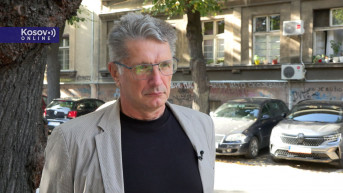
Sociologist Vladimir Vuletic stated that Serbian President Aleksandar Vucic, in his speech at the 79th session of the UN General Assembly, pointed out that the first event leading to the collapse of the world order, which has resulted in the current global turbulence, was NATO’s decision to bomb the Federal Republic of Yugoslavia without UN Security Council approval. He also noted that Vucic used the opportunity to speak about the struggles of Serbs in Kosovo, while simultaneously acting as a spokesperson for small countries.
"President Vucic took the opportunity at such a gathering to connect the hardships of Serbs in Kosovo and Metohija with the broader global issues the world is facing. He correctly pointed out that the first moment when the previous world order started to crumble, leading to these turbulences, was the situation when NATO bombed the then-Federal Republic of Yugoslavia without the Security Council’s approval," Vuletic told Kosovo Online.
He added that a quarter of a century has passed since then, and although it was believed at the time that this could help solidify the global order, as Vucic explained, it has led in the opposite direction.
Vuletic emphasized the significance of Vucic pointing out the "enormous disparity and gap between the legitimization of this world order—based on the protection of human rights—and the facts and the situation in Kosovo and Metohija."
"That kind of contradiction is precisely what bothers those trying to justify their geostrategic positions in Kosovo by any means. They don’t like to hear such things, and it took a certain kind of courage to say that in front of the world's powerbrokers," Vuletic remarked.
He also highlighted another equally important point: that while Vucic spoke about the challenges Serbia faces, he also, in a way, acted as a spokesperson for many small, non-aligned countries.
As Vladimir Vuletic explains, the term "non-aligned" was not used by chance, as this movement once served as a kind of shield to protect small countries from the influence of great powers.
"The President also spoke about how the major powers are not much different—each behaves according to its power. However, the problem is that while Ukraine is discussed as a global issue, no one talks about Kosovo as a global problem, and that is what he aimed to highlight, which he successfully did," Vuletic said.
He believes that it is important that Vucic reiterated such messages at last night's session, as the UN is the only place where such messages can be heard.
However, Vuletic added, the problem is that the UN no longer has the strength it once had, because if it did, such messages probably wouldn’t be necessary.
"The problem is that the old order, the Cold War order, has collapsed, and a new one has yet to be established. Small countries suffer the most from this, as they have no real support other than calling for international law, which is precisely what the major powers are trampling on. This is the contradiction, but there is nothing else to do but to point it out and talk about it, as there is no other option," Vuletic explained.
Commenting on the issue of Kosovo's armament, which President Vucic also addressed last night, Vuletic said this is important because this militarization "adds fuel to the fire." However, in a global context, it is something that can be expected.
"The President did not speak about this, nor should he as a politician, but we can assume that this armament is not so much directed at 'neighboring Serbia,' but is rather preparation for something that might happen in the near future if these global conflicts are not stopped—and it seems unlikely they will be. In such a scenario, the Kosovo army could be on the front lines of conflicts that have yet to unfold. The war in Ukraine is ongoing and will continue; even if Russia wins, it will not mark the end of the conflict between the political West and Russia. These are the things the architects of the new order are thinking about. No one knows how these conflicts will end, and that is why these preparations are being made," Vuletic remarked.
Commenting on Kosovo President Vjosa Osmani's statement during her meeting with U.S. Assistant Secretary of State Dafna Rand, where she expressed concern about the "threats and ethnic cleansing of Albanians" in southern Serbia, Vuletic noted that, from a media perspective, everything is being done to downplay and spin the key issue, which is the violation of all human and civil rights of the Serbs living in Kosovo.
"Osmani does not provide concrete numbers, nor does she discuss the real causes of migration shifts, or where these people are going. This is an attempt at propaganda spin to push the real issues in the region into the background, but it's part of the campaign," Vuletic said.
Vuletic also commented on the ovations Osmani received during her address to U.S. soldiers.
"Of course, this is part of the propaganda war, but I believe those soldiers have a reason to cheer for her because, ultimately, if a conflict arises, it will be those currently supporting the ruling authorities in Kosovo who will be involved in the fighting, instead of them," Vuletic concluded.

0 comments