
What will the meeting in Ohrid bring and will the EU continue the "take it or leave it" tactic?
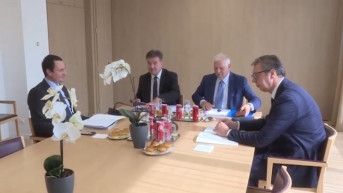
There are still ten days left until the meeting between Aleksandar Vucic and Albin Kurti in Ohrid, which was announced for March 18, as part of the stay of the head of the European diplomacy, Josep Borrell, in North Macedonia, but the question is what can be concretely done in the meantime, given that as a condition for further agreements, Pristina's move towards the formation of the Community of Serb-majority Municipalities is awaited.
The previous meeting on February 27 in Brussels ended without a clearer approach to the issue of the CSM, although after the meeting Borrell came out with a European proposal as a framework for further talks.
Serbia's position is clear, without the Community of Serb-majority Municipalities, which was agreed 10 years ago, it is impossible to go further and enter into agreements on the implementation plan of the European proposal, while the Kosovo side, that is, Prime Minister Albin Kurti, persistently refuses to do so.
The EU special envoy for dialogue, Miroslav Lajcak, who is already coming to Pristina on Friday, in an attempt to convince Kurti to take the step he is obliged to take, says that he is looking forward to the meeting in Ohrid. Analysts estimate that two scenarios are possible in that round of dialogue, but that essentially this meeting will not remove the ambiguities of the proposal, which both sides interpret in their own way.
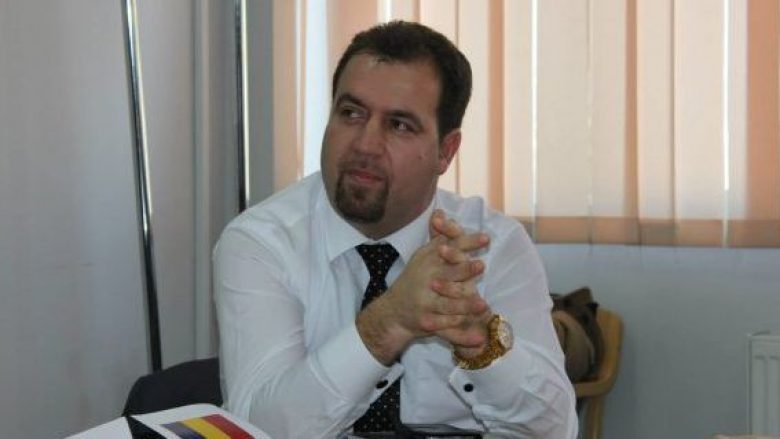
Afrim Hoti, professor of international law at the University of Pristina, believes that Ohrid is a good chance for Belgrade and Pristina to eventually sign an agreement.
"I believe in that because the EU and the US are mediating the dialog. I think it is very important for the Serbs because they are the only country that has not imposed sanctions on Russia. Now is the moment to sign the agreement," Hoti is convinced.
He adds that the "take it or leave it" tactic of the European Union is not good, because, he says, it is not a good diplomatic tactic if you take into account the situation and the position of both sides.

Dimitrije Milic from the "New Third Way" organization tells Kosovo Online that two scenarios are possible in Ohrid, an optimistic one and a worse one, and which one will actually happen will depend on the EU and the US.
"In an optimistic scenario, the meeting should bring a little more discussion about the implementation itself, primarily regarding the Community of Serb-majority Municipalities. That would be a better result. What would be a worse result or a worse outcome would be if the parties, without any major developments, just confirm the previous positions," Milic explains.
He warns of Kurti's attempt to dilute the proposal on the Community of Serb-majority Municipalities as much as possible, concerning what was agreed upon in the Brussels Agreement. The second thing, according to him, will be related to Belgrade's request that there be no word on Kosovo's entry into the UN.
"Those are two possible scenarios and it will depend only on the level of pressure from Western countries, that is, the European Union and the US, on two sides. That pressure exists and I assume that it will increase in the coming months," Milic said.
According to him, the "take it or leave it" tactic is good, in order to get the parties to an agreement.
"If everything were left to the negotiations of the two sides, without a set framework for what is being negotiated, and since the positions of Belgrade and Pristina are distant, a long process would follow that would mostly serve the domestic public, on both sides. When you receive a concrete proposal, with very clear frameworks of what can be changed in the implementation and what is not, i.e. what are the main items of that proposal, then that leaves less room for maneuvering for the parties to use it for domestic political purposes and to try to 'eat up time' by doing nothing," Milic said.
Dr. Aleksandar Mitic, a research associate of the Institute for International Politics and Economy, says in a statement for Kosovo Online that March 18 will certainly not remove the ambiguities about what further negotiations will be.
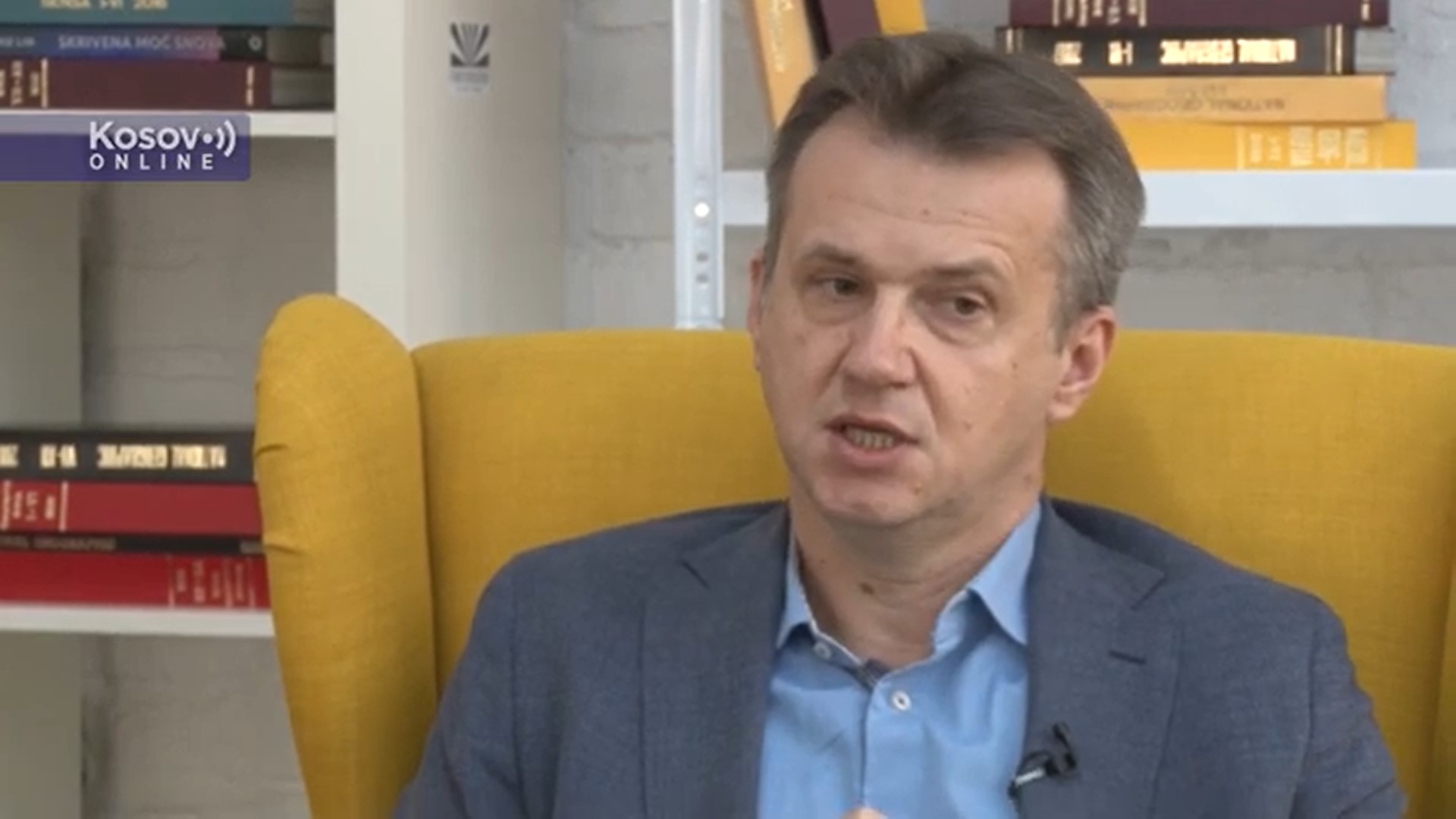
He believes that there are many ambiguities and manipulations when it comes to what is happening regarding the so-called "Franco-German plan".
"There is a whole series of items of the plan - not to say all of them - which, from the Serbian point of view, are unacceptable and irreparable, no matter how flexible and liberal you look at the possible road map for implementation. Namely, it is clear that the goal of this agreement is for Serbia to renounce Kosovo and Metohija and allow Kosovo to float in international waters toward membership, recognition, and other forms of legitimacy and legalization. The fact that there is no explicit recognition in the plan does not diminish the fact that the principle of reciprocity and acceptance of the existence of Kosovo as a separate entity is respected. This is exactly what is demanded by the Albanians, so it seems a bit farcical to me that someone in Pristina is protesting against such an extremely one-sided proposal," Mitic believes.
He also assesses that "intra-Albanian" pressure is coordinated with Western embassies and serves the purpose of creating an impression in Serbian public opinion that, allegedly, some concession has been made to Belgrade.
"The European Union and the US, which are at the same time mediators in the dialogue and lobbyists for the legitimization of the unilateral declaration of independence of Kosovo, in this process behave towards the Serbs in a non-transparent manner, and towards Belgrade in a bullying manner. Threats of sanctions and ultimatums may lead to some consent, but in the long term it will not contribute to the implementation," Mitic says, commenting on the EU's "take it or leave it" tactic.
It is clear that the West is in a hurry and that, in the new circumstances of a year ago, there is a noticeable intensification of the pressure on Serbia, by accepting the agreement on "good neighborly relations" with the Albanians, to acknowledge that Kosovo is a "sui generis" case.
"It does not represent anything new, except that it is imbued with the urgency to use artificial deadlines and threats to get the support of Belgrade as soon as possible and break the argument to Russia that "double standards" are unacceptable," Mitic points out.
Especially, he adds, Brussels' urgency is absurd in the context of not forming the CSM, a process which, he notes, is proof that the EU is an absolutely unreliable mediator.
"Brussels has been pretending for 10 years that it cannot influence the creation it sponsored in 2008 and has been supporting ever since. The goal of this pseudo-drama directed by the West-Kurti is also clear, which is that artificially raised tensions, from the issue of the formation of the CSM, make bait for Belgrade to participate in the negotiations and implementation of the Franco-German plan. Belgrade should clearly and unequivocally reject this kind of manipulation and ultimately demand the formation of the CSM according to previously reached agreements, without prejudicing the time frames, content, and format of further negotiations," Mitic said.
After the meeting in Ohrid, on March 23 and 24, the European Council will meet, which expects a report on the progress in the dialogue between Pristina and Belgrade.
0 comments