
What is written in Belgrade's request to return Serbian forces to Kosovo?
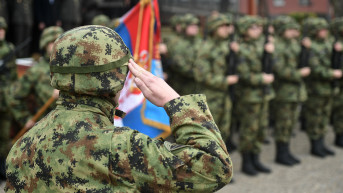
In Belgrade's request to return part of the army and police to Kosovo, the reasons why the return of Serbian security forces was necessary are stated in detail, and with this document, the commander of the international military mission, Angelo Ristuccia, was sent six detailed attachments with data on the vulnerability of the Serbs and other non-Albanians; graphic depictions of ethnic cleansing after 1999, information on the March pogrom against the Serbs from 2004; a list of illegal incursions by Kosovo special forces into the north of Kosovo.
Novosti reports that they had access to the document, and they write that it states that "ensuring the presence of the army and police of the Republic of Serbia, at least on part of the territory of Kosovo and Metohija, is not only a right of the Republic of Serbia guaranteed by UN Security Council Resolution 1244 but also necessary to ensure its very survival of the Serbs and other non-Albanian population in the only remaining area where they have remained in significant numbers since 1999 and can significantly contribute to the process of normalizing relations and achieving the necessary degree of stability".
This is the conclusion stated in the official request from Belgrade addressed to the KFOR command, by which Serbia requested the return of its soldiers and policemen in Kosovo, in accordance with the current UN Resolution 1244.
"The return of the army and police of the Republic of Serbia is not a mere possibility, but the Resolution of the UN Security Council created an obligation for KFOR to make this return possible," Belgrade's request states.
In the text, Serbia reminds that the UN Resolution 1244 is an indisputably, internationally, and legally binding act that, in accordance with Article 103 of the UN Charter, has primacy over all other agreements and arrangements. It is stated that the UN Resolution 1244 had been adopted based on the consent of the Republic of Serbia to the solutions contained in annexes 1 and 2, which form an inseparable part of it. In other words, the essential basis for establishing an international administration (both its civil and security components) and limiting the powers of the Republic of Serbia on the territory of the Republic of Kosovo is precisely the consent of the Republic of Serbia (that is, the Federal Republic of Yugoslavia whose international and legal continuity Serbia follows).
The consent was given with the expectation that the international administration would carry out its mandate in accordance with the reached agreements, which are an integral part of the UN Resolution 1244. The UN Resolution 1244 confirmed the obligations of states to respect the sovereignty and territorial integrity of the Republic of Serbia and other states in the region in accordance with the principles which had been established under general international law and the Helsinki Final Act.
Nevertheless, the document states that "for years, the international administration of Kosovo and Metohija has been ignoring its main responsibilities, which relate, among other things, to the organization and supervision of the development of Provisional Institutions of Self-Government in anticipation of a political solution. It also mentions the insufficient efficiency of KFOR, which should provide safety for all the people on the territory of Kosovo and Metohija:
The Serbs and other non-Albanian population is exposed to constant persecution, which resulted, among other things, in the fact that 312 settlements had been ethnically cleansed since the establishment of the KFOR mission. The current situation on the territory of the Republic of Kosovo is of such a nature that it requires appropriate measures to be taken in order to prevent the destruction of the values confirmed by the UN Resolution 1244. Among those measures is certainly enabling the return of the agreed number of members of the army and police in Kosovo.
The request further states that "the situation created by permanent and serious violations of the UN Resolution 1244 represents a clear basis for the authorities of the Republic of Serbia to take appropriate measures to protect rights and interests based on the international law."
The measures that the Republic of Serbia is trying to take, i.e. the provision of police and military presence on the part of the territory of Kosovo, are necessary to ensure respect of the principles and rules of international law, the protection of Serbian cultural and religious heritage sites and the minimum security of the Serbs and other non-Albanian population. In this way, it would be contributed to the suppression of the continuous implementation of the policy of persecution, as a crime against humanity, of the Serbs from the territory of Kosovo and Metohija and further destabilization.
The text then states the reasons that give Serbia a clear basis to take countermeasures:
- The impossibility of performing the basic functions of the international military presence, which resulted, among other things, in the formation of armed formations capable of carrying out incursions into the northern part of Kosovo.
- Expulsion of the Serbs from the territory of Kosovo and Metohija and failure to provide minimum conditions for the return of the exiled population.
- Destruction of religious and cultural buildings and theft of church property, which reached the proportions of cultural genocide, and the UN Resolution 1244, confirmed the right of the Republic of Serbia to provide military and police presence to protect its sanctuaries.
- Usurpation of state property.
- The impossibility of the international civilian presence to ensure minimum respect for the principles of the rule of law.
- Pristina’s permanent violation of the agreements reached in the dialogue conducted under the auspices of the EU.
Particularly illustrative is the graphic attachment on the ethnic cleansing of the Serbs, which was forwarded along with the request to the KFOR command. The example of Gnjilan, Prizren, and Pristina is particularly devastating, where the complete disappearance of the Serbs can be seen in just five years.


comments