
Without the possibility for the Serbs in Kosovo to live dignified lives, there can be no peace and stability in the Western Balkans
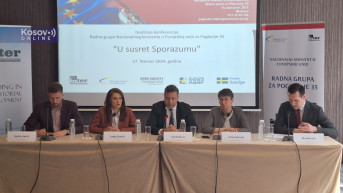
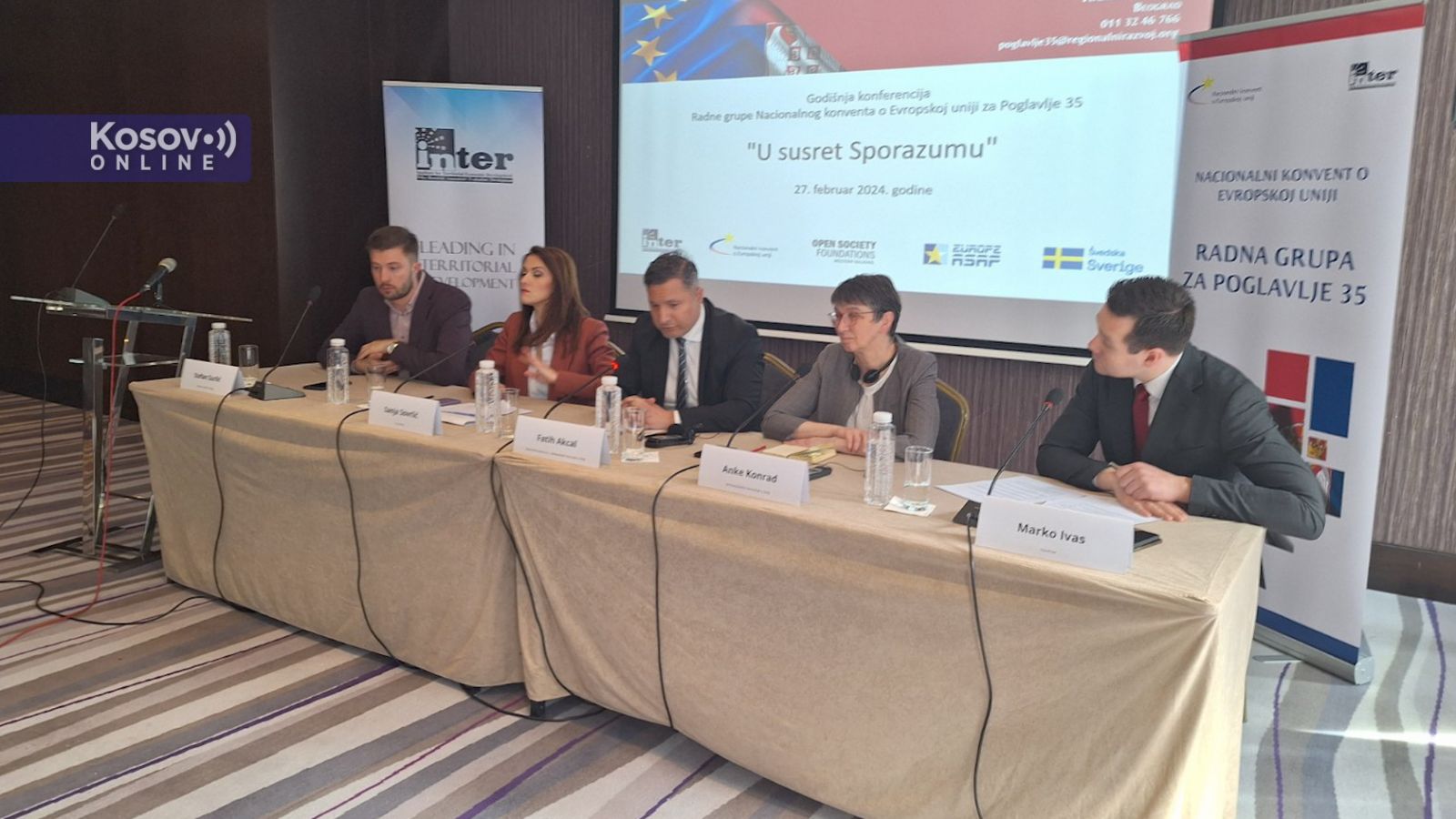
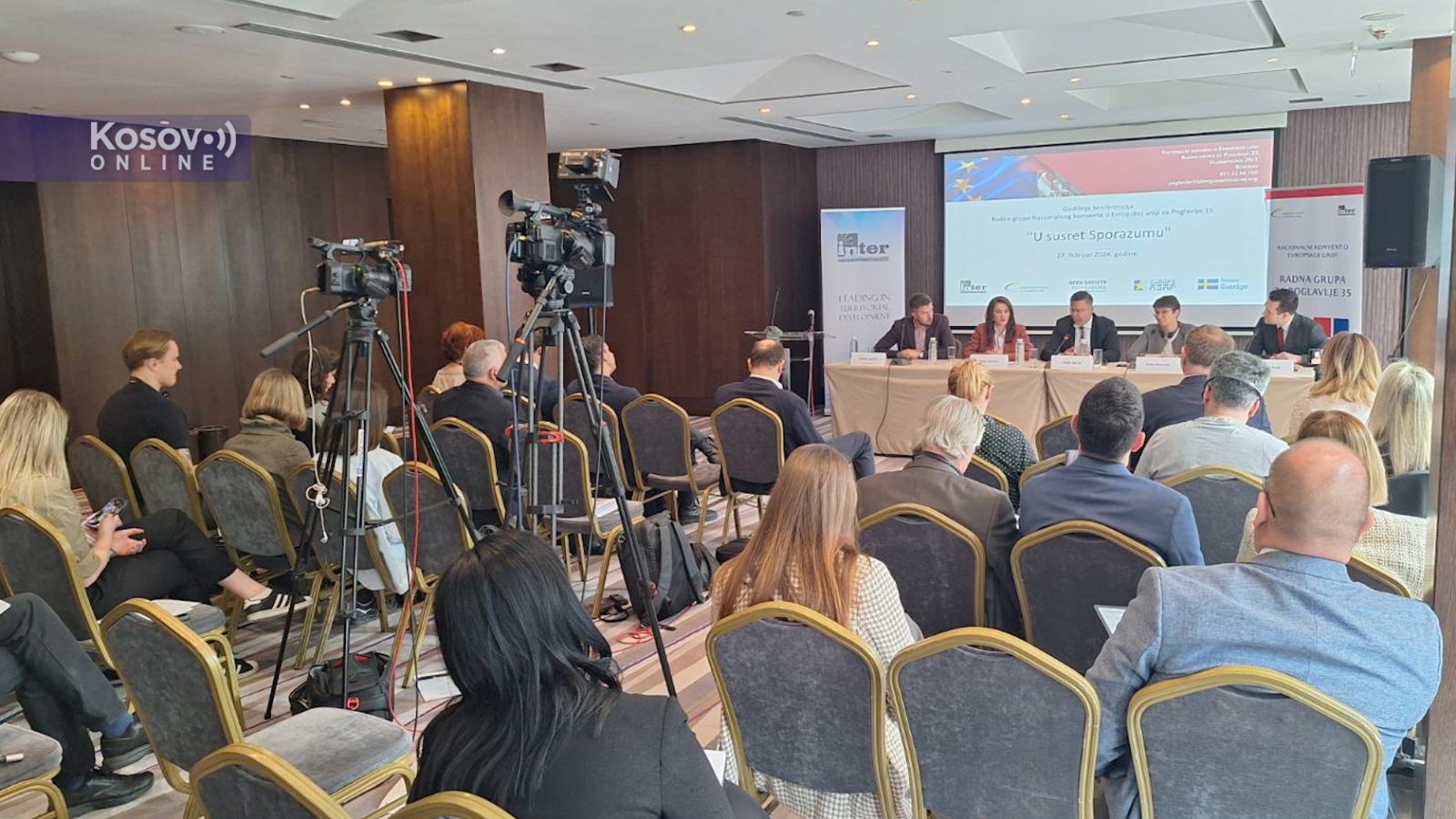
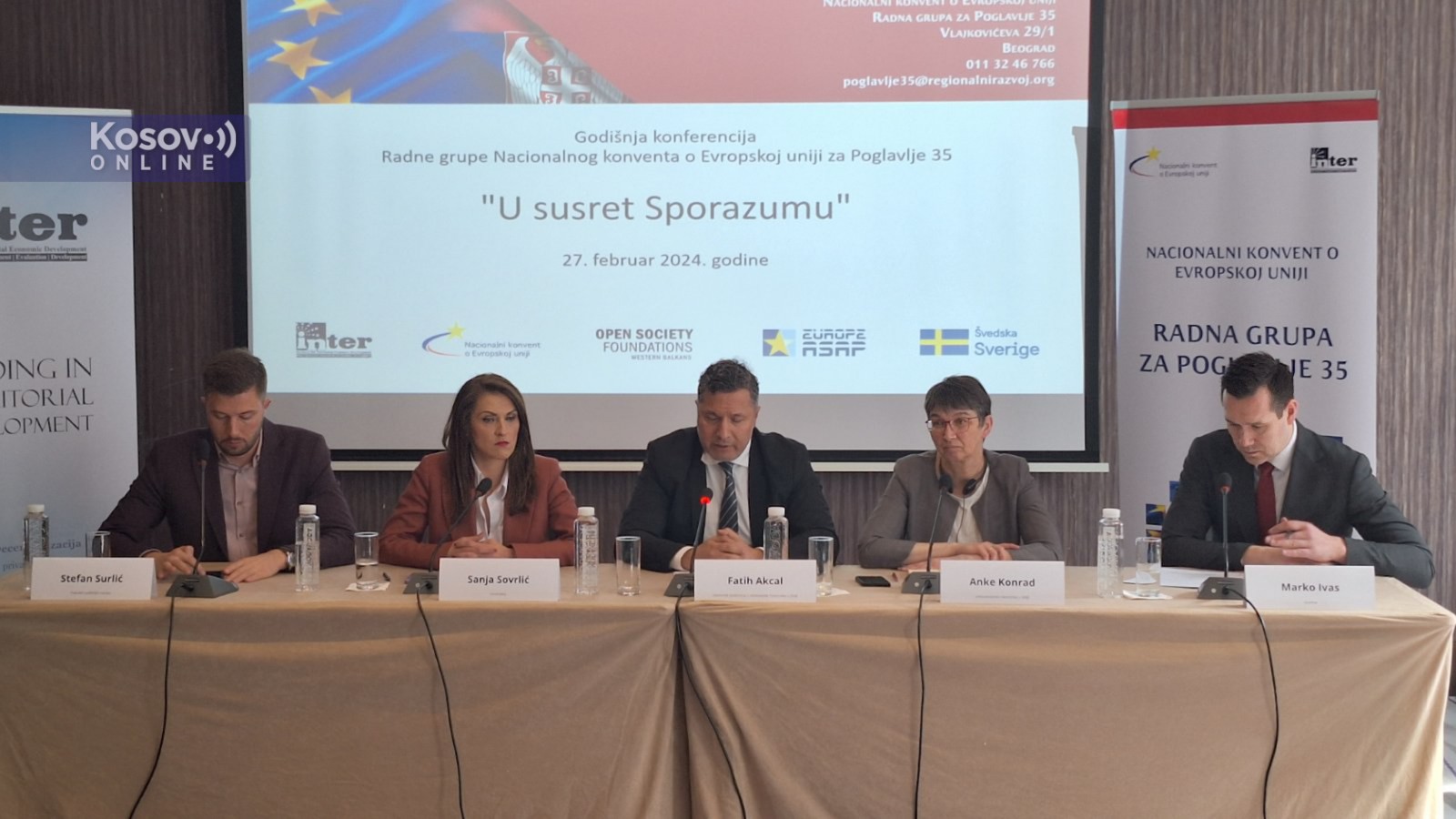
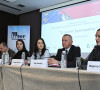
German Ambassador to Serbia Anke Konrad emphasized at the annual conference of the Working Group of the National Convention on the European Union, titled "Towards the Agreement," that despite many challenges, there was still a positive momentum and continuous work on normalization. However, journalist Sanja Sovrlic and Assistant Professor at the Faculty of Political Sciences Stefan Surlic held a different opinion, highlighting that normalization had not yielded the expected results.
Konrad emphasized that the normalization of relations between Kosovo and Serbia was in their interest as well as for the entire Western Balkans and the European Union, which mediated the negotiations. She stressed the importance of continuing the talks and not giving up on reaching an agreement. Konrad highlighted the need for political will from both Belgrade and Pristina to reach an agreement and to persevere in seeking a solution.
The German Ambassador mentioned that a year ago there had been a roadmap for the normalization of relations, and it had seemed that the plan would be implemented.
"There will certainly be some regrets because, I remember, a year and a half ago, in the efforts for normalization of relations, we had a roadmap, as well as the impression that this was a clear path to implement the plan. There will be regrets, but also a determination not to give up, not to say 'we tried and it didn't work,' but to move forward. I am talking about the people who live both in Kosovo and Serbia. If there is no normalization of relations, there is no progress in solving so many issues. This is in the interest of both sides, but also in the interest of the Western Balkans and the EU. However, the EU cannot step in and replace the political will of Belgrade, but also, to a large extent, the political will of Pristina. So, it is crucial that we continue, that we do not give up," she said.
Regarding the demands that the EU has and the expectations from Serbia, she stated that the situation must be discussed.
"Excuses add new tensions that could overshadow important issues that need to be discussed in order to be resolved. Great strides have been made, and there is much discussion about what the priorities are, and what to do first. We hope for the political will for the Serbs to return to institutions in the north. The issue of mayors and leadership would not even exist if the Serbs had not left the institutions. We expect the leaders of both sides to take political responsibility. The discussion about the past is difficult, but it means that people are talking. Dialogue is very important," the German Ambassador emphasized.
She added that the EU would do everything it could.
"We will do everything we can as the EU, but we cannot take the place of representatives of both sides. We will not give up," Konrad emphasized.
The Charge d'Affaires of the French Embassy, Fatih Akcal, praised the work of the mediator in the dialogue, Miroslav Lajcak, and said that Belgrade had made some significant steps in progress despite all the challenges the parties face.
"Despite many challenges, we still have a positive dynamic and continuous work on normalization," he said.
Akcal stated that there were many challenges on the path to normalization.
"That paper was supported by all EU countries. There have been challenges in recent months. Dissatisfaction is mainly in northern Kosovo, so for those people, we want hope. But there are also positive steps, such as the recent good news from Belgrade about progress regarding license plates, and energy. There are still many challenges, but we have a positive dynamic and many tools - bilateral channels, but also through the EU - to contribute to a greater EU influence in the region and to have more efficiency in our results," he said.
He added that the President of France was very dedicated to pushing this process forward.
"President Macron is very dedicated to pushing this process forward. However, time is running out, the purpose of the European paper is implementation - that's why engagement from both sides is necessary, and I hope for additional motivation," he emphasized.
Journalist Sonja Sovrlic highlighted that the crucial issue was that normalization seemed to lead to confrontation, or rather, that there was an increasing trend towards confrontation, and that the term "frozen conflict" was moving towards a thaw, emphasizing that this was a very dangerous situation.
"Without reconciliation between the Serbs and the Albanians, there is no peace in Kosovo, without a dignified life for the Serbs and without the possibility for the Serbs in Kosovo to live dignified lives, there is no peace and stability in Kosovo or the Western Balkans," she said.
She emphasized that even the countries that had recognized Kosovo under, as she said, the "pretext of multi-ethnicity" bore responsibility because "we haven't seen anything of multi-ethnicity in the last 20 years, and everything seems to be getting worse."
She added that in the last three years, there had been a particularly pronounced escalation and radicalization of relations, as well as the erosion, as she said, "of the fragile peace we have had for the last 10 years since the signing of the Brussels Agreement."
She emphasized that the responsibility for this lay with both the USA and the EU, who believed that imposed solutions could solve all problems, and she pointed out a series of unilateral actions by Pristina, from license plates and building bases to the abolition of the dinar, to which no one from the international community had reacted. She also adds that there is no stability if a dignified life is not provided for the Serbs in Kosovo.
"What would be Serbia's motivation to engage in the dialogue process and fulfill its obligations, while Western countries would lose the argument of multi-ethnicity? That is just one of the reasons," she said.
She added that confrontation and radicalization in both Serbian and Albanian societies had been evident over the past three years.
"There has been a serious escalation of relations between the Serbs and the Albanians and the erosion of the fragile peace we have had for the last 10 years after the signing of the first Brussels Agreement. I managed to do this analysis through my own and a few Facebook accounts. The topics that we, journalists, and civil society activists, have been dealing with for the past 10 years have been focused on reconciliation and building a common life, and from the topics we are now dealing with, it is clear that we have entered a serious uncertainty about where it will lead us," Sovrlic said.
She added that in Belgrade, "there is no discussion as if the Albanians live in Kosovo, and in Pristina, it is as if the Serbs do not live there."
"As long as we ignore this and pretend it doesn't exist, we won't have a serious discussion that is the basis of normalization and normal relations. Responsibility for this also lies with the international community, primarily EU countries and the USA, who believe that with a magic wand, imposed solutions can solve all problems. Obviously, that hasn't happened, and today, on the anniversary of the Brussels-Ohrid Agreement, perhaps I would ask - who still remembers that agreement? The problem is that we have had a series of unilateral actions by Pristina that have not been taken into account," she said, reminding that they had occurred even before the Serbs had left the institutions.
She believes that some opportunities have already been missed, but that solutions should still be sought.
"When it comes to the presence of Western countries in Pristina, due to the need not to harm the citizens of Kosovo, representatives of foreign embassies in Pristina often forget the needs of the Serbs in Kosovo and ignore the serious frustration that exists among them," she said, citing the example of moving monuments in Pristina, which the German and French ambassadors had done, and then returned when they had realized they had been wrong.
Stefan Surlic said that there had been hope that the agreement signed a year ago would lead to a reset of relations and a new situation, but the result had been "that normalization produces confrontation."
He emphasized that on the ground, there was a lack of any perspective for the Serbian community, as well as systemic discrimination against the Serbian community.
He stressed that the Serbs and the Albanians talked about Serbian rights in completely different ways on the ground.
"When you listen to the Serbian and Albanian communities, it's as if they don't live in the same space. The Albanians think the Serbs have the greatest rights in Europe of all minorities, but when you ask the Serbs, they say they have no rights," he said, emphasizing the incredible difference in understanding.
He emphasized that there was a lack of any idea of a real agreement and stressed that no imposed solutions bring any good. He believes that it would have been more appropriate for the panel to be titled "Normalization Towards Confrontation".
"It's worth repeating that on the anniversary of this basic agreement, there was hope that this agreement, although imposed, would be a reset of relations and lead to some new reality on the ground. We now have the conclusion - not normalization or confrontation, but that normalization produces confrontation," Surlic said.
He pointed out that political scientists had understood the agreement "as a bitter pill for Serbia and the political elite in Belgrade, where they would have to accept de facto recognition of Kosovo, and because of that, it is unclear what the outcome of the elections will be."
"In the end, the majority of options that based their campaign on rejecting the Franco-German proposal did not pass the threshold, the government successfully presented with red lines and accepted to gradually implement provisions related to documents, and license plates, showed goodwill on the ground. We see what was much harder for Belgrade to accept and accommodate both in public and in the political sphere, meaning there are no consequences," he said.
On the other hand, he says, Pristina gains international recognition through membership in international organizations, dramatically presents the agreement, and says it will not accept it.
"Now, in reality, those initial assumptions, that this will be harder for Belgrade and easier for Pristina, have turned into Pristina saying they do not accept it. On the ground, we have the terrible consequence of a lack of any perspective for the Serbian community, systemic discrimination in all areas," Surlic says.
He emphasizes that there is an absence of any willingness to overcome some important issues.
"We have entered a phase of normalization that means imposing a political agreement beyond the political elites and real reconciliation and understanding between the two ethnic groups, and obviously, that is not succeeding. It is clear that this agreement, like the Brussels one, will be a dead letter, the only thing I see is that it will be a success for the mediators to put it in the negotiating framework for Chapter 35, and thus they will prolong for a few more years the expectation of the success of that agreement," Surlic said.


0 comments