
Zecevic: EU is aware of security threats, that is why it is rushing to admit new member states
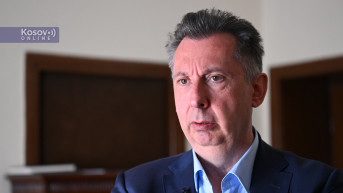
The Director of the Institute for European Studies in Belgrade, Slobodan Zecevic, assessed that the visit of European Commissioner for Enlargement Marta Kos to Serbia should be interpreted in light of the EU's desire to accelerate the enlargement process in order to shield itself from security threats, particularly Russian influence. The issue of the Belgrade–Pristina dialogue was not a topic of the meeting because they are waiting for the formation of new Kosovo institutions, as well as more concrete involvement from the new EU High Representative for Foreign Affairs and Security Policy, Kaja Kallas.
“I believe that the EU is now aware, given the war in Ukraine, that there are security threats, Russia being perceived as one, and they want to secure themselves by including new member states, thereby creating a larger and stronger alliance than it is now,” Zecevic told Kosovo Online.
He reminds that Kos emphasized that the first countries could join the EU by the end of the mandate of the current European administration in 2030, and that this refers to Montenegro and Albania.
“She does not mention Serbia in that context, although, realistically, we were in the same group with Montenegro. So, their geostrategic interest now is to admit new members in order to secure themselves, in the sense of controlling the entire European continent in light of the potential strengthening of Russia and its influence in Europe,” Zecevic explained.
Asked how to interpret the absence of the Belgrade–Pristina dialogue as a meeting topic, Zecevic said Kos had emphasized in some interviews the EU’s desire for Kosovo to receive candidate status, but that they are waiting for a new government to be formed.
“And they are waiting for that new government to fulfill certain conditions related to the dialogue. But what exactly, she didn’t say. Does she mean the CSM, which would be important for a safer and more normal life for our people? In any case, she mentions it in the context of the upcoming elections and government formation in Kosovo,” Zecevic said.
He is convinced that the dialogue issue will fall under the purview of the new EU High Representative for Foreign Affairs and Security Policy, Kaja Kallas.
“They hope that by May, the president of parliament and a new government will be elected in Kosovo, and then maybe Kaja Kallas could engage more concretely,” Zecevic clarified.
He therefore believes that Kos’s visit should be viewed more through the lens of Serbia’s internal situation.
“They want that to be resolved in some way so that Serbia can later tackle open issues. Cluster 3 has not yet been opened in negotiations, although it is ready. In December, the government offered certain guarantees related to adopting media laws, cleaning up the voter registry, and selecting new members of the REM. All of that is pending, and I believe she primarily came to Serbia because of this. There had been criticism of the EU for ignoring the demands of students. Now, they are trying to show they are not ignoring them, but that they believe the best response to student demands is for Serbia to implement what was agreed in December,” Zecevic concluded.


0 comments