
Donic: Visit of Marta Kos a positive signal; no EU integration of the region without Serbia
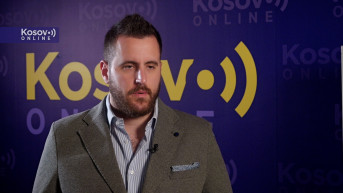
Analyst Petar Donic from the New Third Way stated that the visit of European Commissioner for Enlargement Marta Kos to Serbia is a positive signal and a clear message that the country plays a central role in the Western Balkans.
“The visit is definitely a good signal. The EU cannot function or integrate the region without Serbia. Serbia is the most important player in the Western Balkans. It has the largest economy, the highest military spending, the most significant influence, and a central geographic position. Every European Commission so far, including this newly elected one, recognizes that interest, especially today, given the current geopolitical landscape, Serbia and the Western Balkans play a major role,” Donic told Kosovo Online.
According to him, the messages delivered by the European Commissioner were more significant than in the past, but Serbia still faces challenges to fulfill several steps necessary for full EU membership, especially closing Clusters 3 and 4.
Donic considers Cluster 3 the most challenging because it involves inclusive growth and human rights, and that the main blockage comes primarily from the Baltic states, not only due to the rule of law but also due to Serbia’s “unique position” regarding Russia.
“Serbia has maintained its own policy, has not imposed sanctions, yet openly supported Ukraine, so it holds an interesting neutral position. Baltic countries, which have Soviet-era experience, have always been cautious of the Russian factor. Since the annexation of Crimea and the overall Ukraine situation, this caution has only grown. We'll see what this means because there must be a rapprochement between both sides, especially as Europe increasingly consolidates its foreign policy stance, along with its military and political influence since the Ukraine crisis,” Donic emphasized.
He warned about how continued “flirting” with Russia might be perceived, such as President Aleksandar Vucic attending a military parade in Moscow.
“If Serbia were to continue openly or semi-openly 'flirting' with Russian interests, or instance, if President Vucic attends a military parade in Moscow, where the only other European leaders might be Orban and Fico, who are Serbia’s significant partners but not major decision-makers or veto players in the EU, this raises the question of how such actions would be perceived. EU integration means integration with all members and finding common ground with all of them. That is why the process is so slow,” he said.
Donic noted that Montenegro is currently furthest along in EU integration, followed by Albania, which has made “drastically accelerated progress.”
“Serbia is next, having opened the most chapters and made the most progress, but it is advancing very slowly,” Donic said.
Asked why the Belgrade–Pristina dialogue was not on the agenda this time, Donic said that indicates other geopolitical issues were prioritized.
“Given the current political context of the announcement that Serbia may attend a military parade in Moscow, as well as 'quiet rapprochement' such as visits by religious and state officials to Moscow, this creates a certain unease among some European officials. So, other geopolitical topics were certainly on the table. Hence, the strong message that Europe wants Serbia’s integration, and perhaps this time it will happen more quickly, but a willing partner is needed on the other side. A new government means a new beginning, and a new European Commission means a new beginning, so they can give this process stronger initial energy. Perhaps they avoided explicitly mentioning the dialogue to deliver messages that could not be misinterpreted,” Donic concluded.
0 comments