
Nikolic: Serbs indispensable in forming a Government in Pristina, the Serb List a constant in the fight for national interests
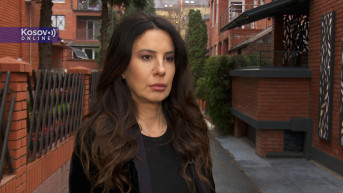
The Chair of the Serbian National Assembly’s Committee on Kosovo and Metohija, Danijela Nikolic, commenting on Albin Kurti’s campaign and the prospects for forming a government in Pristina, assessed that the Serbian community is an indispensable factor in the formation of any government, and that the Serb List remains a constant in the struggle for Serbian national interests.
“The Serb List has been continuously campaigning since 2013. That is why it is the strongest political party among Serbs—because it is dedicated to the people and to citizens 24 hours a day. Circumstances have led to the situation that, within a relatively short period of time, over the past year, small Kosovo has gone through three electoral cycles: regular parliamentary elections, local elections, repeated local elections, and now early parliamentary elections. This is a burden for all voters, regardless of the community they belong to, but when it comes to the Serb List, it is clear and represents a constant in the fight for our national interests,” Nikolic told Euronews.
She added that the Serb List is effectively in a permanent campaign.
“For us, the campaign lasts from the moment we see the other side acting and when our national interests are threatened—that is, when someone works against the Serbian community. That is why we are constantly vigilant,” Nikolic stressed.
She does not expect Albin Kurti to repeat his previous electoral success.
“Kurti’s provocations will not stop, but judging by the analyses I have heard, I do not believe he will repeat the result of 41 percent that he achieved in the previous elections. My personal opinion is that this time he will secure around 31 percent, meaning he will lose about ten percentage points of support, although it is undeniable that he has left a political mark,” she stated.
According to her, Kosovo is facing an institutional crisis.
“I believe the process will not be completed easily. They will have a deadline sometime around March to constitute the assembly and form a government. If they fail to elect the so-called president or president of that so-called Kosovo, the process will once again move into a new electoral cycle and new parliamentary elections. This institutional crisis and the dysfunction in the operation of what they call a government and a state, in my opinion, represents the beginning of their end,” Nikolic said.
She emphasized that the Serbian community is indispensable in every political process.
“No matter how much they may fantasize about doing something without Serbs, no government can be formed without Serbs. Not because we wish to be anyone’s coalition partners, but because seats in the government and ten parliamentary mandates are guaranteed to us by that so-called constitution. The Serbian community is indispensable,” Nikolic underscored.
Speaking about the emergence of other Serbian lists, Nikolic was unequivocal.
“Our task is to send those who work against the interests of our people and our national interests into political history. We must not allow anyone to manipulate the Serbian people—neither Albin Kurti, nor Bedri Hamza, nor Ramush Haradinaj. We must not grant them legitimacy to claim tomorrow that they have some other option. There is no other option—the only option is the Serb List,” she stressed.
Nikolic also warned of the risk of manipulation.
“Albanians have always dealt with Serbs and calculated with us. We deal with ourselves and our people. What matters most is our unity, our cohesion, and remaining steadfast on our own land,” Nikolic said.
Drecun: Kurti Cannot Form a Majority
The Chair of the Serbian National Assembly’s Committee on Defence and Internal Affairs, Milovan Drecun, assessed that Kurti’s campaign represents a continuation of an old strategy.
“It seems to me that Kurti is playing a politically worn-out card—constant incitement of anti-Serb hysteria, hatred, political and institutional terror, and even physical violence against the Serbian people,” Drecun said.
He also warned of economic problems.
“People cannot live on rifles, helicopters, and military equipment. They need jobs and a better standard of living. After all, hundreds of thousands of Albanians would not be leaving Kosovo and Metohija if they had conditions for a dignified life,” Drecun noted.
He referred to a public opinion survey published by the Slovenian institute IFIMES.
“That research shows that Albanian voters are fairly apathetic and that turnout is expected to be around 40 percent, possibly even lower,” he said.
According to the survey, Kurti remains the frontrunner, but with reduced support.
“The results show that the Self-Determination Movement has between 50 and 53 percent among those who have already decided. The Democratic Party of Kosovo stands at 16 to 19 percent, the Democratic League of Kosovo at 15 to 17 percent, while the Alliance for the Future of Kosovo and Nisma are between 7 and 9 percent,” Drecun stated.
He concluded that Kurti cannot form a majority.
“Albin Kurti has no possibility of political cooperation with the Serb List and therefore cannot secure a majority,” Drecun said.
He also highlighted the importance of winning all ten guaranteed mandates of the Serb List.
“This is a matter of the survival of the Serbian people. In order for the Serb List to be able to fight for the survival of Serbs and for normal living conditions, it must have full political capacity. There must be no room for manipulation of Serbian votes, as was the case in the past. It is essential that the Serb List wins all ten mandates, thereby preventing anyone without genuine support from speaking on behalf of the Serbian people,” Drecun concluded.



0 comments