
Zecevic: Admitting new EU members without veto rights is not a democratic solution
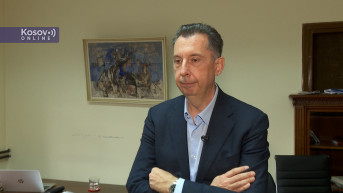
The Director of the Institute for European Studies in Belgrade, Slobodan Zecevic, told Kosovo Online that the option of admitting new members to the European Union without veto rights in the Council of Ministers is not a democratic solution and that, given the democratic nature and federal elements of the Union, such a scenario should not be permanent.
He points out that the EU has had a tendency to become a federal state, like the United States, and that it cannot be said to be a democratic solution for a state to have no participation in an entity called the European Union.
Taking into account that Albanian Prime Minister Edi Rama has expressed readiness for Albania, as an EU member state, to give up veto rights, and even to not have its own commissioner in the European Commission, Zecevic says that Rama has thereby sent a signal that Albania will not create problems as long as it is admitted to the EU.
“That means they would not even have to have veto rights in the Council of Ministers, they would not even have to have a member of the Commission, which would normally be expected. What matters to them is simply to be admitted, and Rama probably thinks that this will come later. This shows that Rama has calculated that it pays off for him to be a member of the European Union even under conditions where he does not have political decision-making power within the EU, because he would receive funds as a full member and that is what matters most to him. He believes it is more profitable for Albania to receive funds as if it were a full member, while decision-making is not so important,” Zecevic emphasizes.
As for whether Rama’s assessment of what is best for Albania coincides with the assessments of other EU membership candidates from the region regarding their model of EU membership, Zecevic says that countries in the region have different views on veto rights in the EU. He cites the example of Montenegrin Prime Minister Milojko Spajic, who said that he would not like Montenegro to enter the EU as some kind of second-rate member.
Zecevic recalls that the idea of limiting the absence of decision-making rights to five to ten years, until the EU’s institutional system is reformed, existed within the EU itself, and that Rama proposed this because he knows that for the EU the biggest problem is that new accessions further complicate the constitutional order of the European Union, which is already complicated.
Speaking about the situations in which future EU members would be most disadvantaged if they were without veto rights, Zecevic says that EU member states, with their vote, their members of the European Parliament, and their member of the Commission, usually lobby for certain decisions, enter into specific coalitions during decision-making, and derive certain benefits from this.
“When you have a vote, you do not just state your position on an issue, you also participate in political bargaining within the European Union. You say, I will support this or that, but on the condition that I get this or that. When you do not have voting rights in the Council of Ministers, you do not participate in this and you have no political weight in that process,” the director of the Institute for European Studies emphasizes.
He also illustrates with figures what it means to be in the EU and outside it, noting that Serbia, as a country that is not an EU member, can at best withdraw 500 million euros annually from the EU to finance various projects, whereas if it were a member it would have 2.2 billion euros from the EU.
“The differences are enormous. Edi Rama says: give me that, I do not even have to decide. That is his philosophy and calculation: it is better for me to take two billion a year and not be a full member than to be outside the European Union, because I would get much less money, and in any case everything that happens in the European Union concerns me anyway given my geographical and political position in Europe,” Zecevic concludes.

0 comments