
Kozarev: Even if migrants were to arrive in North Macedonia, they would seek to move on to European countries
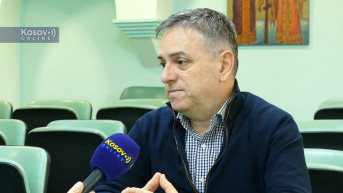
Professor Atanas Kozarev, President of the Association for Corporate and Digital Security in Skopje, assesses that the Republic of North Macedonia has a serious migration policy, and that the recently adopted resolution on state policies in the field of migration represents, as he says, a sufficient guarantee that migration-related processes are under control.
Commenting on reports that North Macedonia could, on the basis of an agreement with the United Kingdom, receive migrants from that country, Kozarev says that there is, in practice, a clash between two narratives on this issue. One claims that migrants are on the verge of arriving in the country—an argument he notes is promoted by the opposition—while the other is the government’s position, which seeks through concrete actions to demonstrate that this issue is far removed from North Macedonia.
At this moment, in his view, calming rhetoric is needed, as security issues intersect with migration policy and migration-related challenges.
“Certain voices in the media, primarily from the United Kingdom, have reached even this region, suggesting that there is some plan to establish migrant centers outside the territory of the United Kingdom. North Macedonia is not immune to these processes, but it is a respectable state, and we have a government that takes all these issues seriously. Our Prime Minister has called on all mayors to adopt an act that will clearly reassure the local community that there is no danger from migrants,” Kozarev told Kosovo Online.
According to information circulating in the media, he adds, it is being said that migrants, if they were to arrive, would be granted asylum status, which would mean they could move freely, be employed, and also have the option of leaving North Macedonia.
“In that context, this information is quite important to me because our country is, above all, a transit route. Migrants do not want to remain in our country, and I truly believe that, even if they were to arrive, they would seek to move on to European countries where they see a greater future,” our interlocutor says.
At the same time, he points out that within cooperation with partner states in combating organized crime and migrant smuggling, North Macedonia is an active participant.
“We are signatories to numerous international documents, and I expect that these processes will not endanger our national security, which at this moment demonstrates a serious approach to contemporary global challenges. What is particularly important is the fact that our country, like any normal state, cooperates with partner countries from the European Union and the United States in combating migrant smuggling. In that context, I believe it is the right step for this cooperation to continue, all with the aim of strengthening processes to reduce irregular migration,” Kozarev emphasizes.
According to him, all migration-related processes have security and financial implications.
“In Kosovo, it has even been mentioned that if migrants from the United States were to arrive, this would be linked to certain financial compensations. For now, we have information that only two migrants have arrived there. On the other hand, there is an agreement between Kosovo and Denmark for the reception of prisoners from Danish prisons, and, for example, Kosovo will, as stated, receive millions of euros over the next five years as compensation for this service,” Kozarev notes.
All migrants, he stresses, who enter a country uncontrollably via smuggling routes represent a security threat.
“And that security threat is incorporated into our national strategies and into the laws regulating the activities of the Intelligence Agency and the National Security Agency. I believe that the personnel of these security agencies are well prepared, as they have been so far, to respond to any challenge, with the aim of ensuring that the security situation is not compromised,” concludes the President of the Association for Corporate and Digital Security.

0 comments