
Muca: The interest in securing EU funding outweighs any other regional priority
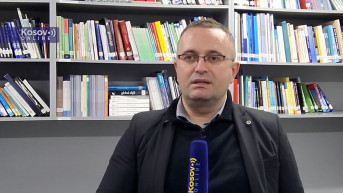
Lecturer at the “Marin Barleti” University in Tirana, Erion Muca, says that the main pillars of the EU Growth Plan for the Western Balkans are the fight against corruption, the alignment of national legislation with that of the European Union as a condition for EU membership, and financing that is primarily strategic and serves not only individual countries but the entire region.
Muca notes that the interest in securing funding outweighs any other regional priority and that earlier initiatives in the Western Balkans have almost disappeared or dropped off the list of government priorities, as they have been overshadowed by the EU’s support measures and the reduction of bureaucracy in disbursing funds and financing certain sectors of the economy and markets.
“Part of the EU funds (from the Growth Plan) also comes as financing for various projects, both in infrastructure and in areas that directly affect citizens, supporting the modernization and standardization of many elements of the institutional chain, or even the establishment of certain innovation centers. The goal is for these countries to adapt to the way a united Europe functions and to achieve the most sustainable economic development for the Western Balkan countries,” Muca told Kosovo Online.
Considering that Kosovo has not yet ratified the agreement with the EU on the Growth Plan, Muca says that Kosovo is significantly lagging behind in resolving its internal political issues, which, one way or another, raises uncertainty about how EU funds will be distributed or invested.
“There is concern that these funds could be used for the political interests of those in power or to support a particular political party that seeks to dominate. This situation is the reason why the European Union has not allocated funds to the state of Kosovo,” he explains.
When it comes to Albania, Montenegro, and North Macedonia, Muca says that these countries have maintained balanced diplomatic relations with the European Union and that most of them have not directly promoted support for Russia, which is currently at war with Ukraine, while Serbia has openly participated in various pro-Russian meetings.
“This has had a political impact, leading to the provision of funds to Serbia being accompanied by certain conditions for it to change its pro-Russian political stance and to be more balanced, at least in its decisions and positions, between the European Union on one side and friendly countries such as Russia on the other. Therefore, the EU is encouraging Serbia to prioritize the interests of its citizens instead of certain geopolitical interests tied to various trade agreements. Serbia’s pro-Russian positioning has damaged Belgrade’s relationship with the EU regarding the allocation of certain funds. This is not the case with other countries in the region, which have been very cautious,” Muca concludes.


0 comments