
Todorovska: Sexual and labor exploitation are the most common forms of human trafficking
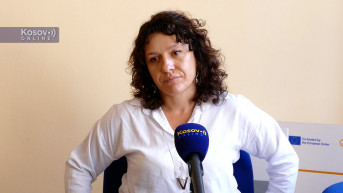
Human trafficking remains a serious problem in the Western Balkans, while modern technologies and online platforms have created new methods for recruiting, controlling, and exploiting victims, according to Marija Todorovska, Program Director of the anti-violence and anti-human trafficking organization Open Gate – La Strada in North Macedonia.
"Human trafficking is definitely a reality in North Macedonia, but it is also largely invisible. It often goes unrecognized, which is why timely responses are frequently lacking," Todorovska told Kosovo Online.
According to her, 109 victims of human trafficking have been identified in North Macedonia over the past five years. While sexual exploitation remains the most common form, labor exploitation is also on the rise.
"Forced and child marriage, forced begging, and, most notably, over the past two to three years, cases involving the trafficking of human organs and even illegal adoption of children have also been identified," Todorovska said.
She stressed that both the methods and forms of exploitation are evolving and that the cross-border nature of human trafficking requires stronger cooperation among institutions throughout the region.
"As an organization that has been working on this issue for 25 years, we have handled numerous cross-border cases where a person was recruited in North Macedonia and exploited in neighboring countries such as Kosovo, Albania, or Serbia, and vice versa," she said.
She added that non-governmental organizations play an important role in supporting victims.
"We have developed good practices and close cooperation with partner NGOs across the region. We respond quickly, exchange information efficiently, facilitate referrals and identification, and, above all, provide victims of human trafficking with appropriate long-term support," Todorovska emphasized.
Commenting on online escort advertisements, she said they can sometimes serve as a cover for human trafficking, although every individual case must be carefully assessed.
"It is not always a case of human trafficking. We must always ask who is behind it and to what extent the person is being controlled. However, I have to say that cases of human trafficking have indeed been identified," she said.
According to Todorovska, it is essential to determine whether the women and girls featured on such platforms are being subjected to coercion, threats, blackmail, or other forms of control.
"Are they being forced to do this? Have threats been made against their lives or their families? Are they being blackmailed because of unpaid debts or through intimate photographs and videos, which are often used as tools to exploit people within human trafficking networks?" she said.
She also warned that in some cases there are suspicions that children may be victims.
"We have received reports through our SOS hotline from people who fear that some of these advertisements may involve children—boys or girls—who are effectively part of trafficking networks. In such cases, we are clearly dealing with sexual abuse, the sexual exploitation of children, and, under certain circumstances, child trafficking," Todorovska said.
She emphasized that human trafficking is not concealed only through escort advertisements, but also behind fraudulent job offers.
"It is very common to see online advertisements for fake employment opportunities, for example seasonal work abroad in sectors such as hospitality, tourism, domestic care, construction, and agriculture," she explained.
Todorovska advised members of the public who suspect a case of human trafficking to seek professional assistance rather than attempting to intervene on their own.
"They should not act independently. We recommend that they seek support by contacting an SOS hotline so they can report the case and receive information about the victims' rights," she said.
Explaining how human trafficking networks operate, she noted that there is no single model, as traffickers continuously exploit new technologies to target vulnerable groups.
"Today, the internet and information and communication technologies are particularly important because they make it easier to reach vulnerable target groups, who, unfortunately, in our experience are still primarily women and children," Todorovska said.
According to her, in some cases a single individual recruits, controls, and exploits the victim, while in others organized criminal networks are involved.
"Sometimes one person recruits, controls, and exploits the victim. However, there are also many cases involving organized cross-border networks with more than ten people participating," Todorovska explained.
She said that the primary motivation behind human trafficking is the enormous financial profit it generates.
"The profits are enormous when people exploit the human body or human labor, because such exploitation can be continuous," she said.
She added that institutions must focus on the timely identification of victims, effective investigations, criminal prosecution, and appropriate punishment of offenders.
"These cases must be identified promptly, followed by thorough investigations, criminal prosecution, and appropriate penalties for the perpetrators in order to send a clear message that this is a serious crime that will be punished accordingly," Todorovska concluded.
She also underlined the importance of protecting victims, who often play a crucial role in criminal proceedings.
"Victims of human trafficking must be protected, provided with high-quality support, guaranteed access to justice, and given the opportunity to obtain compensation, because the consequences of human trafficking are extremely serious," Todorovska said.



comments