
Softa: Albania has become a destination where women are brought for sexual exploitation
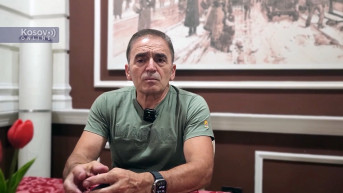
Former Director of the Albanian State Police and security expert Fation Softa has assessed that human trafficking networks are now far more organized than in the past, warning that Albania has transformed from a country from which women were taken abroad for prostitution into a destination where women are brought from other countries for the purpose of sexual exploitation.
Softa explained that Albanian criminal groups had cooperated with the Italian mafia for years, particularly in prostitution and human trafficking, but have since become part of much broader international criminal networks.
He recalled that during the 1990s Albania was one of the main transit routes for human smuggling across the Strait of Otranto to Italy.
"Albanian criminal groups, especially those operating in Italy, cooperated with the Italian mafia for many years. At that time, Albania served as a transit country for human trafficking across the Strait of Otranto, and women and minors from Ukraine, Russia, and other Eastern European countries were transported along that route for sexual exploitation," Softa told Kosovo Online.
According to him, the closure of the speedboat routes did not eliminate human trafficking but instead made it considerably more sophisticated.
"In the past, these operations were carried out by individuals or small groups. Today, however, we are dealing with organized and structured criminal organizations operating across extensive territories and connected with criminal groups in European Union countries, as well as networks in Latin America and other regions from which narcotics originate," Softa said.
He pointed out that Albania's role within these criminal networks has changed over time.
"Albania has gone from being a country that exported prostitution to becoming a country where women are brought from abroad for prostitution. This is the result of the activities of organized criminal groups," Softa stated.
Speaking about cooperation among criminal organizations in the region, Softa said they operate through what is commonly referred to as the Balkan network.
"These are the same groups that periodically operate in different countries. We are talking about the Belgrade–Montenegro–Tirana axis, through which cooperation in human trafficking is carried out," Softa said.
He added that criminal organizations now rely heavily on the internet, social media, and short-term accommodation rental platforms.
"Albania is already familiar with the escort phenomenon. There are numerous websites promoting these services, and they remain active despite repeated warnings from experts and the media. Criminal groups are taking advantage of the fact that Albania has become a major tourist destination, which is why human trafficking reaches its highest intensity between May and October," he said.
He further noted that Kosovo continues to serve as an important transit corridor because of the free movement of people and the difficulty of effectively inspecting all vehicles.
Softa said that in recent years the Albanian police have carried out a number of anti-human trafficking operations in Tirana, Durres, Vlore, Fier, Kamza, Lezhe, and Shkoder, but that the phenomenon continues to expand despite these efforts.
He identified corruption, insufficient oversight of properties rented through short-term accommodation platforms, and the substantial profits generated by criminal organizations as the principal reasons for the growth of human trafficking.
"According to some estimates, more than €800 million leaves Albania each year as a result of this phenomenon. This demonstrates the enormous financial resources generated by international criminal networks," Softa said.
He believes that the Albanian authorities have the capacity to combat human trafficking more effectively through stricter control of border crossings, improved information sharing with Europol and Interpol, and tighter supervision of the short-term rental sector, arguing that inadequate oversight continues to facilitate the activities of organized criminal groups.


comments