
Andric Rakic: The Census Boycott without Major Political Consequences for the Serbian Community
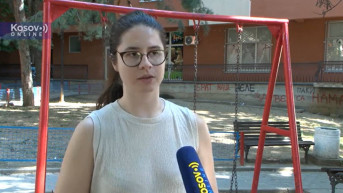
Milica Andric Rakic, the program manager at the NGO Social Initiative, assesses that the census results for the Serbian community in Kosovo show that the number of Serbs in some areas has significantly increased since 2011, and that the boycott in the north may result in smaller budgets for the four northern municipalities, but not more serious political consequences.
"Not the entire Serbian community boycotted the census. The boycott evidently occurred only in the north, while in other places, Serbs participated in the census, as the only areas where population growth was recorded are municipalities with non-majority communities. This is because they also boycotted the 2011 census, but now have recorded a higher number of people. For example, Strpce and Gracanica now have almost 80 percent more residents than they had in 2011. This is good news for them because, in Kosovo, municipal budgets are defined according to a formula that includes, of course, the number of inhabitants, and they can expect their budgets within the Kosovo system to increase accordingly, which is good news for them," said Andric Rakic for Kosovo Online.
On the other hand, she emphasizes that for the four Serbian municipalities in the north, despite the majority of Serbs boycotting the census, there will not be major changes.
"There will still need to be some estimates based on which the budget will be projected. It might be reduced compared to what we had until 2012, when the administrative office was established in North Mitrovica, and then in 2013, when Kosovo municipalities were formed in other northern municipalities. This could cause issues. The government could deliberately give a much lower estimate of the population than the actual number, thereby influencing budget reductions, but that’s the range of consequences," Andric Rakic emphasizes.
She says she does not expect other serious political consequences, and it is unrealistic to think that majority-Serb areas could be prevented from joining the Association of Serb Municipalities due to a lower population count in the census.
"I don't think that is a real threat, because the status of majority-Serb municipalities is not determined by the census but by elections. So, if the Serbian option wins, it is a majority-Serb area, and if there are enough councilors who will vote within the local assembly to join the Association of Serb Municipalities, then the census results are completely irrelevant. Therefore, the only serious consequence will be on the budget projections for these northern municipalities," says Andric Rakic.
She points out that the boycott of the census in Kosovo dates back to the 1990s, and that the international community will not consider these results valid either.
"It's simply unreasonable to take them seriously. Anyone who wants to work with the municipalities in the north will have to continue as before because this is not a new situation since there has been no census in the north since the 1990s. Anyone who wants to seriously engage in development projects, if we ever reach that stage, will simply have to make different kinds of population estimates. There are many methods for doing this: based on the number of children in schools multiplied by the average family size, that's one formula... The number of electricity connections or sewer connections... There are many ways to estimate the population, especially in such a small area. We are not talking about half a million inhabitants," Andric Rakic explains.
She does not exclude the possibility that under different political circumstances, it would be possible to repeat the census in the areas that boycotted it, reminding that such initiatives existed after the 2011 census boycott.
"Back then, there was an initiative to conduct a census only in the north. So, something like that is possible. If the political situation stabilizes at some point, it is possible to have a partial census repeated only in the north," says this activist.
When asked whether the Serbian community's boycott will provoke a reaction from the authorities in Pristina, Andric Rakic says there is no room for serious abuse, except for verbal ones.
"I don't believe, I don't see how these results can change the intentions of Pristina for better or worse. They are as they are, and I believe they would behave the same regardless of what is planned to be done in northern Kosovo. It would be the same regardless of whether the community participated in the census or not. I don't see serious room for it to be abused in any way other than those verbal claims that these are not majority-Serb municipalities. But, the next local elections will change that. Simply put, none of the Brussels agreements define municipalities as majority-Serb based on census results. So, I don't see that there should be a problem," concludes Andric Rakic.


comments