
Avramovska Nuskova: The problem of violence against women is systemic, institutions and media play a decisive role
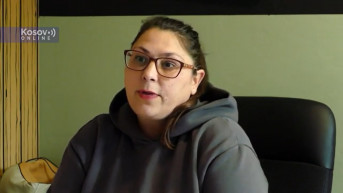
Ana Avramovska Nuskova, project coordinator in the Executive Office of the National Network to end violence against women and domestic violence, says that femicide is one of the most severe forms, but other forms of violence against women, such as sexual, economic, and the most prevalent - psychological violence, should not be forgotten.
The murder of 14-year-old Vanja Djorcevska in Skopje and the previous murder of Liridona Murseli in Pristina have shaken the region, and Ana Abramovska Nuskova emphasizes for Kosovo Online that in such events, especially when it comes to violence against women, the role of the media is crucial. These are events that must not be reported sensationally.
"Sensationalism must be set aside. Such a way of reporting is unacceptable, and we should always start with the victim, and see her life and her path. No excuses should be found for the perpetrator, such as cheating or leaving, or presenting her as an immoral person to justify the acts of murder", Nuskova says, explaining that professional organizations have been pointing out this problem for a long time because the consequences are immeasurable.
"There have been articles where instead of reporting on the murder of a woman, they talk about a 'love drama' or the title is 'from quarrel to murder' or 'he killed her because she cheated on him'. A lot needs to be done, and caution is needed because the media not only have an obligation to accurately present the facts but also have a responsibility, in accordance with international standards and our laws, to prevent future violence and domestic violence", Nuskova emphasizes, noting that femicide is one of the most severe forms of physical violence against women, and six such cases of murder have been recorded in North Macedonia this year.
"When we talk about femicide, we must know that it is one of the most severe forms of physical violence that can be committed against a woman, simply because they are women. In January alone, we had three cases of femicide, another femicide was widely covered in the media in August, and in September, yet another. This year, there was another attempted femicide. When it comes to numbers, we hope to stop there, six women killed in Macedonia, simply because they are women", Anа Avramovska Nuskova says.
According to her, North Macedonia is one of the countries in Europe with the fewest reports of violence, or domestic violence. Still, the reality is entirely different, and the reasons should be sought in patriarchal values, shame, and stigma from the environment, as well as systemic problems, namely the inaction or insufficient action of institutions, and the lack of specialized services that the state should offer to protect women.
"This problem is systemic, not only related to femicide but to all forms of violence that may occur—physical, sexual, economic, psychological as one of the most prevalent forms of violence. There are two reasons, maybe more. One aspect is our traditional, patriarchal aspects, shame, and questions like 'What will others say' and 'Can this really happen to me'. And the other thing is the response of institutions, what and how can be done.
Nuskova says that North Macedonia has excellent laws regarding the prevention and protection from violence against women and domestic violence, which also anticipates and improves protection measures from the previous law. There are urgent and temporary measures that social welfare centers and police officers can propose to the court and provide initial protection when reporting any form of violence.
"I assume that insufficient awareness or knowledge or an insufficient number of training sessions by professionals from the relevant institutions know how to give the right answer. And that is why we need to work. It is one thing to have laws, but their implementation is very important. When we tell the victim to go to the Center for Social Work or contact the nearest police station, they are the ones on the front line who should provide initial protection. So, in the first moment, a risk assessment should be done to see in what situation the victim is and what measures should be taken to provide adequate protection", Nuskova says, mentioning that North Macedonia amended the Criminal Code in February this year, aligning it with the Istanbul Convention.
She says that North Macedonia is one of the few Western Balkan countries to include the new criminal offense - "stalking", which could prevent more serious criminal offenses, especially femicide. However, more concrete data will be available after at least two years of implementation.
Our interlocutor emphasizes that cyber harassment is still a topic that is little known and discussed, but much has been done regarding the recognition of sexual violence over the internet.
"This is an excellent question because it has been widely discussed. You know that we had several cases like Public Room and Gevgelija Hub, and then there was the case of Roma women on Facebook. These are cases with photos of women and girls taken from their social networks where they are public, captured, and forwarded in groups with sexual connotations, along with their personal information (where they live, phone numbers), a rather high form of sexual harassment and violence. A lot of work has been done on recognizing sexual violence in all forms where it can occur, not only in cyberspace but also in public space and public action. Our legislators have recognized the need to criminalize this act. Although we haven't followed the case yet, I think the statistics speak for themselves; I have the latest data from the Ministry of Internal Affairs. The statistics show that it is starting to be reported as a criminal offense and is beginning to be prosecuted. When we talk about forms of violence, the methods of execution change with the changes in technology, and this must be taken very seriously. Since the majority of social media users are minors, adults cannot always have insight into what is happening", Ana Avramovska Nuskova says, coordinator of the project in the Executive Office of the National Network to end violence against women and domestic violence in North Macedonia.



0 comments