
Brkljac: Police reports submitted as evidence, indictment a disgrace for the prosecution
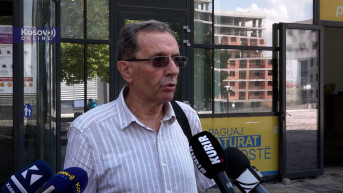
One of the lawyers for Milun Milenković Lune, who is charged by the Special Prosecutor's Office with the criminal offense of terrorism, Miodrag Brkljac, stated that the indictment is a disgrace for the prosecution because it is based on police reports.
"The indictment presented to us by the Special Prosecutor is a legal document that, in a case and legal situation like this, should be supported by clear, solid, and convincing evidence that leaves no room for doubt that our clients indeed committed the criminal offense they are charged with. Instead of proposing such evidence that would practically leave us speechless, to put it simply, the prosecutor has proposed a number of police reports that represent correspondence between police investigators and the prosecutor himself, from which nothing relevant to this case can be established with certainty, and especially, no essential and relevant facts can be established that our clients actually committed the criminal offenses they are charged with," Brkljac said.
Brkljac emphasized that it is a disgrace that an indictment like this has been raised in such a case.
"You saw, the prosecution was offended by this. It’s a disgrace for the simple reason that some of the police reports contain such notorious falsehoods, not to say nonsense, that they do not deserve to be part of these files. Such evidence must, by law, be eliminated as unacceptable evidence and physically removed from the case files, and instead of doing that, the court allows such evidence to remain in the files. God forbid a verdict is based on such evidence," Brkljac said.
He also mentioned that during the opening statement, the prosecutor highlighted that the ambulance vehicles in this case were used for "arms smuggling" and stated that he proposed to the court that the crew who were in the ambulance that day be called to testify.
"And the ambulance is mentioned in this particular case as the means by which the alleged explosive devices were brought to the scene. What could be more natural and normal than to hear from the people who were members of the ambulance crew on that day and at that time, who allegedly brought those explosive devices. You heard the prosecutor say that this is not relevant. Not only is it relevant, but it is extremely relevant, and I expect the court to be up to the task and accept this proposal," Brkljac said.
He also commented on the prosecutor's proposal for the court to call two prosecution witnesses, pointing out that the proposed witnesses have been known since the beginning of the investigation.
"There is a principle in the Criminal Procedure Code regarding the disclosure of evidence, where the parties are obliged to present evidence in a timely manner that they consider relevant to the case. You can't just propose evidence whenever you feel like it and keep some evidence in reserve, saying, 'I'll wait until the last moment and then checkmate the prosecutor.' No, you must present your evidence on time, which the prosecutor should have done. That’s why we all opposed the prosecutor's proposal to hear those people, because those individuals were involved in the investigation and were known to the prosecutor from the beginning," Brkljac said.
The most problematic issue, he emphasized, is how the court will evaluate the evidence.
"Only today do we find ourselves in a situation where verbal evidence is being mentioned. This is an almost unprecedented case in practice where we received an indictment that contains no verbal evidence and instead is entirely based on police reports. Please, let’s use some logic here. A police report involves papers or documents submitted by the police to the competent public prosecutor. The police are, in a way, an interested party in this case. They submit what suits them to prove their version of events, so how can that be valid evidence, especially if it contains things that it should not contain. The police report includes a passage that conveys a conversation between the suspect and the investigator in which a casual conversation is held, where my client talks about how he participated in this or that event, etc. This is absolutely inadmissible; it’s a clear abuse of rights. A suspect must not be asked anything about the events unless they have been provided with a defense attorney," Brkljac said.


comments