
Ciric: The burning of the Patriarchate of Pec one of the darkest episodes of damage to Serbian cultural heritage

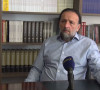
The burning of the Patriarchate of Pec during the night of 15–16 March 1981 was in fact the first in a series of events that would later be repeated when it comes to the destruction of cultural property in Kosovo and Metohija, and unfortunately represents one of the darkest episodes related to the devastation of cultural heritage, art historian Jasmina S. Ciric told Kosovo Online.
Although the church complex within the Patriarchate of Pec itself was not damaged, during the burning of the residence (konak), in addition to the monastery’s residential quarters, certain manuscripts were also damaged, which, she adds, was spoken about very little in the public at the time.
“The message that has been sent to Serbs for the past 45 years is certainly not optimistic. Far from it,” Ciric points out.
In her assessment, the reason why sacred buildings have been targeted by extremists in Kosovo for decades is that they contain preserved inscriptions and records—whether on portals or frescoes—that directly testify to the Serbian identity in the territory of Kosovo and Metohija.
“If we speak about frescoes, there are also donor portraits (ktitor portraits), which are direct testimony to the Serbian presence in that area. Of course, it is not accidental why those structures are targeted—not only in terms of physical destruction, which we have witnessed in the past, but also in the contemporary sense, namely the alteration of historical narratives,” our interlocutor says.
As a particular problem, she highlights the “Kosovization” of Serbian cultural heritage, which, she notes, stems from the fact that UN Security Council Resolution 1244 is violated on a daily basis, as well as from what she calls the unfortunate circumstance that the endowments in Kosovo are registered on the UNESCO website as monuments of the Middle Ages in Kosovo, rather than in Kosovo and Metohija, as originally stated in the nomination dossier.
Considering that in the era of social media misinformation about the origin of Serbian monuments in Kosovo spreads uncontrollably, Ciric says that the digital struggle against such claims should be based on disseminating accurate information and appropriate arguments, using relevant historical sources and scholarly historiography.
“The information that appears day after day certainly requires a faster struggle and quicker reactions, and science cannot always respond adequately at that pace. It could be of great help if, at the state level, certain expert teams were organized to conduct a form of monitoring of misinformation that appears regarding Serbian medieval culture in Kosovo and Metohija and to issue rebuttals citing relevant sources. Such a process should certainly include historians, art historians, and archaeologists who unequivocally testify to the archaeological layers that demonstrate the presence of Serbian medieval material culture, and I sincerely hope that this will be implemented in the future,” Ciric emphasized.


comments