
Albanian Demonstrations in Kosovo in 1981: The beginning of a lasting drama (2)
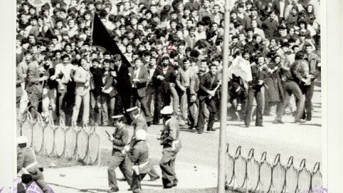
Firming the distance from the Slavic peoples
Writing for Kosovo Online: Dragan Bisenic
Things began to change only after the demonstrations on March 26, and especially on April 1 and 2. At the Provincial Committee of the League of Communists of Kosovo meeting on March 28, 1981, the demonstrations of March 11 and 26 were described as "hostile." In the meantime, on April 2, at a joint session of the Presidency of the Central Committee of the League of Communists of Serbia and the Presidency of the Republic of Serbia, the demonstrations were described as "destructive," aiming at "destabilizing the constitutional system," "undermining brotherhood and unity," and "overthrowing the political system." The next day, on April 3, 1981, at a joint meeting of the Federal Executive Council and the Presidency of the Central Committee of the League of Communists of Yugoslavia, the demonstrations were described as "irredentist," "nationalistic," and even "counter-revolutionary." At a closed session of the Central Committee of the League of Communists of Yugoslavia on April 7, 1981, Lazar Mojsov accused the USSR of the events in Pristina. At the Presidency of the Socialist Federal Republic of Yugoslavia meeting on April 28, 1981, Lazar Kolisevski said: "The fact is, if the units of the Yugoslav People's Army and the police had not intervened, the Socialist Autonomous Province of Kosovo would have fallen."
In August 1981, Gani Koci, Januz Januzi, Ramadan Dobra, Kadri Krieziu, Murat Musliu, Selim Geci, and Bedri Deliu were sentenced to prison terms for organizing the demonstrations on March 11. The verdict stated that the accused had agreed the night before the outbreak of the riots in a room in the student dormitory to exploit the dissatisfaction of the students who had been complaining for several days about the poor service in the cafeteria. They developed a plan and divided roles, and then the next day, they encouraged more students to join them in their intention. After provoking an incident in the cafeteria, they led the dissatisfied students in front of the dormitories and dictated slogans. Ali Lajqi, Bajram Kosumi (a member of the delegation of Albanians from Kosovo in Rambouillet. After the war, he became the vice president of the Alliance for the Future of Kosovo. He served as Prime Minister of Kosovo (2004-2005), after the resignation of the party leader, Ramush Haradinaj), Musli Kosumi and Halit Osmani joined them. They were all already connected to the Albanian illegal separatist movement, actively participating in the organization of later demonstrations. Among the gathered students were Adem Prapashtica, Faton Topali, and Fatmir Grajcevici, members of the leadership of the illegal Communist Marxist-Leninist Party of Albanians in Yugoslavia. None of the convicted denied their participation in the demonstrations, but they falsely claimed that there had been no organization and that the rebellion had erupted due to poor living conditions for students.
However, of crucial importance was the split within the leadership of the Kosovo communists. The then President of the Provincial Committee of the League of Communists of Kosovo, Mahmut Bakali, and a member of the Presidency of the Socialist Federal Republic of Yugoslavia from Kosovo, Fadil Hoxha, vehemently opposed the political qualifications of the unrest, only accepting their social and economic character. In contrast to them, the rising young politician Azem Vllasi went further in condemning these events, stating that they were "counter-revolutionary events."
"I think these demonstrations were unnecessary and they happened at the most inconvenient time for Kosovo, therefore they caused more harm to Kosovo and the Albanian people than benefits. However, the protests took on large proportions and a political character because some illegal Albanian groups, inspired and directed from abroad, were leading the demonstrations, imposing violence and a sensitive national slogan for Kosovo.
According to Bakali, many other non-Albanian political and destructive forces were involved in this affair. "The time when the demonstrations were similar was the most inconvenient for opening or resolving such a case, especially not for resolving it through street riots. Because at that time, a year after Tito's death, many calculations and projects were being made for the future of Yugoslavia, especially in many circles in Serbia," Bakali said. "I was merely opposed to the view that these demonstrations should be judged as a counter-revolution, due to the serious consequences that would arise for the people and the position of Kosovo, but I was neither an inspirer nor a supporter of those demonstrations. Likewise, neither publicly nor tacitly did I support the actions of the then Albanian illegal groups," Bakali said.
Indeed, the communist dissident of former Yugoslavia, Milovan Djilas, also assessed them as such. In his book "The Power of Ideas," he wrote: "When the Communists declared the national movement in 1981 as counter-revolutionary, they made a big mistake. First, because they did not understand what was really going on, and second, when they gave that qualification, they started from ideological schemas that everything non-communist must be counter-revolutionary by definition. This, of course, is not true. No one can stop this national movement of Albanians unless they kill half a million Albanians."
However, the only official who called them counter-revolutionaries was Azem Vllasi himself. Former President of the Provincial Committee Azem Vllasi said that the organizers of the demonstrations in 1981 had not strived to improve the conditions of Kosovo Albanians but intended to replace Yugoslav communism with Stalinism. Vllasi assessed that the organizers and leaders of these protests had idolized the figure of Enver Hoxha and had been ideologically supported in Marxism-Leninism. "Many assessments have been made that this form of reaction was to our detriment, not to our benefit because those protests did not seek more rights for Albanians. The Republic was not formally demanded because the main organizers and leaders of those protests were ideologically inspired by Marxism-Leninism," he said.
According to Vllasi, the leaders of the protests fought against the Yugoslav system on these ideological grounds, which, in his view, was the most liberal socialist state in the world, adding that "their deep indoctrination in the Enverist and Stalinist mentality made the slogans 'Kosovo - republic' seem like a demagogic mask."
"The main slogan on March 26, at the Student Center, where I was also present, was: 'Long live Marxism-Leninism'," Vllasi says. He emphasized that it was unfounded to argue that the protests in 1981 had raised national awareness among Kosovo Albanians because he points out that "national consciousness was constantly increasing." "We had schools, universities, media, the Academy of Sciences. We were not without national consciousness. Based on this awareness, we managed to institutionalize ourselves," Vllasi said.
According to him, these Marxist-Leninist slogans did not resonate well in other parts of former Yugoslavia when it became clear that the goal was not just a republic.
"We openly discussed the republic even during the constitutional changes in 1968 and 1969. When it became clear what the ideological platform of the protest leaders was, it became clear that the demand was not for a republic equal to other parts of former Yugoslavia, but for a republic according to the Enverist ideology. Then a real conflict broke out, and Serbia took advantage of that situation, constantly creating problems for Albanians, as it does today," he said.
"It is untrue what the organizers of the protests claim, that the aim of the demonstrations was national unity because the idea of national unity was carried only by Adem Demaci. Yugoslavia, which was an obstacle to national unity, has been destroyed, and unity has not happened. Why?" Azem Vllasi poses the question.
Vllasi says that everyone at the time assessed that violent demonstrations were not the best solution.
"A reaction had to happen in other forms because none of the other parts of former Yugoslavia reacted, as it was only 10 months after Tito's death. The organizers of the protests in 1981, until today, will not tell the truth about who incited those protests. I say with conviction that neither federation nor province, let alone Albanians, had any interest in violently solving problems," Vllasi stated.
Vllasi correctly stated that the events had been organized by members of illegal Enverist groups under the influence of Albania. He believed that intelligence services from Albania and Eastern Bloc countries played a significant role. Mahmut Bakali wrote to US Secretary of State Lawrence Eagleburger in August 1990, claiming that the events of 1981 were staged and that he had evidence to support this claim.
Illegal groups inside and outside the country began to reorganize and launched the idea of uniting these groups into one powerful political entity. From several illegal groups that existed before the beginning of the demonstrations in 1981, after their merger into a single political entity, the Movement for the Socialist Republic of Albania in Yugoslavia emerged.
The demonstrations in 1981 became a factor and a source of information for the internationalization of the Albanian issue. The development of the March-April events in 1981 was supported by Albania, and almost all the world's press wrote about it. Western agencies and the press indeed wrote about and supported the demonstrations. Enver Hoxha stated at the 8th Congress of the Party of Labour of Albania, held on November 1, 1981, that the Albanian state had protected and would continue to protect the part of the Albanian nation living in "their countries in Yugoslavia," which did not mean interfering in Yugoslavia's internal affairs.
Although Albania's policy at the time supported these demonstrations and their demands, a decade later, in September 1992, Albanian President Ramiz Alija, in a lengthy interview conducted by Blerim Shala and Lukman Halili, published as a book titled "I, Ramiz Alija - Witness to History," said: "I can say that the demonstrations in 1981 were completely unexpected for us, and we often wondered who was interested in them because the development of relations between Albania and Kosovo was so favorable, as these events benefited others more than Albanians. Personally, I often thought that Serbs had more benefits from those events."
Ismail Bala, then a student at "Jeta e Re" high school in Suva Reka - a member of illegal groups (OMLK), later a member of the National Liberation Movement of Kosovo and the KLA - was arrested on June 3, 1981, and as a 16-year-old, he was sentenced to four years in prison. He formulated the significance of the demonstrations as follows: "The demonstrations of 1981 were the awakening of the Albanians from agony. They marked the path that the Kosovo Albanian should take, towards liberation and full independence from Serbia. They strengthened the national feeling and our distance from the other Slavic peoples of former Yugoslavia."
THE END


comments