
Blocking the import of Serbian goods harms everyone
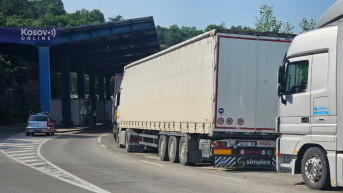
The blockade of Serbian goods introduced by the Kosovo Government almost a month and a half ago is causing millions of dollars in damage to businesses on both sides of the administrative crossings of Jarinje, Merdare, and Brnjak, but it is also a huge blow to the pockets of consumers in Kosovo, who, according to the interviewees of Kosovo Online, have faced with new price increases. They add that there is no economic justification for the fact that the truck ramp for Serbian goods is still lowered.
Despite clear calls from the EU, USA, business associations, and companies for the blockade to be lifted and alarming estimates of the huge damage to the economy of Kosovo, which is otherwise in a bad state, the Government headed by Albin Kurti does not give up on the blockade. Economists in Kosovo warn that this decision, besides generating additional inflation, also discourages potential investors. The authorities in Pristina were not alarmed by the indicators that Kosovo is the second poorest in Europe, after Ukraine, and that according to the latest UNDP survey in Kosovo, respondents cited unemployment, poverty, and inflation as the biggest problems.
The head of the Center for Regional Cooperation of the Serbian Chamber of Commerce, Aleksandar Radovanovic, assessed that the Kosovo Government's decision to ban the import of Serbian goods was unreasonable from the point of view of the economy and added that it had a harmful effect on both the Serbian and the Kosovo economy, with the fact that, as he added, the Kosovo economy would have more damage.
As he explained for Kosovo Online, the decision was unreasonable because it was made at a time when there was general inflation all over the world, and Kosovo itself was "cutting the channels of distribution of goods and supply chains".
"It is a move that did not care about the interests of the economy," Radovanovic says.
According to him, when it comes to the damage that the Serbian economy will suffer, it was forecasted in relation to the analysis of last year's daily deliveries of Serbian products to Kosovo.
He explains that it must be divided into two parts, i.e. from June 14, when the decision was made, to July 8, when the Kosovo Government allowed the import of artificial fertilizers, animal feed, raw materials, semi-finished products, as well as machinery and production equipment.
Last year's delivery of goods to Kosovo daily, as Radovanovic says, amounted to about 1.3 million euros, which includes two-thirds of the goods intended for further processing, so it is clarified that the damage daily should be reduced from July 8 for 66 percent.
"They were guided by that decision, which our analysis also shows, which is that this measure affects the production sector in Kosovo, which is about two-thirds of the products that are marketed for further processing, which includes raw materials, but also funds for work. In a way, we helped them to help their economy and not to stop production," he said.
Radovanovic says that Serbian businessmen were interested in how long this measure could last, given that the Kosovo market is interesting for them.
"About half a billion euros of products are sold there annually. No market is negligible, but when viewed in relation to the total export of Serbia, it is not very significant. It is certainly important from the point of view of small and medium-sized enterprises and very significant in that sense for our companies," he says.
He points out that in areas in Kosovo with a Serb-majority population; people probably do not have the opportunity to get Serbian goods because anything that is a finished product does not pass the border.
Stating that the cooperation with the Kosovo Chamber of Commerce functions smoothly and that they cooperate within the framework of a joint platform, Radovanovic indicates that the Kosovo Chamber itself requested that this unreasonable decision be abolished because it was very harmful to the economy of Kosovo.
He points out that this decision harms the economy of Kosovo more than Serbia.
"The Kosovo economy is fragile, it is not strong, and if you cut supply chains to the production sector, you hit macroeconomic parameters that will show negative consequences for GDP at the end of the year. Also, Kosovo consumers are affected, who now have to pay for lower quality products at more expensive prices quality compared to those who came to them from Serbia," Radovanovic concluded.
The President of the Alliance of Kosovo Business, Agim Shahini, tells Kosovo Online that, according to the Alliance's preliminary research, the Serbian economy has suffered more than 40 million euros in damage so far due to the blockade.
"Kosovo also has losses, but significantly less than Serbia. All of this goes in the direction of losses due to the fact that politicians, both in Kosovo and in Serbia, whenever something good happens for the economy, make some political move and destroy the economy. So it is necessary to solve the problems and to finish the dialogue with Serbia that can move goods, capital, and general freedom of movement of people between Kosovo and Serbia without hindrance," Shahini says.
He indicates that Kosovo annually imported goods worth about 370 million euros from Serbia and that these products are now partially replaced on the market by goods from other countries, mainly from Bulgaria, North Macedonia, Albania...
"These goods, however, in most cases are more expensive than the products that arrived from Serbia. The daily damage to the Serbian economy in terms of exports to Kosovo is more than one million euros. Unfortunately, this will last until the Prime Minister of Kosovo decides that the economy should not suffer because of political disagreements. We have to separate politics from the economy, and that means that regardless of what happens in the political sense, economic cooperation should be developed," Shahini points out.
He also states that the blockade also affects the lower interest of potential investors to invest in Kosovo.
"Investors who come to Kosovo do not think only about the Kosovo market, but about the market in Serbia, in other Balkan countries. While we look at what is happening in the north of Kosovo, while we look in the direction of the dialogue that is not going as it should, investors withdraw or give up their investments. No foreign investor is going to invest in a country where there is no security, good business climate, or openness to investments, and which has no political and economic stability. According to what we have seen in recent months, the events in the north of Kosovo indeed affect it," Shahini concludes.


0 comments