
On this day 26 years ago, the Battle of Kosare began
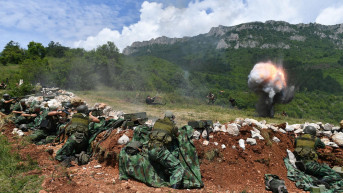
Twenty-six years ago, on this day, the Battle of Kosare began, which is remembered as one of the symbols of heroism of the Serbian army during the NATO intervention in 1999. The fighting on the Yugoslav-Albanian border lasted for 67 days, and 108 members of the then-Yugoslav Army lost their lives in defense.
The attack began on the saddest Christian holiday, Good Friday, in the early morning hours of April 9, and the weapons fell silent only several months later, on June 14, with the signing of the Military-Technical Agreement in Kumanovo between NATO and representatives of the Federal Republic of Yugoslavia.
Dusko Sljivancanin, President of the Veterans’ Association of the 53rd Border Battalion and wartime commander of this unit, emphasized to Kosovo Online that the memory of the heroism of all army members has not faded even 26 years later, and that it is the duty of the survivors not to let this and many other battles, as well as all fallen comrades, be forgotten.
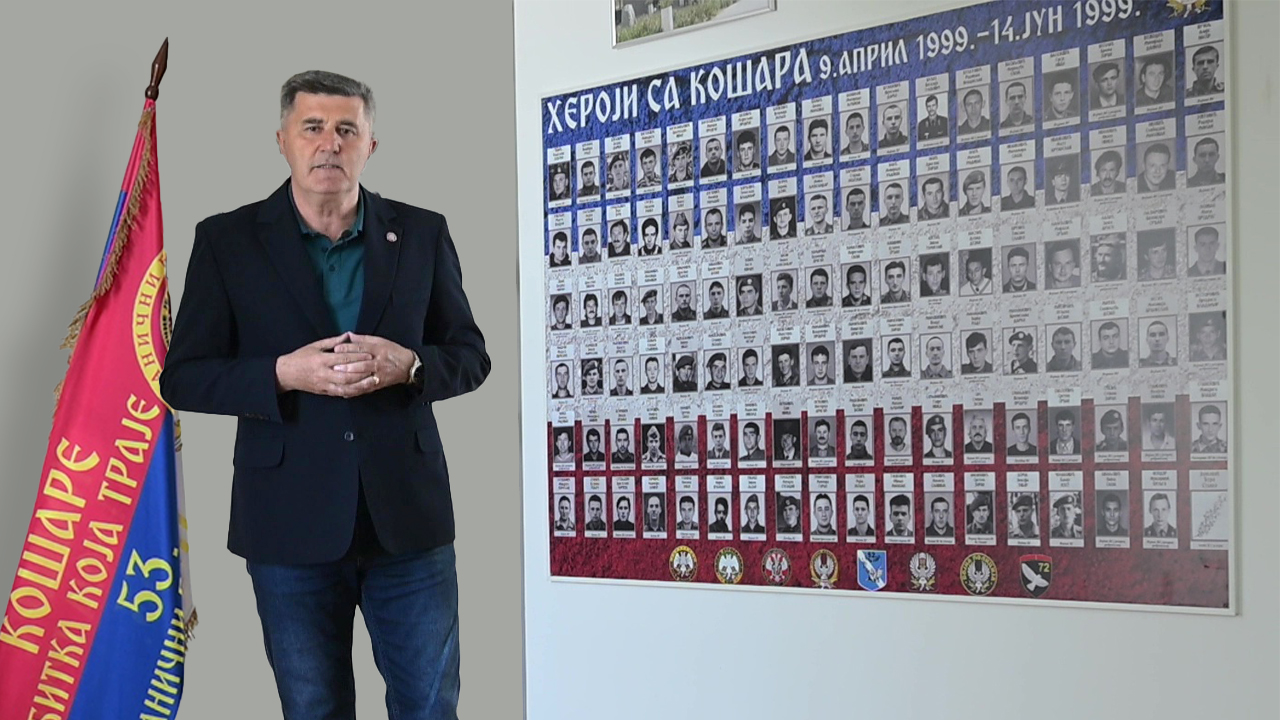
He stresses that the fiercest fighting at Kosare took place in the first three days and that the border guards, mostly conscripts serving their mandatory military service, were facing an enemy ten times stronger, whose core was made up of the former KLA, and also included “dogs of war,” regular Albanian forces, and NATO air forces.
He emphasizes that the attack on the Kosare outpost was the first attempt at a ground invasion with two main objectives:
“First, to create a corridor for smuggling weapons and equipment to terrorists along the route from the Albanian outpost Pades, our outpost Kosare, the village of Batusa, the village of Junik, Junicko Polje, Decani, and further toward Drenica. The second and perhaps more important goal was to present the so-called terrorist KLA to the international and global public as a legitimate military force capable of conducting combat operations independently,” Sljivancanin said.
He explains that the most difficult – the “first strike” – was borne by the soldiers at the Kosare and Morina outposts, part of the 1st Border Company of the 53rd Border Battalion.
“By decision of the commander from the forward command post of the Pristina Corps in Djakovica, the available forces at the time were brought into the fight: a combat group from the 5th Military Police Battalion, three armored combat vehicles from the 52nd Artillery-Rocket Brigade stationed in the village of Batusa, which was providing deep defense of the state border, a rapid response platoon from the 53rd Border Battalion led by the legendary Second Lieutenant Predrag Leovac, and a 60mm mortar unit from the General Pavle Ilic outpost,” Sljivancanin said.
He adds that the fiercest battles occurred on April 11, on Orthodox Easter.
“The hardest and bloodiest day for the battalion was our holiest and happiest Christian holiday, Easter. On that day, eight members of the 53rd Border Battalion gave their lives, and it turned out that those first three days were crucial in the defense of the state border,” Sljivancanin emphasized.
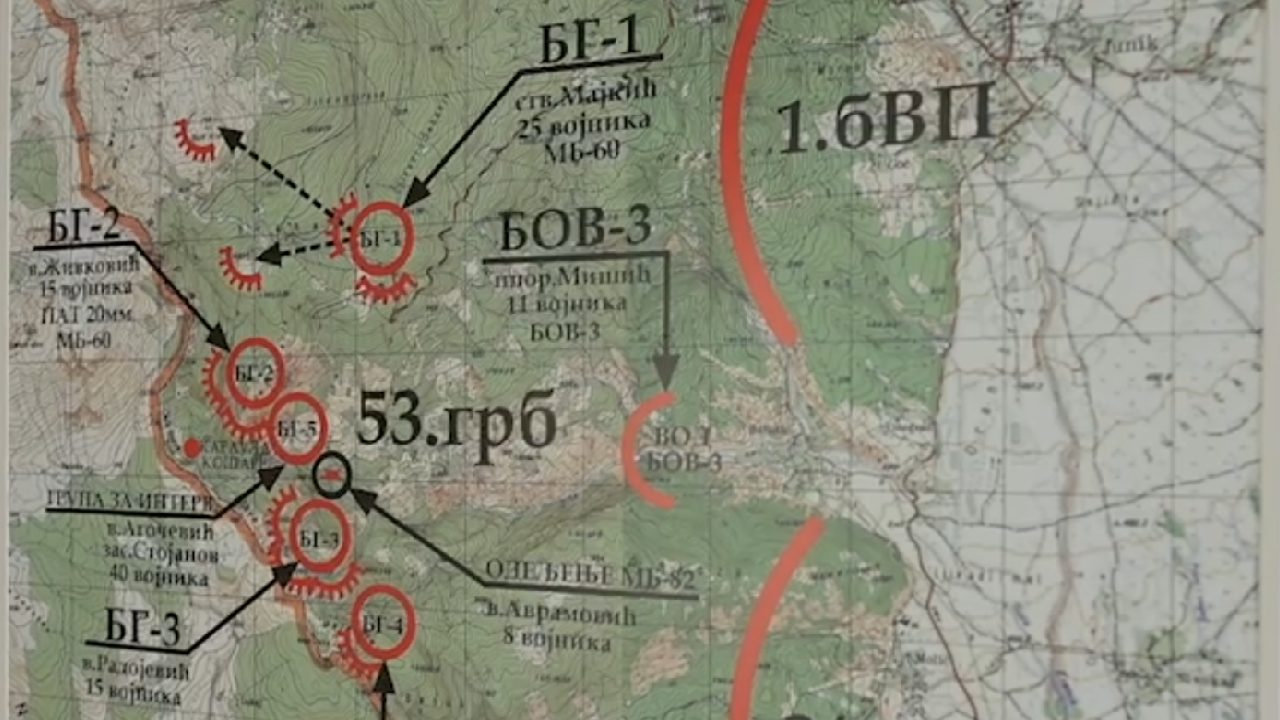
In this way, he specified, members of the 53rd Border Battalion, along with reinforcements, stopped the aggressor at the state border, inflicted losses, and created conditions for bringing into the fight the 2nd Battalion of the 125th Motorized Brigade, followed later by parts of the 63rd Parachute Brigade, parts of the 72nd Special Brigade, and the 52nd Military Police Battalion.
The battle in the Kosare outpost area ended on June 14 after the signing of the Kumanovo Agreement.
“During this battle, 108 members of the then-Yugoslav Army laid down their lives for their homeland, coming from the 53rd Border Battalion, 52nd Artillery-Rocket Brigade, 125th Motorized Brigade, 5th Military Police Battalion, 63rd Parachute Brigade, and the 72nd Special Brigade,” Sljivancanin stated.
He concludes that only the armed form of aggression against Serbia ended 26 years ago.
“With the end of the battle in the Kosare outpost area, the armed aggression ended, but not the other forms of aggression against Serbia, which continue to this day,” Sljivancanin emphasized.

0 comments