
Anniversary of the start of NATO bombing: Trauma and fear for a lifetime
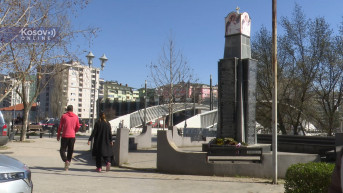
Twenty-six years after NATO's bombing of the Federal Republic of Yugoslavia, the testimonies of those who survived that period remain harrowing. Petar Janackovic, Zorica Zivulov, and Dusanka Vlahovic from North Mitrovica recalled the fear, hardship, and destruction during the 78 days of bombing. Life under the bombs, the trauma that remained even after the bombing ended, but also the strength of unity, are integral parts of their memories.
Despite the different circumstances they were in – whether working in a factory, staying in shelters, or caring for their families – the interviewees emphasize that fear and uncertainty followed them every day, while the sounds of sirens and explosions became part of their daily lives. They also share a common feeling of injustice over the suffering of innocent people and the destruction, but also pride in the solidarity and humanity that helped them endure the most difficult moments.
Petar Janackovic was commuting between Vucitrn and Slatina during the NATO bombing. He recalled that even then, there was a work obligation at the galvanized sheet metal factory, while his family was in the then-multiethnic village of Slatina.
No one expected the bombing, he recalled – not the Serbs, nor their Albanian neighbors.
"It was a state of emergency, as we all know, and we actually had a shelter in the factory. I was with my wife and children in the village of Slatina. It was stressful, everyone knows that. There was a military warehouse very close to our village. It was covered with soil, only the roof was visible, and they bombed it. Our houses were heavily damaged. I remember we had a large glass-covered terrace, and everything was shattered. My children were small at the time – it was a shock. It was a very difficult situation," Janackovic recalled.
One of the hardest challenges during the 78 days of bombing, according to him, was the food shortage.
"The hardest part was when we didn’t have supplies, we didn’t have food. My mother was sick at the time, so I had to take her to Mitrovica for treatment. I also had to be at the factory to maintain the zinc bath. Personally, it was traumatic. My children were small at the time, and they must have felt it too – it passed from us to them," he emphasized.
Zorica Zivulov lived through the bombing in South Mitrovica, and as she said, the memories are still fresh, even though many years have passed, because trauma cannot be forgotten.
"The first missile hit the barracks in Bair. It was terrifying. I can still hear that sound to this day, how it approaches – you have the feeling it will hit you," she said.
She also recalled how children, who were of school age at the time, were traumatized and would ask every night at 8 PM if they would be bombed again. At first, she said, people paid attention to the sirens, but later they became constant.
"Even today, when I hear firecrackers, I feel unwell," Zivulov added.
Besides the bombs falling from the sky, she was also deeply disturbed by the murders and kidnappings that were frequent during that period. Surviving in such difficult times was not easy, but as she pointed out, the Serbian people maintained a sense of unity by sharing food.
"We all had flour, we gathered together, and we exchanged what we needed. We shared everything we had. We had a neighbor who worked at a store, milk and bread would arrive, not in enough quantities, but she always set some aside for us, for the whole building, and we would share it. Whoever had potatoes, onions, pasta… we managed like that," she said, adding that they had already survived the 1993 hyperinflation and were used to hardship.
She added that during the unjust bombing, she feared most for the lives of her loved ones.
"You don’t know if someone is alive, if they will be killed. These are terrible things, traumas that leave a mark for a lifetime," Zivulov emphasized.
Dusanka Vlahovic recalled that women and children spent most of the bombing period in shelters.
"When the siren sounded, the first thing was to calm the children. Then we all went to the shelter. We believed we would be safe there. There were no men in our building, they were all in the reserves. We locked the outside doors because we were afraid of the Albanians. There are extremists on both sides. It was terrifying," she said.
There was still a work obligation, and she was working as a nurse in the coronary unit at the time. She recalled that even then, in North Mitrovica, there were Albanians being treated, and she emphasized that they were given the same care as all other patients, without discrimination.
Life in the shelter, she said, was strange during the first week, but later they got used to it. There was a strong sense of support and empathy among the Serbs in the shelters.
"We had a wood stove, we lit fires, cooked whatever we could, and we got used to it. When the bombing ended, we said, 'Shall we go back to the shelter to socialize?' because that’s where we all gathered. Everyone came down, it was a three-story building, and we spent time together. We had food reserves because the bombing had been announced beforehand. We helped each other. We didn’t have much, but it was enough for everyone. We shared everything we had," Vlahovic recalled.
The worst memory she has is of the bombing of the police station in the north.
"When the bombing stopped, every night, every day, we stood by the bridge. When we were free, we were there, guarding it to prevent them from crossing and attacking us. My colleague's child was three years old, I remember it asked its grandmother if she would protect them, like they protected the bridge. Even children internalized it. But we endured, and we had moments of togetherness. But it was unfair, Serbia did not deserve to be bombed," she concluded.
0 comments