
Diocese of Raska and Prizren: Draft law on Inspectorate could jeopardize legally guaranteed rights of Serbian Orthodox Church
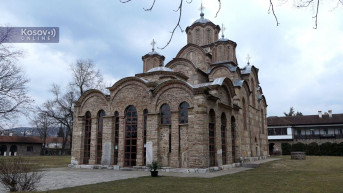
The Diocese of Raska and Prizren has expressed serious concern over the Draft Law on the Central Inspectorate for Cultural Heritage, adopted at first reading by the Kosovo Assembly, warning that the Inspectorate’s new powers could jeopardize the legally guaranteed rights of the Serbian Orthodox Church and circumvent existing mechanisms for the protection of monasteries and churches in special protective zones.
The Diocese of Raska and Prizren noted that the draft law, on which the Serbian Orthodox Church had not been consulted, provides for the establishment of a Central Inspectorate within the Ministry of Culture.
The Diocese warned that the Inspectorate would be granted new and expanded powers—to oversee all works on cultural heritage sites, suspend them in certain cases, directly review the legality of construction activities in protected areas, and take other measures that could seriously interfere with the rights of owners of cultural heritage properties.
“Our Diocese supports professional oversight that protects all cultural heritage sites, including our holy sites, from damage and unlawful construction. We are concerned, however, that the new powers could in practice be used to circumvent the protection already afforded to the Church by the Law on Special Protective Zones, the Law on Freedom of Religion and other applicable legislation. The Law on Special Protective Zones requires municipalities to obtain the Church’s consent for certain interventions. If no agreement is reached, the parties are required to refer the matter to the Implementation and Monitoring Council, which includes representatives of the European Union, the OSCE, two competent Kosovo ministries and the Serbian Orthodox Church,” the statement said.
The Diocese of Raska and Prizren noted that the new draft law mentions neither the Law on Special Protective Zones nor the Implementation and Monitoring Council.
“This leaves room for matters directly affecting the life of our holy sites to be decided by an institution vested with extensive powers, even though it has not been granted direct jurisdiction within special protective zones under the relevant special law, while the Law on Freedom of Religion prevents it from accessing and intervening in religious buildings without the consent of the religious community,” the statement added.
The Diocese of Raska and Prizren stressed that churches and monasteries in Kosovo have for centuries been places of worship and gathering for the faithful, while monasteries are also the homes of monks and nuns.
“For a monastic sisterhood or brotherhood, the potential unilateral suspension of essential repairs or a prohibition on works could have serious consequences. Although the Draft Law does not provide for any change of ownership, the Serbian Orthodox Church, as owner, could be directly restricted in its ability to properly and promptly maintain, restore and use its holy sites in accordance with their purpose and existing legal provisions. Moreover, the powers that this law would grant to the Inspectorate point to consequences that could be more drastic than merely restricting activities,” the statement said.
The Diocese of Raska and Prizren recalled that the European Commission, in its Kosovo Report of November 4, 2026, also noted that inconsistent interpretation of regulations had already resulted in violations of the Law on Special Protective Zones.
“The Commission calls for a comprehensive legal framework for the protection of the Church, based on the Ahtisaari Plan and reaffirmed by the 2023 agreement, as well as for the Implementation and Monitoring Council to fully exercise its role. The European Commission also clearly notes that the use of an incomplete name for the Church and certain actions concerning its holy sites are perceived as a denial of its identity and as calling its religious and cultural heritage into question,” the Diocese noted.
The Diocese of Raska and Prizren believes that, before the Draft Law on the Central Inspectorate for Cultural Heritage is finally adopted, if there is no willingness to return it for additional consultations—which were absent when it was first placed on the agenda—it must be supplemented with a clear provision stipulating that inspection measures may neither restrict rights already guaranteed to the Church by law nor circumvent the role of the Implementation and Monitoring Council.
“Any law intended to protect our holy sites must also respect the Church’s right to care for them, as well as the freedom and undisturbed life of those who live, serve and pray to God within them,” the statement concluded.
The Serb List said yesterday that the Kosovo Assembly, despite opposition from its MPs, had adopted in principle the Draft Law on the Central Inspectorate for Cultural Heritage, which it claims grants broad powers to the Inspectorate while failing to provide clear guarantees for respect for the property rights of the Serbian Orthodox Church and the laws protecting the Church’s special status and its property.
Serb List parliamentary group leader Igor Simic warned that the proposed Law on the Central Inspectorate for Cultural Heritage represented a serious threat to the rights of the Serbian Orthodox Church, the protection of its monasteries and the preservation of Serbian cultural identity in Kosovo.
He said the Serb List had pointed out that the draft law encroached upon the constitutionally guaranteed autonomy of religious communities and existing regulations governing special protective zones.

comments