
The facade in Banjska is being restored, Father Danilo: The monastery is spiritually alive
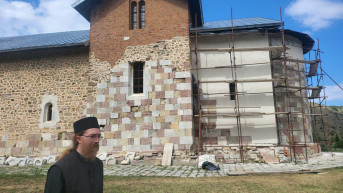
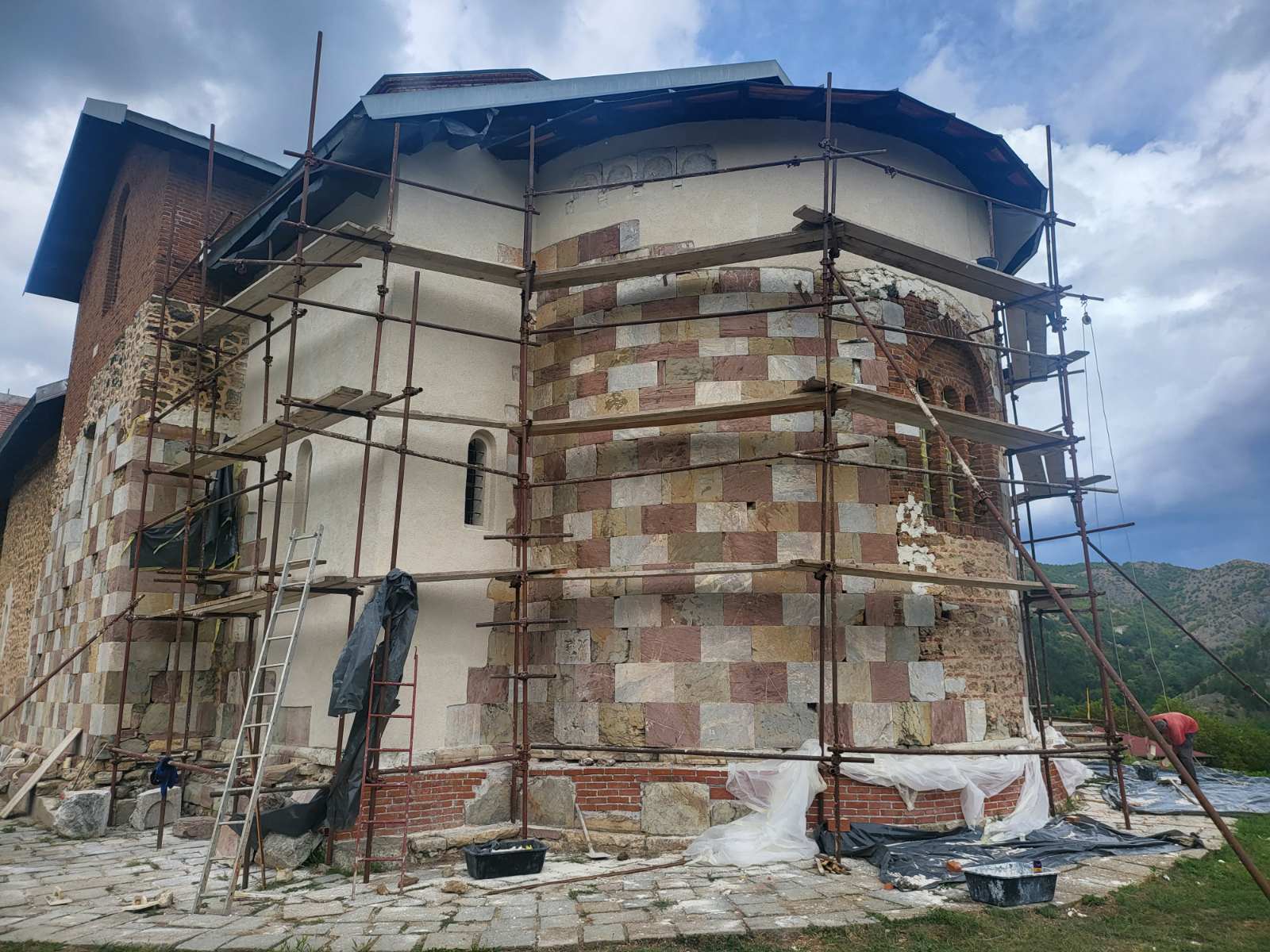
In the Banjska Monastery, the endowment of King Stefan Uros II Milutin, works are underway on the decoration of the facade of the church dedicated to the Holy First Martyr Archdeacon Stephen, patron of the Nemanjic dynasty.
The visible remains of the unique facade made of stone in three colors, which at one time could only be compared to the Tuscan facade of the Siena Cathedral, testify to an unrepeatable architectural feat from the 14th century.
The abbot of the Banjska Monastery, protosyncellus Danilo, points out that the Government of the Republic of Serbia and the Office for Kosovo and Metohija are the initiators of the restoration of the Banjska Monastery, in cooperation with eminent experts from the Republic Institute for the Preservation of Cultural Monuments.
"With the blessing of Bishop Teodosije from Prizren, thanks to our state, the Government of the Republic of Serbia, the Office for Kosovo and Metohija, and individual donors, work is underway on the decoration of the facade of the monastery church, under the supervision of experts from the Republic Institute for the Preservation of Cultural Monuments. The monastic quarters were also renovated, the monastery's economy, the production of beer, for which the monastery was once famous, was started," Abbot Danilo told Kosovo Online.
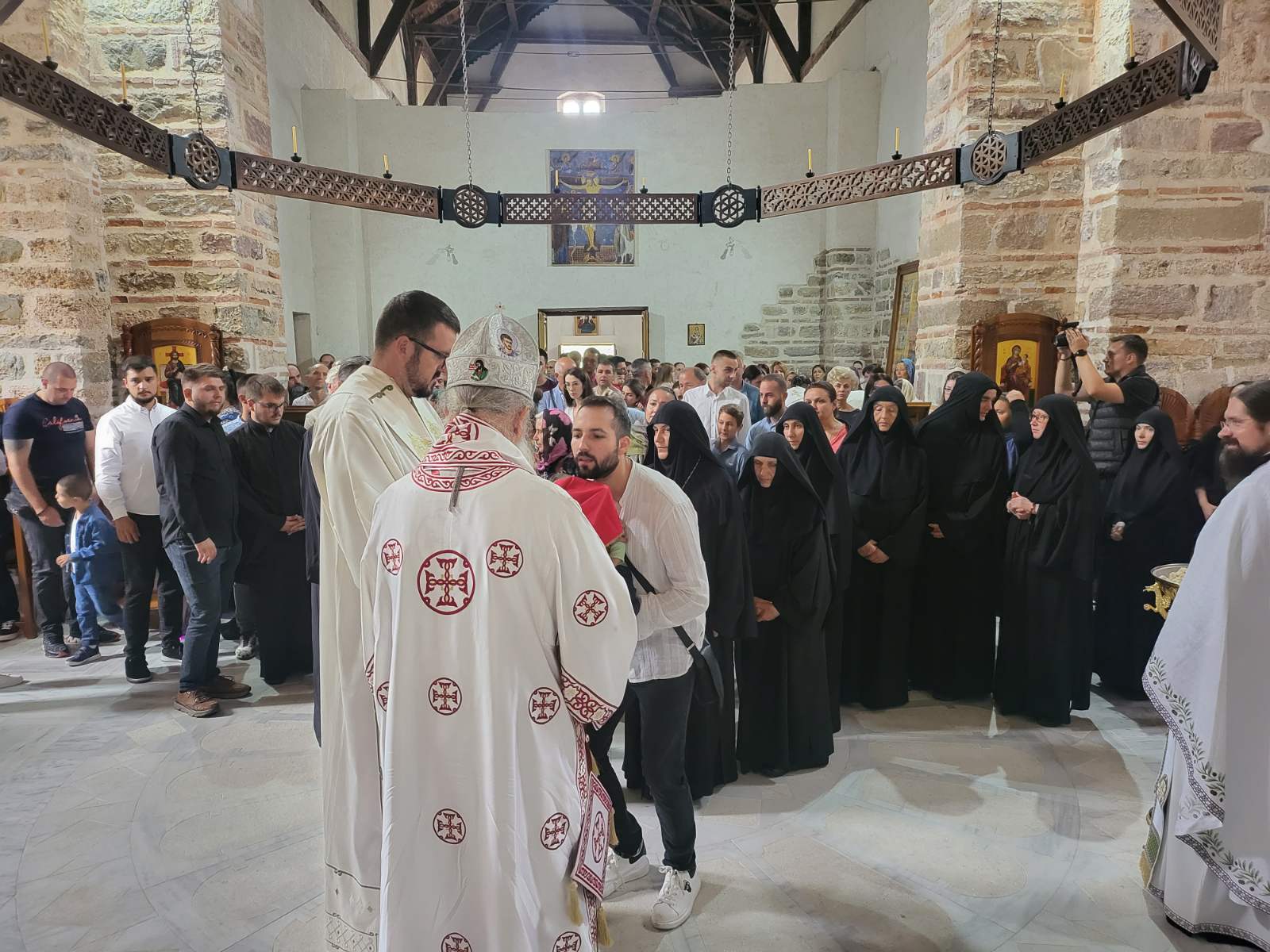
He added that the monastery lived spiritually and that it had become a meeting place for the faithful and a recognizable destination for tourist and professional excursions.
Showing us the remains of a large-scale complex, which was once surrounded by defensive ramparts, Father Danilo emphasizes that Banjska was famous for its beauty, the richest gifts, and the most luxurious endowment of Milutin, stating that "Banjaska gold" is mentioned in the Karlovac genealogy, at the beginning of the 15th century, as one of the most beautiful artistic legacies, "The floors of the Prizren church, the church of Decani, the narthexes of Pec, the gold of Banjaska, the writings of Resava School are nowhere to be found".
"Holy King Milutin decided that Banjska would be his burial church, that's why it stood out from the other endowments of the greatest Nemanjic builders. The best master builders, stonemasons of that time, like Fra Vita from the city of Kotor on the Adriatic coast, who would later build the Decan Monastery, were gathered here. The construction of the monastery, between 1313 and 1317, was directed by the invitation of King Milutin himself, Hilandar abbot Danilo, the latter Archbishop," Father Danilo said.
The Banjska Monastery does not shine with the same brilliance today, but it bears witness to the seven-century suffering past of the Serbs in Kosovo, as a symbol of renewal and survival.
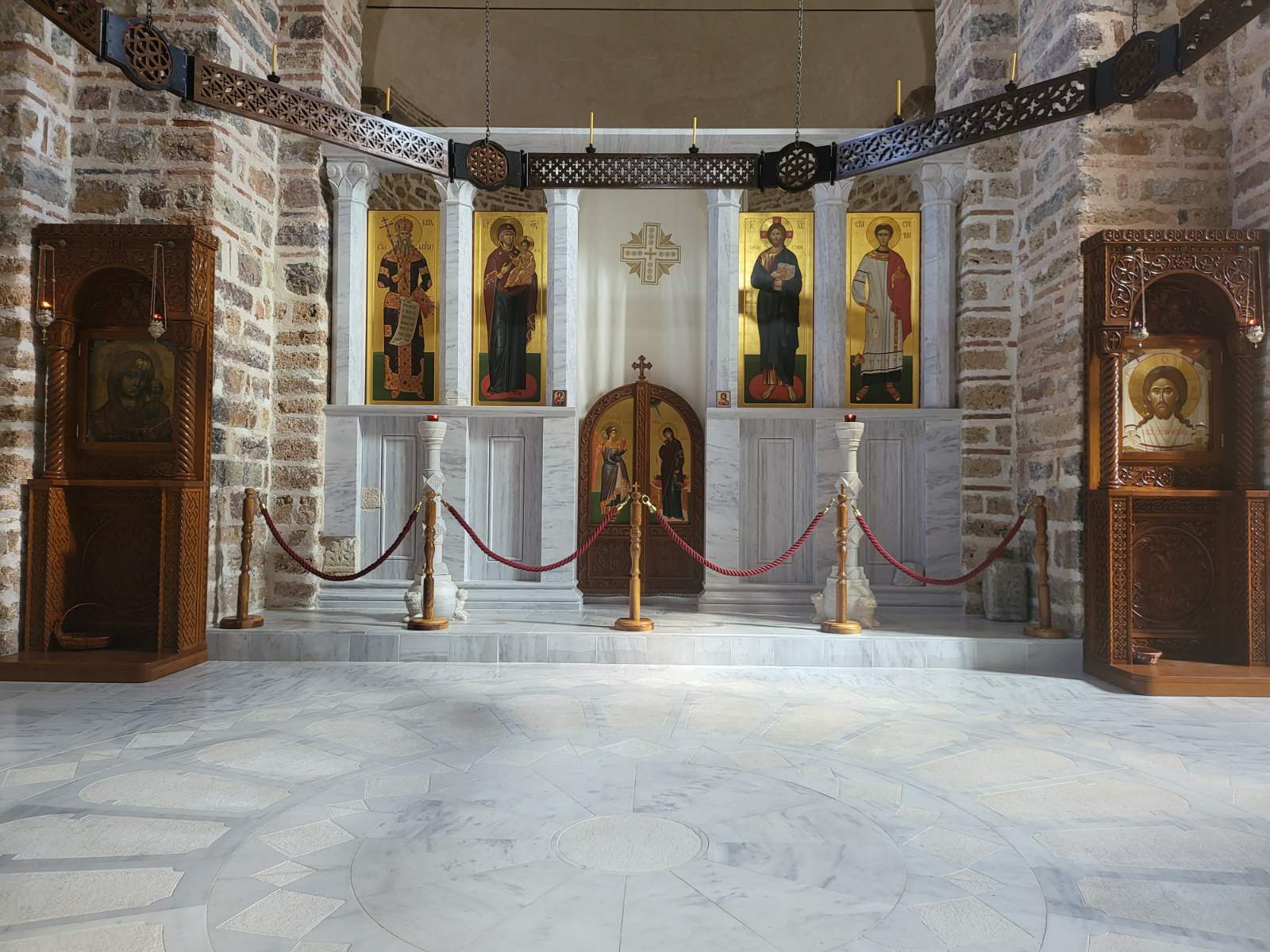
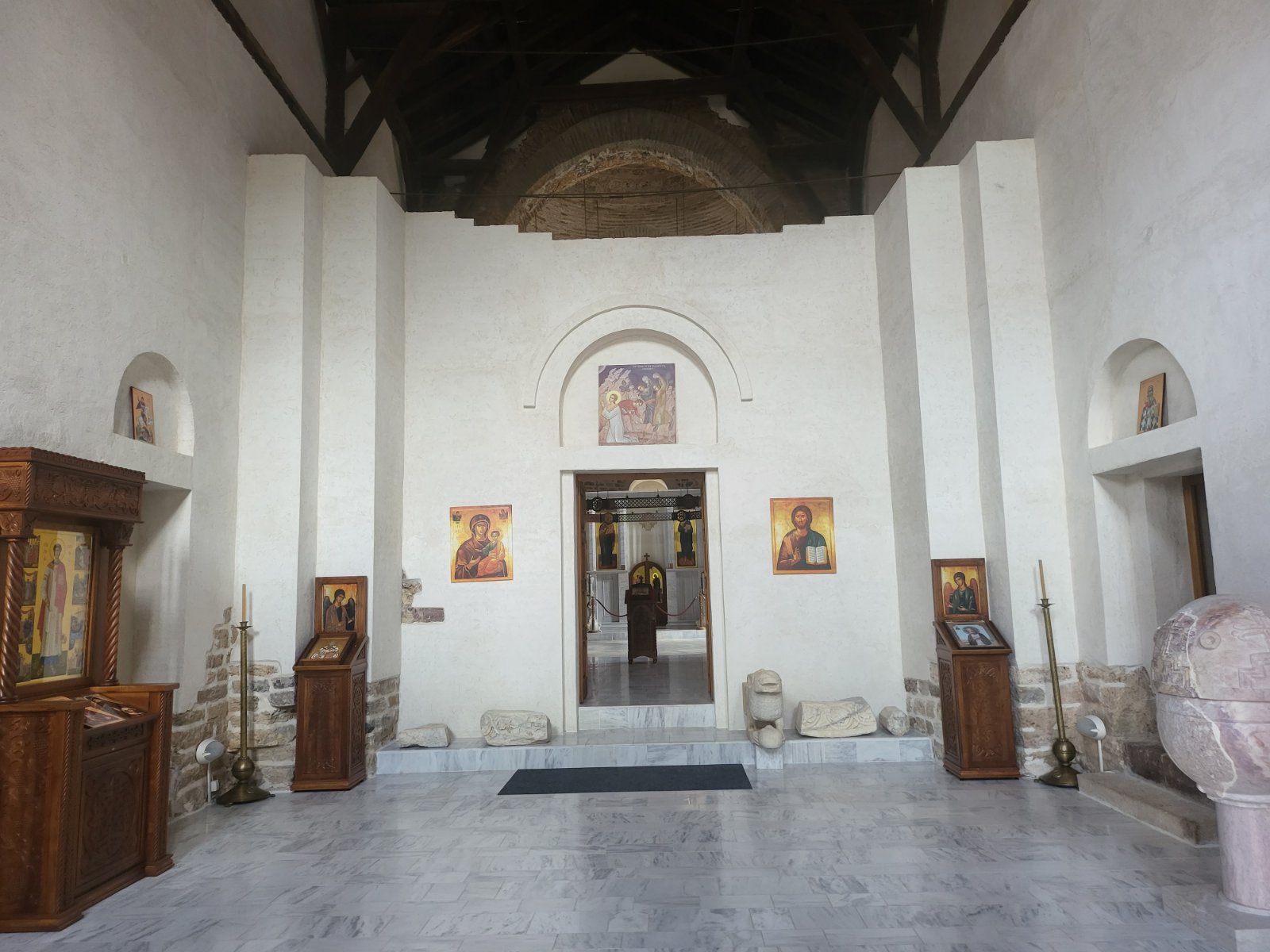
After more than five centuries, on August 15, 2004, the bells rang again in the Banjska Monastery, the blessed Serbian Patriarch Pavle, with eight other archbishops and many clergy and people, served the holy liturgy. Then the comprehensive renovation of the monastery began.
The Banjska Monastery is a category I cultural monument of importance for the Republic of Serbia.


0 comments