
Rakovic: The goal is to remove Serbs from Kosovo and Metohija and erase every trace of their existence
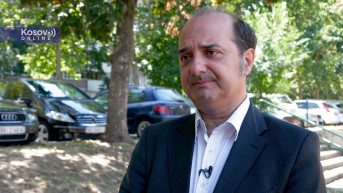
Historian Aleksandar Rakovic believes that the withdrawal of the Carabinieri from the main Ibar Bridge and the involvement of the Kosovo Police in providing security for Visoki Decani conceal malicious intentions aimed at exerting further pressure on the Serbian people and creating another threat.
Rakovic told Kosovo Online that the incident in Lipljan also demonstrates how vulnerable the religious sites of the Serbian Orthodox Church are.
"The Albanians will pretend that they are capable of protecting Visoki Decani and securing the bridge in Kosovska Mitrovica, but that will last only until someone presses the 'on' button, when they are supposed to step aside as some kind of quasi-security force and allow the crowd through to threaten both Visoki Decani and the northern part of Kosovska Mitrovica. This is all a staged performance intended to demonstrate supposed progress, while very malicious intentions lie behind it—to exert further pressure on the Serbian people and create yet another threat," Rakovic said.
He also stated that Serbs have had very negative experiences with the Kosovo Police.
"The consequences could include an influx of Albanian separatists and violent groups into northern Kosovo and Metohija, specifically northern Kosovska Mitrovica. And that could happen suddenly, without any preparations or prior warning. So all this talk that the security situation is good and that they have confidence in the Kosovo Police and so on is just a lot of 'blah-blah.' The experience Serbs have had with the Kosovo Police—which are merely offshoots of the KLA—is very bad, extremely negative, and not at all encouraging. At critical moments, they will always pose a threat to the Serbian people," he said.
Rakovic also believes that the ultimate goal is to remove Serbs from Kosovo, reduce their presence to the absolute minimum, and make Kosovo ethnically Albanian.
"And later, once it becomes ethnically Albanian, an attack on the Serbian Orthodox Church would follow, and you should know that this is not something we do not expect. The events of 1997, 1998, and 1999, followed by those of 2004 and subsequent years, demonstrate that the Serbian Orthodox Church is highly vulnerable and that all attempts to integrate it, to whatever extent possible, into the system of the so-called Kosovo have failed because the so-called Kosovo regards it as a destabilizing factor rather than as an institution that could play a constructive role in that society. The Albanians have a clear objective of seizing Serbian ecclesiastical and cultural heritage, presenting it as their own—in other words, appropriating it and portraying it as their own—in order to erase every trace of the existence of Serbs in Kosovo and Metohija," Rakovic said.

comments