
Group of NGOs concerned about events at the Patriarchate of Pec: Attempt to change character and identity of SOC heritage in Kosovo and Metohija
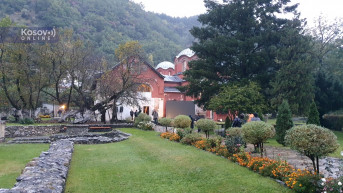
A group of non-governmental organizations from Kosovo today expressed concern in a statement over the case in which the Patriarchate of Pec was presented as a “complex of original pre-Romanesque and Byzantine churches that were systematically transformed into Raska-Serbian Orthodox churches”, stating that it appears not to be an isolated incident, but part of a broader pattern of controversial interpretations, provocations, and attempts to change the character and identity of the Serbian Orthodox Church heritage in Kosovo.
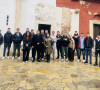
“We express serious concern regarding the events at the Patriarchate of Pec on March 30, during an organized visit which, according to publicly available information, was carried out by the Museum in Pec and the ‘Rifat Gjota’ Technical School from Pec. According to available posts and videos on Facebook, during the visit a museum representative presented within the monastery complex disputed and historically unfounded claims about the identity of this protected religious and cultural site, including presenting it as an ‘Albanian patriarchate’ and claims about the alleged ‘systematic transformation’ of earlier churches into Serbian Orthodox temples,” the joint statement of several organizations said.
It is added that instances of inappropriate behavior by some visitors were also recorded, including displaying national symbols within the monastery complex.
They note that presenting historically disputed and ethnically framed interpretations to children, particularly in the sacred space of a living place of worship, represents a serious disrespect toward the religious site and its purpose, as well as a deviation from basic standards of responsible education, professional ethics, and respect for freedom of religion.
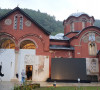
It is recalled that the Patriarchate of Pec is a protected religious and cultural site and a monument on the UNESCO World Heritage List, as well as one of the most important religious sites of the Serbian Orthodox Church, with a clearly established historical, legal, and international status.
Therefore, they stress that any attempt at its politicization, arbitrary reinterpretation, or ethnic appropriation represents an attack on the dignity of the Serbian Orthodox Church, on the right to peacefully enjoy religious and cultural heritage, and on efforts to build interethnic trust.
“It is particularly concerning that this case does not appear to be an isolated incident, but part of a broader pattern of controversial interpretations, provocations, and attempts to change the character and identity of the Serbian Orthodox Church heritage in Kosovo and Metohija. Such developments further burden already sensitive interethnic relations, deepen mistrust, and hinder the creation of a social climate based on mutual respect, equality, and the rule of law,” the NGOs stated.
They call on competent institutions, educational and cultural institutions, as well as international actors monitoring human rights, religious freedoms, and cultural heritage protection, to promptly establish all the circumstances of this event and take appropriate measures to prevent similar cases from recurring.
They emphasize that protected religious sites must remain spaces of respect, professional responsibility, and peaceful coexistence, and not places for spreading historically controversial, ethnically charged, and potentially politically inflammatory messages.
“In a democratic and law-based society, the protection of religious rights, the dignity of religious communities, and cultural heritage must be consistent, impartial, and in accordance with existing regulations and international standards,” the statement concludes, signed by the Institute for Territorial Economic Development – InTER, the Center for Advocacy of Democratic Culture – ACDC, the Center for Peace and Tolerance from Pristina, the Association of Business Women “Avenija”, the Center for Affirmative Social Action – CASA, the Forum for Development and Multiethnic Cooperation – FDMC, the Institute for Public Research – IJI, the Humanitarian Center Mitrovica – HCM, the New Social Initiative – NSI, the Center for Social Initiatives – CSI, Communication for Social Development – CSD, NGO Aktiv, and Gracanica Online.
0 comments