
Jevtic: Sustainable survival key to the return of displaced persons
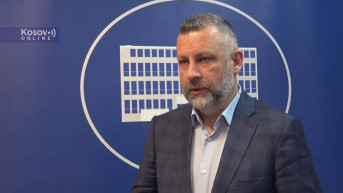
Sustainable survival is the key to the sustainable return of displaced persons, which is only possible if political obstacles are removed and all necessary preconditions are ensured, including the construction or renovation of their houses or homes, access to quality healthcare, and educational opportunities, says Dalibor Jevtic, Mayor of Strpce and former Minister for Communities and Return.
"I have always emphasized, even during the time I dealt with this issue in the capacity of my former role, that without sustainable survival, there can be no sustainable return. To truly have a situation where returnees stay, you must ensure not only the construction or renovation of their houses and homes but also access to good healthcare, economic security, and education. In short, the essential pillars of life for every individual, regardless of whether they are displaced or have never moved. In this context, sustainable return will be possible when we no longer face the other problems that currently exist. And we have many problems of a political nature," Jevtic said in an interview for Kosovo Online.
Commenting on the recent case—the attack on Dragica Gasic, the only returnee in Djakovica—Jevtic noted that there are far too many similar examples.
"I worked on the return to Ljubozde, a village near Istok where we facilitated the return of Serbs displaced due to the war. They went through all the procedures, checks, and everything involved in the return process. Their houses were renovated, new ones were built, and people returned. What happens after all these years? The representative of that returnee village is arrested and accused of war crimes. I’m referring to Zarko Zaric, who is now in custody. And he’s not the only example. Essentially, sustainable return will be possible when, in addition to these preconditions, we also remove the political obstacles and problems that hinder the return process," Jevtic stressed.
According to him, under the current circumstances, the return of displaced persons is only feasible in areas where Serbs are the majority population.
"In the current situation, it is evident that for Serbs to return sustainably, they can only return to majority-Serb areas, communities, or villages where all the life pillars I mentioned—healthcare, education, and economic aspects—are in place," Jevtic said. He added that returning to urban areas is far more complicated.
"In Pristina, there is no school in the Serbian language. There are no Serbian-language schools in other cities either. Look at what’s happening with the only returnee in Djakovica. Therefore, Serbs today can return only to places where a minimum of conditions for normal life and survival exist," emphasized the Mayor of Strpce.
He stated that for the potential return and survival of Serbs in Kosovo, it is crucial for Serbs not to sell their property, as this is the only way to preserve the possibility of returning one day.
"It is important that we do not sell our property, the property left to us by our ancestors. Every time a piece of that property is sold, the chance for us to be more numerous in the future is also sold," Jevtic emphasized.
For this reason, he said, it is essential that the lives of Serbs in Kosovo are not viewed through the lens of daily political events or short-term planning.
"We must think about the distant future, which is why we must remain persistent," Jevtic concluded.



0 comments