
Jevtovic: We are facing a shortage of skilled tradespeople as interest in vocational secondary schools declines
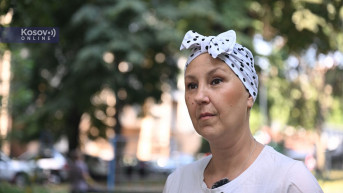
Jelena Jevtovic of the Serbian Employers' Union told Kosovo Online that skilled trades are in short supply across the Western Balkans, as well as throughout Europe, making comprehensive reform of the education system essential in order to align enrollment policies with labour market needs.
"The situation is the same everywhere – there is a shortage of skilled tradespeople, not only in our region, the Balkans, but across Europe in general. On the one hand, young people are increasingly reluctant to pursue these professions. Parents tend to steer their children toward office-based careers. On the other hand, many experienced tradespeople have concluded that they can secure a better livelihood by moving abroad. There is a shortage of virtually all skilled trades, as well as technical professions. The construction sector lacks workers across the board. There is also a shortage of drivers, who are not classified as tradespeople, as well as construction technicians, electrical technicians, and auto mechanics. We are certainly facing a serious problem," Jevtovic said.
Asked whether eighth-grade students are interested in enrolling in vocational secondary schools and whether enrolment policies are aligned with labour market needs, Jevtovic noted that the Serbian Employers' Union has for years been advocating comprehensive reform of the education system.
"There must be reform so that education is adapted to the needs of the labour market, rather than forcing the labour market to adapt to graduates who have already completed their education simply so they can find employment. We have submitted numerous initiatives that received positive opinions from the Socio-Economic Council, and I believe this is something we should continue working on in the future," she explained.
She added that interest among young people in vocational secondary schools has been declining for some time.
"We still do not have the official results of the entrance examinations, so we do not yet know how many students have enrolled in vocational schools. This year, just over 60,000 pupils sat the entrance exam. I believe that for some of them, the incentive was the 5,000-dinar subsidy granted to students who enroll in programmes listed as shortage occupations. We are all aware that not everyone can become a doctor or an economist. Children should be educated in accordance with their interests and aptitudes," she said.
According to Jevtovic, skilled trades should be promoted more actively, with particular emphasis on educating parents.
"Parents need to understand which professions today stand shoulder to shoulder with highly qualified occupations in terms of earnings. Someone who graduates from a vocational school has the opportunity to become their own employer, establish a business, become an entrepreneur, and work independently. At the same time, the media, trade unions, and employers should all become involved so that we can clearly identify the sectors in which our country is expected to develop over the next five, six, or seven years. The goal is not that, if we determine there is a shortage of 200 bricklayers, everyone should become a bricklayer. That is precisely why reform is necessary—to enable accurate labour market analysis," Jevtovic concluded.


comments