
Jovanovic: Call to demolish the Church in Pristina marks all Serbian Orthodox Church properties in Kosovo as targets
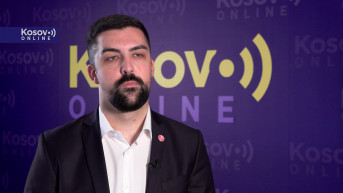
Luka Jovanovic, an assistant at the Department of History at the Faculty of Philosophy in North Mitrovica, warns that recent statements about demolishing the Orthodox Church in Pristina send a clear message that Serbian Orthodox Church (SOC) properties are "legitimate targets" for destruction and desecration.
"Absolutely, the message is being sent that SOC properties are legitimate targets for destruction and desecration. We have seen that the Church of Christ the Savior in Pristina has constantly been targeted for desecration in recent years. Even a singer filmed a derogatory music video in it, which by itself represents an attack on SOC properties," Jovanovic stated for Kosovo Online.
He emphasizes that sending such messages is a "clear marking of targets" on monuments, not only of Serbian, but also of world cultural heritage in Kosovo.
"They are legitimizing that what wasn’t destroyed in 1999 and 2004, if it doesn’t become purely Albanian and if a story isn’t created around it among the Albanians that it is an Albanian object with Albanian history and past, it is a legitimate target that should be erased from the territory where it has always been," Jovanovic explains, commenting on the recent claim by historian and writer Jusuf Buxhovi and Enver Rexhaj that the Church of Christ the Savior in Pristina should have been demolished immediately after the war.
He explains that this is the result of decades-long rhetoric directed against Serbian cultural heritage, which includes historians and public figures in Kosovo.
"There is an effort to annul their Serbian ethnic and Orthodox, or Christian religious, character. We have the official narrative that sacred objects representing the backbone of Kosovo and Metohija’s cultural heritage are first declared non-Serbian, or a different character is invented for them. They have tried to attach an ancient, quasi-pagan character to every Orthodox, Christian, Serbian endowment, churches, first, and then to present them as sanctuaries of Catholic Albanians. And when they realize that this has no historical basis, they call for their absolute demolition and removal," Jovanovic explains.
He reminds that, in such a situation, regardless of the fact that the Church of Christ the Savior in Pristina is a newer building, it also falls under the same narrative that applies to much older Orthodox religious objects in Kosovo.
"If we take the example of the Virgin of Ljeviska, we come to the conclusion that they established it was built on the foundations of an ancient temple, belonging to the ancient culture of the Dardanians or Illyrians. In the case of Decani, we can see that they constantly create the narrative that it represented a Catholic sanctuary of Albanian Catholics in the Middle Ages," Jovanovic says.
He stresses that equally dangerous is the rhetoric that there were no Serbs in Kosovo during the Middle Ages.
"I was shocked by the statement from one of the guests that there were no Serbs in the Kosovo and Metohija region during the Middle Ages. I ask just one question: Find a historical source from the Middle Ages that claims there were Albanians in the Kosovo and Metohija region," the historian concludes.
0 comments