
Jovanovic: Natalie's Ramonda on the level of the Kosovo peony
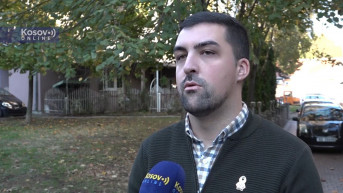
A historian from the Faculty of Philosophy at the University of Pristina with a temporary seat in Kosovska Mitrovica, Luka Jovanovic, stated for Kosovo Online that the flower Natalie’s Ramonda, a symbol of the suffering of the Serbs in World War I, had attained the status of the Kosovo peony in Serbian culture.
Jovanovic pointed out the dual symbolism of the emblem worn on the lapel in the week leading up to Armistice Day since 2012. It consists of two ribbons reminiscent of the ribbon of the famous Albanian commemorative medal and a purple flower with five petals - Natalie’s Ramonda.
"Since it was established as a flower of remembrance for our ancestors who perished in the wars for liberation and unification, Natalie’s Ramonda has gained significance in Serbian culture, tradition, and memory, much like the Kosovo peony. The symbol of Armistice Day has a fantastic symbolism because it is composed of two parts. The flower, named after Queen Natalija Obrenovic, the first Serbian Queen of the modern era, is unique in that every time it withers, with a little water, it blooms again and regains its old brilliance. This symbolism resonates with the Serbs in World War I, who suffered significantly in defending Serbia and during the retreat through Albania. They later recuperated on the islands of Corfu and Vido and managed to break through the Salonika Front and return to their homeland. At that time, the enemy considered our army dead, and during the breakthrough on the Salonika Front, they panic-shouted, 'Run, the dead are coming'. These 'dead' - Serbian peasants who 'resurrected' once again and freed themselves from foreign shackles - absolutely have their symbolism in this flower. As the second part of the Armistice Day emblem, we have a ribbon with the colors of the Albanian commemorative medal, a black-green ribbon that was awarded only to the most resilient, those who managed to endure the ordeal and suffering that Serbian soldiers and the people had to endure during the terrible winter of 1915-1916", he stated.
Speaking of the relationships between the Serbs and the Albanians during the signing of the armistice in World War I, Jovanovic emphasizes that they must be viewed as a whole.
"We can see that at the beginning of the 20th century, Albanians were extremely aggressive and hostile towards the Serbian population, but not necessarily towards the Serbian state. We have a series of testimonies and consular reports, both Serbian and foreign, from diplomatic representatives in the territory of old Serbia and Macedonia, which describe unimaginable crimes committed by the Albanians against the Serbs in Kosovo and Metohija - expulsions, killings, and even forced conversion to Islam, kidnapping, and more," Jovanovic notes.
He emphasizes that the Albanian leaders of that time, the heads of clans, flag-bearers, and infamous Kachaks, were quite inclined to establish contact with official Belgrade, present themselves as protectors of the Serbs, and gain certain benefits based on that.
"Since we are in Kosovska Mitrovica, there is a characteristic example of Isa Boletini, an important Albanian leader and a renowned figure in Albanian public consciousness today, who made every effort to establish contact with Serbia, collaborate with Serbia, occasionally engaged in military intelligence work for Serbia when Serbia paid for it. When he found a big buyer to whom he could sell his services, he would switch sides to work for them. This way, we can see that in 1911 and 1912, Isa Boletini collaborated with Serbia, and received huge sums of money and weapon deliveries, while by 1913 and 1914, he was on the side of Austria-Hungary. The organized state system that the Kingdom of Serbia brought to these areas after centuries of bondage did not suit them because it did not allow for absolute arbitrariness and anarchy", our interlocutor explains.
Jovanovic also says that between the two world wars, Albanians were exceptionally peaceful and loyal citizens of the Kingdom of Serbs, Croats, and Slovenes, and later the Kingdom of Yugoslavia.
"We also have a characteristic example known to historians that the party known as Dzemijet, which gathered Muslims, primarily the Albanians in old Serbia and Macedonia, was the one that gave most Serbian parties the opportunity to adopt the Vidovdan Constitution. In later periods, from the moment of King Alexander's death and the weakening of the state organization, the Albanians started turning against the state again and getting in touch with the fascists and Nazis. That's why during World War II, we had the so-called Balli Kombetar movement among domestic collaborators with the occupiers, which was similar to the Ustasha in Croatia. They also had the idea of creating a 'Greater Albania' that extended to Mitrovica itself. Local leaders like Xhafer Deva and Rexhep Mitrovica, who were actually Albanian fascists, sought revenge against the Serbs in every possible way and, thanks to the Nazis and fascists, they gained power", Jovanovic states.

0 comments