
Serbs from Kosovo: Natalie's Ramonda a symbol of eternity and Serbian identity
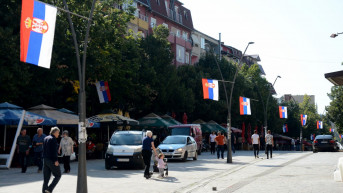
Throughout the world, including Kosovo, Armistice Day in World War I is commemorated, marking the moment when the armistice came into effect, ending one of the greatest wars in human history.
Residents of North Mitrovica emphasize that this national holiday marks Armistice Day, and some explain the symbolism of Natalie's Ramonda (Ramonda nathaliae), an endangered plant species also known as the Phoenix flower, featured on the emblem alongside the Albanian memorial ribbon and why it is worn.
"Natalie's Ramonda is worn seven days before and after the holiday; as far as I know, it represents the suffering and commemoration of the victims in World War I," one of the interviewed individuals said.
Zoran Vicentijevic believes that Natalie's Ramonda primarily symbolizes freedom.
"Armistice Day marks the end of World War I, the breakthrough of the Salonica Front; that day was taken as Armistice Day. Natalie's Ramonda, that flower worn on the lapels, signifies freedom," he conveyed.
Residents of Strpce also spoke about Armistice Day and the significance of Natalie's Ramonda.
One of the residents we spoke with was Radoica Stojcetovic, who said that Natalie's Ramonda actually signified the symbol of eternity.
"Natalie's Ramonda is interesting; it's a flower that symbolizes eternity. It revives even after it dries up; it was worn on the lapel as a sign of Serbian identity."
Stanomir Dimic said that the Serbian people had always fought but had always emerged as victors.
"Today, we mark Armistice Day in World War I, which was on November 11, 1918. This Natalie's flower is worn when a person dies and the state suffers in battles. Our people have always fought; we have always suffered, but we have always renewed ourselves to rise again. Our people have truly suffered a lot in all wars, but we have always emerged as victors.
Serbia has officially celebrated Armistice Day in World War I as a state holiday since 2012 as a sign of remembrance for the day when, on November 11, 1918, the Allies signed the armistice with Germany in a railway carriage in Compiegne, thereby ending World War I.
Natalie's Ramonda is a symbol of the Serbian army's suffering in World War I, officially introduced by the Serbian government in 2012.
The initiative for Natalie's Ramonda to become a Serbian symbol of suffering in World War I came from the current Ambassador of Serbia to the US, Marko Djuric, who was then serving as an advisor to the President of Serbia.
Also, the black-green ribbon on the emblem symbolizes the Albanian memorial ribbon.



0 comments