
Jovanovic: Neo-Nazism in Kosovo is in full swing, historical revisionism has been ongoing for decades
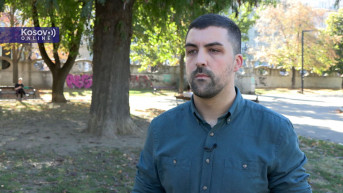
Historian Luka Jovanovic from North Mitrovica stated for Kosovo Online that Kosovo continues to nurture a neo-Nazi policy, commenting on the restoration of Xhafer Deva's house in South Mitrovica. He assessed that this was done as part of a broader movement of historical revisionism among Albanians.
Jovanovic recalled that the EU had previously halted the renovation of Xhafer Deva’s house after alarms were raised by both Serbian and international public opinion. The decision was justified by labeling Deva as a controversial figure or a "person with an ambiguous historical role."
He suggests that this move is emblematic of a wider trend in Kosovo, where historical narratives are being revised to align with contemporary political goals, especially in the rehabilitation of figures associated with World War II collaboration and crimes.
Luka Jovanovic explained that Xhafer Deva is a figure with a clearly defined historical role, serving as the occupation administrator of Kosovska Mitrovica under the Nazi regime from 1941 to 1943, and from 1943 until the end of the war as the Minister of Interior of the quisling state of Albania. "He was responsible for arrests and the liquidation of all anti-Nazi and anti-fascist elements, first in Kosovska Mitrovica and later across a broader area of the quisling state. In short, he was a person tasked with implementing Adolf Hitler's policies," Jovanovic emphasized, adding that such a person cannot be described as having an unclear or ambiguous role.
According to Jovanovic, Deva was a confirmed fascist and Nazi who demonstrated his role through the arrests and murders of many anti-fascist Serbs, Jews, and even anti-fascist Albanians.
"Such a person has no place in public discourse, much less in the actions and projects of the European Union, which aspires to multiculturalism, democracy, the rule of law, and fighting against fascism and neo-Nazism. We saw that the next step taken by so-called Kosovo, which announced that it would independently proceed with the renovation of Deva's house, and indeed carried it out, clearly showed its continued neo-Nazi policies," Jovanovic stated.
The message, he said, is clear—neo-fascism is present today in all countries that were strong supporters of Adolf Hitler. Many countries, either officially or semi-officially, are steering policies that involve the restoration and rehabilitation of figures who were key servants of that regime.
"This certainly bodes ill for communities and countries where Serbs reside, including the state of Serbia and nations that were members of the anti-fascist bloc, which never nurtured Nazi policies. It is clear that this has been done in the context of a broader and longer-standing movement in Kosovo and among Albanians, one that has been ongoing for decades, with a strong drive toward revising history and historical figures," Jovanovic pointed out.
He also noted that, besides Xhafer Deva’s house in South Mitrovica, the most prominent streets and cultural monuments in Kosovo are dedicated to figures who were known collaborators with the occupiers.
"You will find that the Cultural Center in South Mitrovica is dedicated to Rexhep Mitrovica, who was the prime minister of quisling Albania under the Nazi fascist regime, and that major streets are named after figures like Bislim Bajgora, Jusuf and Bajazit Boletinac, all of whom were confirmed collaborators and staunch Nazis and fascists," Jovanovic emphasized.
He added that it should come as no surprise that Xhafer Deva's house was restored, as neo-Nazism in Kosovo is, in his view, experiencing significant growth today. Jovanovic sees this as part of a broader trend of rehabilitating fascist collaborators and reshaping historical narratives, which aligns with the neo-Nazi sentiments being cultivated in the region.



0 comments