
Matica Srpska: Pressure by Kurti’s regime on the University within the Serbian system aimed at an ethnically pure Kosovo
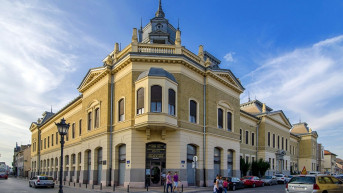
Matica Srpska announced that, as the oldest scientific and cultural institution of the Serbian people, it fully supports the survival and continued successful operation of the University of Pristina with its temporary seat in Kosovska Mitrovica within the educational and scientific system of the Republic of Serbia. At the same time, it expressed solidarity with the employees and students who are subjected to constant pressure from the regime of Albin Kurti, aimed at completing the realization of the idea of an ethnically pure Kosovo, RTV reports.
As stated in the announcement issued by Matica Srpska, the right to education, the right to science and participation in scientific development, the right to cultural identity, and related rights form part of the corpus of fundamental human rights guaranteed by the Universal Declaration of the United Nations, as well as by various international legal documents dealing with international human rights.
“In negotiations with the international community, the exercise of these rights has been specifically guaranteed to the Serbian community in Kosovo and Metohija within the constitutional and legal framework of the Republic of Serbia, which is also in accordance with United Nations Security Council Resolution 1244/99,” the statement notes.
In this regard, Matica Srpska stated that educational, scientific, and healthcare institutions cannot be the subject of the “integration aspirations of Albin Kurti’s regime.”
It is also emphasized that the University of Pristina with its temporary seat in Kosovska Mitrovica is a full member of the European University Association, which guarantees its right to operate without obstruction.
“The revival of the idea of implementing the so-called Law on Foreigners represents yet another in a series of attempts to declare the Serbian people, who live in their own country – Serbia, in the territory of the Autonomous Province of Kosovo and Metohija, or who have been forcibly displaced to other parts of Serbia – as foreigners. In addition to having direct political implications, as it undermines the authority of United Nations Security Council Resolution 1244/99 which guarantees the sovereignty and territorial integrity of our country over the territory of the southern Serbian province, this is also a direct attempt to encourage further emigration of Serbs from Kosovo and Metohija, prevent the return of displaced persons, and dismantle the education and healthcare systems of Serbia in Kosovo and Metohija, thereby further endangering the individual and collective human rights of Serbs and other non-Albanians in this area,” the statement adds.
The announcement by the authorities in Pristina that the Law on Foreigners will begin to be implemented from 15 March calls into question the right to study and work for around 7,000 students and more than 1,000 employees.
“The implementation of the law would lead to unforeseeable consequences. The inability of teachers and researchers to study and work, as well as the impossibility of basic communication at administrative crossings, would lead to a silent exodus of the population. Therefore, it is of crucial importance to react before the competent international institutions in order to prevent even the attempt of its implementation,” the statement says.
In this regard, Matica Srpska will take steps to inform all its partners in various countries, as well as the cultural and academic public, about this form of discrimination.
“At the same time, we call on the competent state authorities to raise this issue before the United Nations Security Council, the UN Commission on Human Rights, UNESCO, UNICEF, the UN Economic and Social Council, as well as the bodies of the European Union that guaranteed the implementation of the so-called Brussels Agreement, as a matter whose urgent resolution is of existential importance for the Serbian community in Kosovo and Metohija, pointing to the pogrom-like nature of such a ‘law’,” the statement concludes.
0 comments